Smarty Ants: A Complete Guide to Early Literacy Learning
Introduction
Learning to read is one of the most important stages in a child’s education. Before children can read complete books independently, they need to understand letters, recognize sounds, build vocabulary, and learn how words work together. These early skills create the foundation for future reading and writing.
Smarty Ants is an educational literacy platform designed to help young children develop these foundational reading skills through interactive activities and structured learning. It combines phonics, vocabulary, reading practice, and comprehension exercises in a digital environment that aims to make learning more engaging.
For parents and teachers, the platform offers a way to introduce reading practice in a format that feels different from traditional worksheets. For children, it can provide opportunities to practice important skills while exploring an interactive learning world.
This guide explains what Smarty Ants is, how it works, its main features, its benefits, and how it can fit into a child’s overall reading journey.
What Is Smarty Ants?
Smarty Ants is a foundational literacy learning program for young children, particularly those in the early stages of reading development. It is associated with Achieve3000 and was created to support children as they move from basic language awareness toward independent reading.
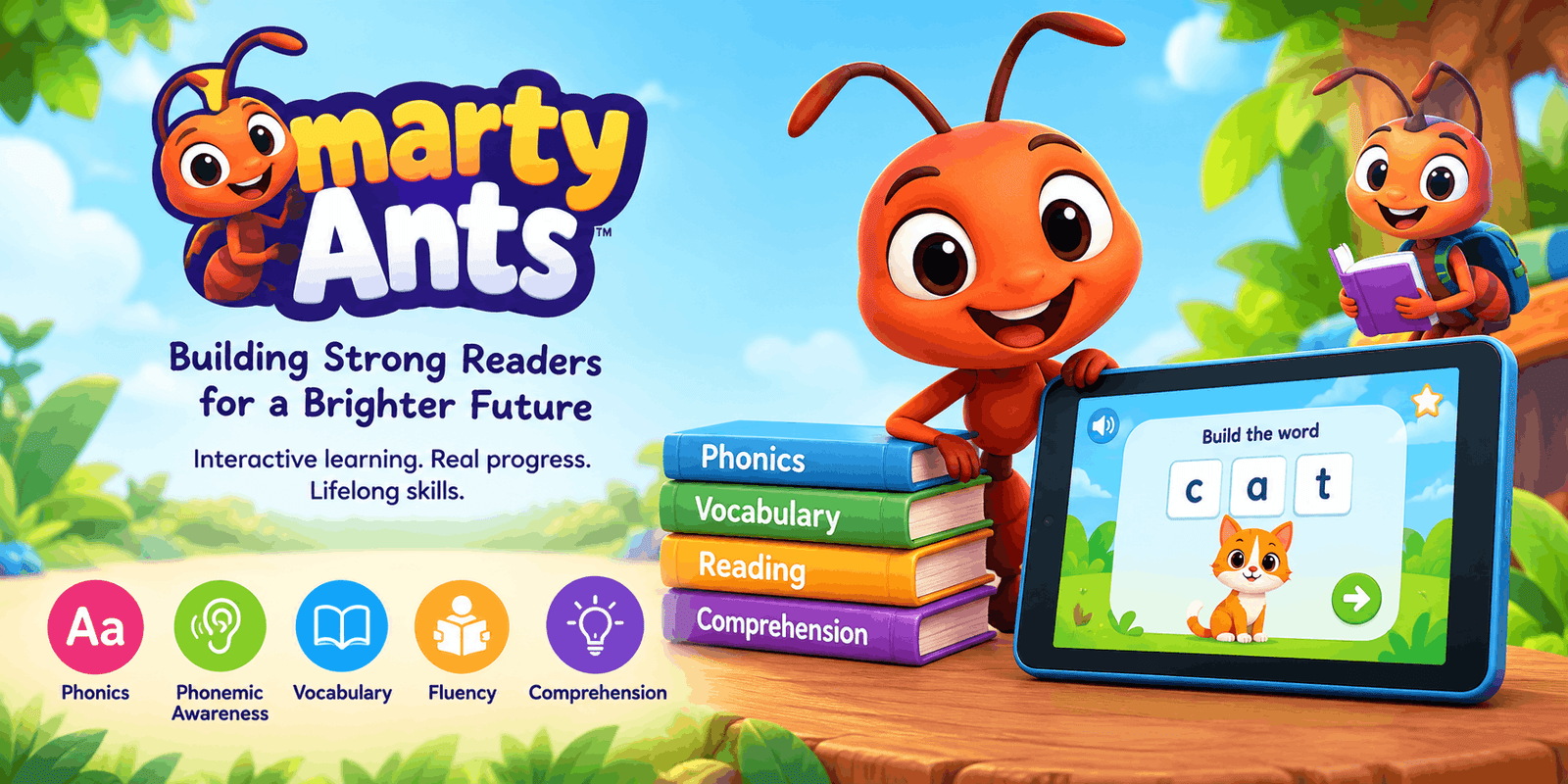
The program focuses on the skills children need before and during their first years of formal reading instruction. Instead of concentrating on only one area, it brings together several important parts of literacy, including letter recognition, phonemic awareness, phonics, vocabulary, fluency, and comprehension.
Its interactive design uses animated characters and learning activities to encourage children to participate. The idea is to make reading practice more approachable while still providing a structured educational experience.
Smarty Ants is not simply a collection of random games. Its learning approach is organized around the development of specific reading skills, allowing children to practice concepts in a gradual and connected way.
How Does Smarty Ants Work?
Smarty Ants is built around a progression of literacy skills. Children begin with activities that help them understand letters and sounds, then move toward more advanced tasks such as reading words and understanding stories.
The learning process generally follows this pattern:
Letters → Sounds → Words → Sentences → Stories → Comprehension
This progression is important because reading develops step by step. A child who understands individual sounds is better prepared to blend those sounds into words. Once word reading becomes easier, the child can focus more attention on understanding sentences and stories.
The platform also includes personalized learning features intended to support children with different skill levels. Rather than assuming every learner begins at exactly the same point, it is designed to provide practice that matches developing abilities.
For teachers, this can make it easier to identify which students need additional support. For parents, it can provide a clearer picture of the skills their child is practicing.
Main Features of Smarty Ants
1. Interactive Learning Environment
One of the most noticeable features of Smarty Ants is its interactive design. The program uses animated characters, activities, and game-like challenges to create a learning environment that is more engaging than a traditional worksheet.
Young children often respond well to activities that include movement, repetition, and immediate interaction. Smarty Ants uses these elements to encourage practice while keeping the focus on literacy skills.
The purpose of the design is not just entertainment. Interactive activities can give children repeated opportunities to recognize letters, listen to sounds, and practice reading concepts in a way that feels approachable.
2. Phonics Instruction
Phonics is a major part of early reading development, and Smarty Ants includes activities that help children understand the relationship between letters and sounds.
Children learn that written letters represent sounds in spoken language. They can then begin combining those sounds to read simple words.
For example, a child may practice identifying the sounds in a word before learning how to blend them together. This process helps build the decoding skills needed for reading unfamiliar words.
Phonics practice is especially useful during the early stages of reading because it gives children a method for working out words instead of relying only on memorization.
3. Phonemic Awareness
Phonemic awareness is the ability to recognize and work with individual sounds in spoken words. It is an important part of early literacy because children need to hear and understand sounds before they can connect them to written letters.
Smarty Ants includes activities that support skills such as:
- Identifying sounds in words
- Blending sounds together
- Separating words into individual sounds
- Recognizing differences between sounds
- Practicing sound patterns
These activities help children understand how spoken language is structured. This understanding can make the transition to reading and spelling easier.
4. Vocabulary Development
Reading is not only about sounding out words. Children also need to understand what those words mean.
Smarty Ants includes vocabulary activities that introduce young learners to new words and their meanings. Building vocabulary helps children understand stories, follow instructions, and communicate more effectively.
A child who can decode a word but does not understand its meaning may still struggle with comprehension. Vocabulary practice helps connect word recognition with actual understanding.
The platform’s learning materials also describe exposure to a large range of vocabulary words as children progress through the program.
5. Sight Word Practice
Sight words are commonly used words that children are encouraged to recognize quickly. Some of these words do not follow simple phonics patterns, so repeated exposure can help children read them more automatically.
Smarty Ants includes sight-word practice as part of its literacy progression. This can help children become more comfortable reading frequently used words in sentences and stories.
Developing sight-word recognition can improve reading speed and reduce the amount of effort needed to read simple text.
6. Reading Fluency
Fluency means reading accurately, smoothly, and with appropriate expression. It develops as children become more comfortable recognizing words and understanding sentence patterns.
Smarty Ants supports fluency by giving children opportunities to practice reading connected text. As learners become more confident with words, they can focus more on the meaning of what they are reading.
Fluency is important because slow, difficult reading can make it harder for children to understand a story. Regular practice can help them become more comfortable and confident readers.
7. Stories and Comprehension
Smarty Ants connects literacy practice with stories and reading activities. This helps children move beyond individual letters and words toward understanding complete ideas.
Comprehension activities may involve answering questions about a story, identifying important details, understanding sequence, and recognizing basic character information.
These activities encourage children to think about what they read rather than simply pronounce words.
For example, after reading a short story, a child may be asked what happened first, what happened next, or why a character made a particular choice.
This type of practice helps develop the understanding skills needed for future reading success.
8. Personalized Learning
Children do not all learn at the same pace. Some may already recognize many letters, while others may still be developing basic sound awareness.
Smarty Ants is designed to support different levels of learning through personalized activities and progress monitoring. This can help make practice more appropriate for each child’s current abilities.
Personalized learning can be especially useful in classrooms where students have different reading backgrounds. It allows teachers to identify areas where a child may need more practice.
For parents, personalized learning can also make it easier to understand whether their child is progressing through the program comfortably.
9. Progress Monitoring
Smarty Ants includes tools that allow adults to monitor learning progress. These features can help teachers and parents understand which skills a child is practicing and where additional support may be needed.
Progress information can be useful for answering questions such as:
- Is the child improving in letter recognition?
- Which phonics skills need more practice?
- Is the child becoming more confident with word reading?
- Are comprehension activities becoming easier?
This information can help adults make better decisions about additional reading practice.
Benefits of Smarty Ants
Makes Learning More Engaging
One of the main advantages of Smarty Ants is its interactive format. Young children may find digital activities more appealing than repetitive worksheets, especially when the activities include characters, challenges, and immediate feedback.
Engagement can encourage children to spend more time practicing important reading skills.
Supports Foundational Reading Skills
Smarty Ants covers several areas of early literacy rather than focusing on only one skill. This makes it useful for children who need to develop a broad foundation in reading.
The combination of phonics, phonemic awareness, vocabulary, fluency, and comprehension can help children build connected literacy skills.
Encourages Independent Practice
The program is designed to allow children to practice certain skills independently. This can give learners opportunities to work at their own pace while teachers or parents provide support when needed.
Independent practice can also help children develop confidence in their ability to complete learning activities.
Helps Identify Learning Needs
Progress-monitoring features can help adults understand which areas a child may find difficult. This can make it easier to provide targeted support instead of repeating activities the child has already mastered.
Connects Reading Skills With Stories
A strong literacy program should help children understand that reading is about meaning, not just individual sounds. Smarty Ants connects word-reading practice with stories and comprehension activities, helping children apply their skills in context.
Smarty Ants for Parents
Parents can use Smarty Ants as part of a balanced reading routine. A digital literacy program can be helpful, but it works best when combined with other reading experiences.
For example, parents can encourage children to read a physical book after completing a digital activity. They can also ask questions about the story, explain unfamiliar words, and practice sounds together.
Simple activities at home can make a big difference:
- Read together every day.
- Ask children to explain new words.
- Practice letter sounds using everyday objects.
- Encourage children to sound out simple words.
- Celebrate effort and improvement.
- Keep reading activities enjoyable.
The goal is to help children connect what they learn through Smarty Ants with the reading they do in everyday life.
Smarty Ants for Teachers
Teachers can use Smarty Ants as a supplemental literacy resource in the classroom. It may be useful for independent practice, small-group activities, or additional support for students who need more time with specific reading skills.
A teacher might use the platform while working with another group of students on guided reading. Progress information can then help identify which learners need extra instruction in phonics, vocabulary, or comprehension.
The program can also support classroom differentiation by giving students opportunities to practice skills at different levels.
However, digital activities should not replace teacher instruction. Young children still benefit from direct teaching, conversation, printed books, and opportunities to practice reading with an adult.
Is Smarty Ants Suitable for Every Child?
Smarty Ants is mainly designed for young learners in the early stages of literacy development. It may be especially useful for children who are beginning to learn letters, sounds, and simple words.
However, every child has different learning needs. Some children may need additional support from a teacher, reading specialist, or parent. Others may benefit more from physical books, hands-on activities, or a combination of learning methods.
Parents should consider whether the program matches their child’s current reading level and whether the child enjoys learning through digital activities.
The best results are likely to come from using Smarty Ants as one part of a broader literacy routine rather than relying on it as the only source of reading instruction.
Research and Educational Evidence
Smarty Ants is described as a research-based literacy program. Its instructional approach focuses on important early reading skills such as phonemic awareness, phonics, vocabulary, and comprehension.
The program’s research materials explain how these skills are connected and why they are important for early readers. There have also been published studies examining the use of Smarty Ants with young learners.
However, it is important to understand that a program being described as research-based does not automatically mean that every claimed benefit has been independently proven.
Parents and educators should look at the actual learning progress of children using the program. A useful approach is to combine digital practice with teacher guidance, regular reading, and other literacy activities.
Conclusion
Smarty Ants is a useful educational platform for introducing young children to the foundations of reading. Its focus on phonics, phonemic awareness, vocabulary, and comprehension makes it more than a simple collection of learning games. By combining structured practice with an interactive environment, it aims to make early literacy more engaging and accessible.
For parents and teachers, the platform can be a valuable supplement to regular reading instruction. However, children also need books, conversation, guided practice, and encouragement outside the screen. The best approach is to use Smarty Ants as part of a balanced learning routine that supports each child’s individual progress.