
Introduction
The internet has become an essential part of everyday life. People depend on reliable internet connections for remote work, online education, entertainment, communication, shopping, and business operations. In Australia, one of the most important developments in internet infrastructure has been the introduction of the National Broadband Network, commonly known as NBN.
NBN is a nationwide broadband infrastructure project designed to provide internet access to homes and businesses across Australia. It aims to improve connectivity, support modern digital activities, and make high-speed internet more accessible to people living in metropolitan, regional, and remote communities.
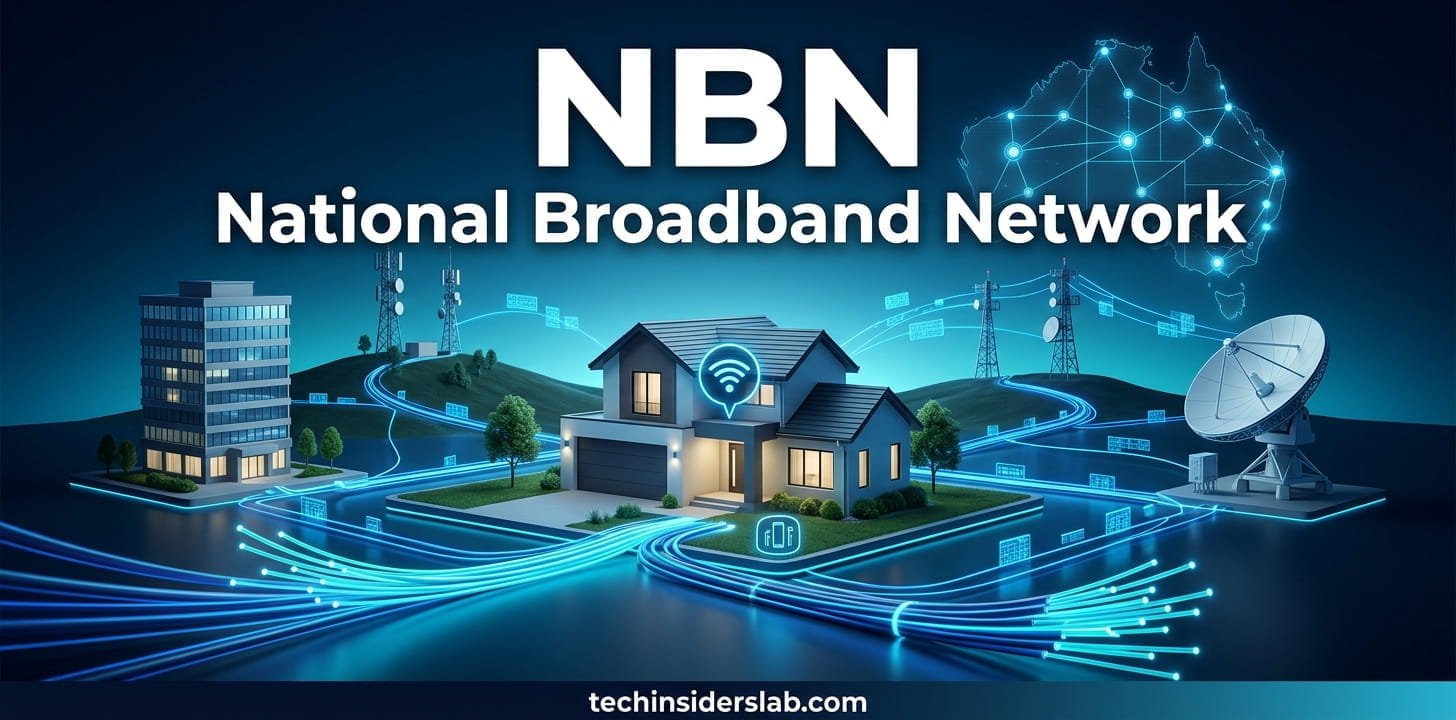
Unlike traditional internet services that depend on a single connection technology, NBN uses several technologies, including fibre-optic cables, existing coaxial cables, fixed wireless connections, and satellite services. This combination allows the network to reach different geographical areas.
However, many people still have questions about how NBN works, which connection type is best, what speeds are available, and whether it is suitable for their internet needs.
This guide explains everything about NBN, including its technology, features, advantages, limitations, and future development.
What Is NBN?
NBN stands for National Broadband Network. It is Australia’s national wholesale broadband network, operated by NBN Co, a government-owned company established in 2009.
The main purpose of NBN is to provide broadband infrastructure that internet retailers can use to deliver internet services to Australian households and businesses.
One important thing to understand is that NBN Co does not generally sell retail internet plans directly to customers. Instead, internet service providers (ISPs) purchase access to the network and offer their own broadband packages.
This means customers can choose between different internet providers while using the same underlying NBN infrastructure.
NBN was introduced to modernise Australia’s internet infrastructure and improve access to broadband services across the country. It also supports the growing demand for reliable connectivity as more everyday activities move online.
How Does NBN Work?
NBN works by connecting homes and businesses to a nationwide broadband infrastructure. Depending on the location, the connection may use fibre-optic cables, coaxial cables, copper wiring, wireless signals, or satellite technology.
The basic process is straightforward:
- NBN infrastructure delivers a broadband connection to a property.
- An approved connection box or network termination device connects the property to the service.
- A compatible modem or router distributes the internet connection.
- Devices such as computers, smartphones, smart TVs, and tablets connect through Wi-Fi or Ethernet.
- The selected internet provider manages the retail broadband service and customer account.
The actual connection experience depends on the technology available at a particular address, the internet plan selected, network conditions, and the quality of the home networking equipment.
NBN uses a Multi-Technology Mix (MTM), meaning different connection technologies work together to provide nationwide coverage.
Different Types of NBN Connections
One of the most important aspects of NBN is its variety of connection technologies. Each technology has a different installation method, performance characteristics, and availability.
1. Fibre to the Premises (FTTP)
Fibre to the Premises is one of the most advanced NBN connection technologies. It uses fibre-optic cables that extend directly to a home or business.
Fibre-optic technology transfers information using light signals, allowing it to support very high internet speeds and substantial data capacity.
FTTP is particularly useful for households with multiple connected devices, remote workers, online gamers, and businesses that depend on fast internet access.
Its major advantage is that the fibre connection reaches the property itself rather than relying on older copper wiring for the final connection.
2. Fibre to the Node (FTTN)
Fibre to the Node uses fibre-optic cables to connect a nearby street cabinet or node to the wider network. Existing copper telephone lines then connect the node to individual properties.
This approach allows NBN to reuse some existing telecommunications infrastructure.
However, the performance of an FTTN connection can be affected by the distance between the property and the node, as well as the condition of the copper wiring.
3. Fibre to the Curb (FTTC)
Fibre to the Curb brings fibre-optic infrastructure close to the property, usually to a distribution point located in a telecommunications pit near the street.
The remaining connection to the home uses existing copper wiring.
FTTC generally places fibre closer to the customer than FTTN, reducing the amount of copper used in the connection.
4. Fibre to the Building (FTTB)
Fibre to the Building is commonly used in apartment buildings and multi-unit properties.
Fibre connects to the building’s communications infrastructure, while existing internal wiring distributes the connection to individual apartments or offices.
This technology provides a practical way to connect multiple properties within a single building.
5. Hybrid Fibre Coaxial (HFC)
Hybrid Fibre Coaxial combines fibre-optic infrastructure with coaxial cables, which were traditionally used for cable television services.
Fibre carries data to a local network node, while coaxial cables deliver the connection to individual properties.
HFC can support high-speed broadband services and is used in selected Australian locations.
6. Fixed Wireless
Fixed Wireless provides internet access through radio signals transmitted from an NBN tower to an outdoor antenna installed at a property.
It is particularly important for regional and rural communities where traditional fixed-line infrastructure may be difficult or expensive to install.
NBN has invested in upgrades to improve the capacity, stability, and performance of its Fixed Wireless network.
7. Satellite Internet
NBN also uses satellite technology to connect homes and businesses in remote locations that cannot easily access fixed-line or fixed wireless infrastructure.
Its Sky Muster satellite service has helped extend broadband access to geographically isolated communities.
Satellite connections are especially valuable in areas where traditional telecommunications infrastructure is limited.
NBN Internet Speeds and Performance
Internet speed is one of the biggest reasons people compare different NBN plans. The network supports multiple speed tiers, allowing customers to select a package based on their internet requirements.
Some common broadband speed categories include:
| Speed tier | Suitable for |
| NBN 25 | Basic browsing and email |
| NBN 50 | Everyday household internet |
| NBN 100 | Streaming and remote work |
| NBN 250 | Multiple users and demanding activities |
| NBN 500 | High-bandwidth household usage |
| NBN 1000 | Advanced internet requirements |
Actual availability depends on the connection technology, location, and internet provider. Not every address can access every speed tier.
According to the ACCC’s June 2026 wholesale market indicators, more than 3.4 million NBN connections were using services above 100 Mbps. This demonstrates the growing adoption of higher-speed broadband services in Australia.
It is also important to understand the difference between download and upload speeds.
- Download speed: Determines how quickly information reaches your device.
- Upload speed: Determines how quickly your device sends information to the internet.
- Latency: Measures the time required for data to travel between devices and servers.
For video calls, cloud applications, and online gaming, upload speed and latency can be just as important as download speed.
Main Features of NBN
NBN provides several features that make it an important part of Australia’s digital infrastructure.
1. Nationwide Broadband Infrastructure
NBN is designed to provide broadband connectivity across metropolitan, regional, and remote parts of Australia. Its combination of technologies makes it possible to serve locations with different geographical challenges.
2. Multiple Internet Providers
Customers can select from different retail internet providers instead of being restricted to a single company.
Providers may offer different prices, customer support options, speed tiers, and additional services.
3. High-Speed Connectivity
Depending on the connection type and available plan, NBN can support high-speed internet for streaming, gaming, video conferencing, and large file downloads.
4. Support for Multiple Devices
Modern households often connect smartphones, computers, tablets, smart televisions, security cameras, and other smart devices simultaneously.
NBN connections can support these activities, although the experience also depends on the router and available bandwidth.
5. Business Connectivity
Businesses can use NBN for cloud computing, online transactions, video meetings, digital communication, and other internet-based operations.
6. Technology Improvements
NBN continues investing in network upgrades to improve performance and expand access to faster broadband technologies.
Benefits of Using NBN
NBN provides several advantages for Australian households and businesses.
Better Internet Accessibility
One of its most important benefits is improved broadband availability. Fixed wireless and satellite technologies help connect communities that are difficult to reach through traditional wired networks.
Supports Remote Working
Remote employees need reliable internet to attend virtual meetings, access cloud platforms, exchange files, and communicate with colleagues. NBN can support these activities through suitable broadband plans.
Improved Entertainment Experience
Streaming services, online videos, music platforms, and digital entertainment have become common household activities. Faster broadband connections make it easier to enjoy high-quality streaming with fewer interruptions caused by insufficient bandwidth.
Useful for Online Education
Students can access online courses, educational videos, digital libraries, and virtual classrooms. A reliable broadband connection helps make these learning activities more convenient.
Supports Smart Homes
Smart home devices depend on internet connectivity to communicate and operate. NBN can provide the broadband foundation for smart security systems, connected appliances, and home automation.
Multiple Provider Choices
Since different retailers offer NBN plans, customers can compare available packages and select a provider that matches their requirements and budget.
Disadvantages and Limitations of NBN
Although NBN has improved broadband infrastructure across Australia, it also has some limitations.
1. Different Connection Quality
Not all NBN technologies provide the same performance. FTTP generally offers stronger speed potential than older copper-based technologies such as FTTN.
2. Speed Limitations
Some properties may not have access to the fastest available speed tiers. The connection technology and infrastructure at a particular address can limit available options.
3. Internet Congestion
Network congestion can affect internet performance, particularly during busy evening hours when many people are online.
4. Installation Requirements
Some properties may require additional installation work before an NBN connection becomes operational. This can involve scheduling a technician or preparing the necessary equipment.
5. Provider-Dependent Experience
NBN supplies the underlying network, but customers purchase retail services from internet providers. Customer support, plan pricing, network management, and service quality can therefore differ between providers.
6. Satellite and Wireless Limitations
Fixed wireless and satellite services are useful for remote communities, but their performance can be affected by environmental conditions, network capacity, signal quality, and other technical factors.
Understanding these limitations can help customers make better decisions when selecting an internet plan.
How to Choose the Right NBN Plan
Choosing an appropriate NBN plan requires more than selecting the highest advertised speed. Customers should consider their daily internet usage, household size, budget, and available connection technology.
Here are some useful factors to consider:
Understand Your Internet Usage
If you mainly browse websites, check emails, and use social media, a basic broadband plan may be sufficient.
However, households that regularly stream high-resolution videos, download large files, or play online games may benefit from faster plans.
Check Your Connection Type
Before purchasing a plan, check which NBN technology is available at your property. This helps you understand which speed tiers you can access.
Compare Internet Providers
Different internet providers offer different broadband packages. Compare monthly prices, advertised speeds, contract conditions, customer support, and additional charges.
Consider Upload Speeds
People who frequently upload videos, use cloud storage, or attend online meetings should pay attention to upload performance.
Check Equipment Compatibility
A good modem and router can improve Wi-Fi coverage and help connected devices use the available broadband speed effectively.
NBN vs Traditional Broadband Internet
Traditional broadband services often depend on older copper telephone infrastructure or other legacy technologies.
NBN was developed to modernise Australia’s broadband infrastructure through a combination of fibre, wireless, coaxial, and satellite technologies.
Here is a simple comparison:
| Feature | NBN | Traditional Broadband |
| Infrastructure | Multiple technologies | Often legacy infrastructure |
| Speed options | Multiple speed tiers | Depends on technology |
| Coverage | Nationwide network design | Varies by service |
| Fibre connectivity | Available in many areas | May be limited |
| Remote access | Wireless and satellite options | Often more limited |
| Internet providers | Multiple retailers | Depends on service |
The biggest difference is that NBN provides a shared national wholesale infrastructure that retail providers use to deliver broadband services.
However, NBN is not automatically faster in every location. Performance depends on the technology available and the plan selected.
The Future of NBN Technology
The future of NBN is focused on faster broadband, improved reliability, and better connectivity for Australian communities.
One important development is the ongoing expansion of Fibre to the Premises. Replacing older copper-based connections with fibre can provide more capacity and support higher-speed services.
NBN is also working to improve its Hybrid Fibre Coaxial and Fixed Wireless networks.
Another area of development is satellite connectivity. Future satellite technology, including Low Earth Orbit systems, could help improve broadband options for people living in remote areas.
NBN Co’s 2026 corporate planning also highlights fibre upgrades, HFC improvements, and the transition towards newer satellite technology as important parts of its long-term network strategy.
These developments are important because internet demand continues to grow. More households are using connected devices, cloud platforms, high-resolution streaming, and online services.
As digital technology becomes more important, reliable broadband infrastructure will remain essential for Australia’s economic and social development.
Is NBN Worth Using?
For Australian households and businesses, NBN provides access to a nationwide broadband infrastructure with different connection options.
Its biggest advantage is that it offers multiple technologies designed to serve different locations. Customers can also choose between different retail internet providers and available broadband packages.
However, the overall experience depends on the connection type, internet plan, provider, and home networking equipment.
For people who need internet access for everyday browsing, streaming, remote work, online education, and business operations, NBN can be a practical broadband solution.
Before choosing a plan, it is worth checking the connection technology available at your address and comparing the packages offered by different providers.
Conclusion
NBN, or the National Broadband Network, plays an important role in Australia’s modern telecommunications infrastructure. It was developed to improve broadband accessibility and provide homes and businesses with better internet connectivity.
Through technologies such as FTTP, FTTN, FTTC, FTTB, HFC, Fixed Wireless, and satellite, NBN serves communities with different internet requirements and geographical conditions.
Although connection performance and available speeds vary, ongoing infrastructure upgrades are helping improve the network and expand access to faster broadband services.
Whether someone needs internet for remote working, entertainment, education, gaming, or business activities, understanding NBN’s connection types and available plans can make choosing the right service much easier.
As Australia’s digital requirements continue to grow, NBN will remain an important part of the country’s internet infrastructure.