Degrees of Separation: Understanding Theory Connects Everyone
Introduction
The concept of Degrees of Separation is one of the most fascinating ideas in sociology and network science. It suggests that every person in the world is connected to others through a surprisingly small number of social relationships. This theory has influenced psychology, mathematics, business networking, social media, and even modern technology.
Most people know the phrase “Six Degrees of Separation,” which claims that any two people can usually be connected through six or fewer social connections. Whether it’s a celebrity, business leader, or someone living in another country, the chain linking you together may be much shorter than you think.
Today, the idea is more relevant than ever. Social media, online communities, and professional networking platforms have made the world more connected, helping people build relationships across the globe.
In this guide, you’ll learn what Degrees of Separation means, where the theory came from, how it works, and why it is important in everyday life.
What Are Degrees of Separation?
Degrees of Separation refers to the number of personal connections needed to link one person to another. Every mutual friend, colleague, or family member between two people counts as one degree.
For example:
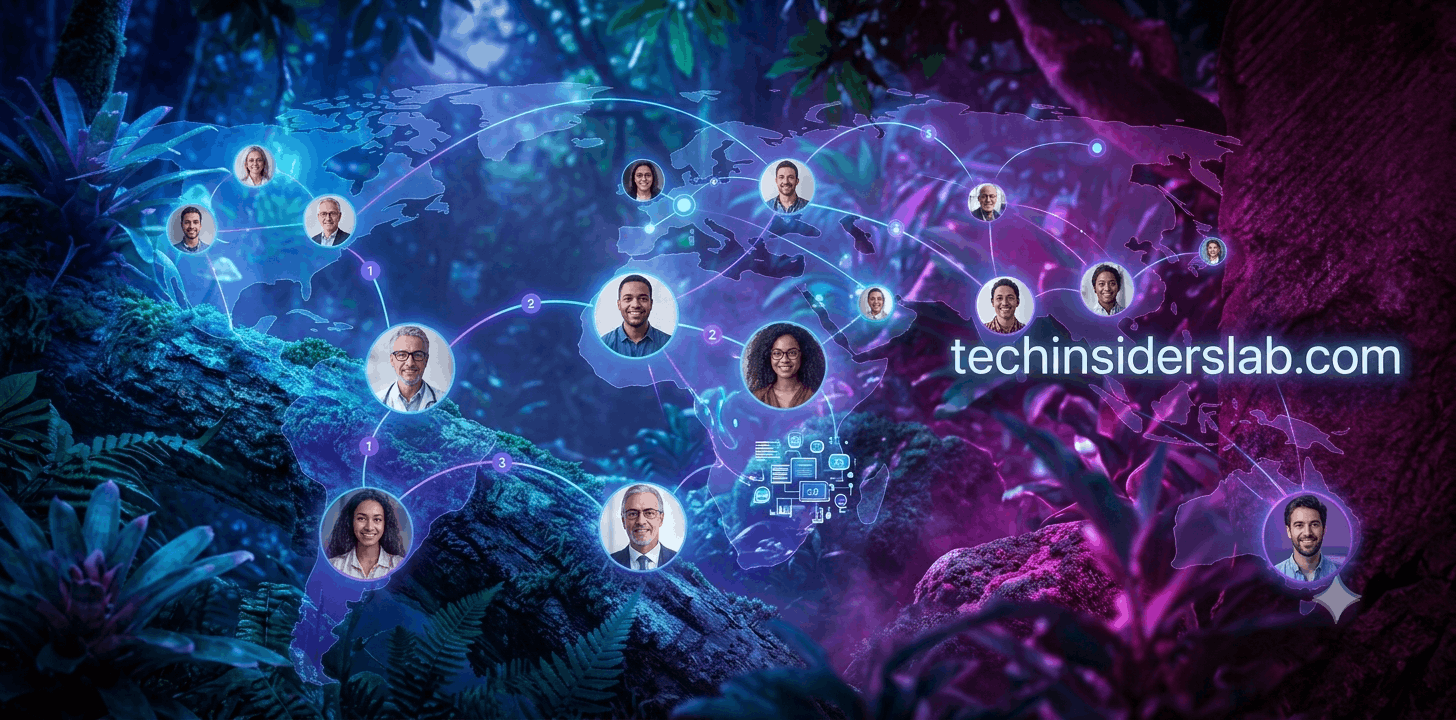
- You know your friend directly = 1 degree
- Your friend’s coworker = 2 degrees
- That coworker’s cousin = 3 degrees
The fewer the connections, the closer two people are within a social network. This idea shows that society is connected through a large web of relationships rather than isolated groups.
Understanding the Six Degrees of Separation Theory
The most famous version of this idea is the Six Degrees of Separation theory.
It suggests that any two people on Earth can usually be connected through six or fewer social links.
For example:
- You know a teacher.
- The teacher knows a researcher.
- The researcher knows a company executive.
- The executive knows a politician.
- The politician knows a famous actor.
- The actor knows another person.
Within six connections, you’ve reached someone you have never met.
Although the exact number can vary, modern research suggests that the average distance between people may be even smaller because of digital communication.
History of Degrees of Separation
The idea of Degrees of Separation has existed for nearly a century.
Frigyes Karinthy’s Idea
Hungarian writer Frigyes Karinthy first introduced the concept in 1929 through his short story Chains. He believed that improvements in travel and communication were making the world increasingly connected.
Although it began as a literary idea, it later inspired scientific research.
Stanley Milgram’s Small World Experiment
In the 1960s, psychologist Stanley Milgram conducted the famous Small World Experiment.
Participants were asked to send a letter to a stranger using only people they personally knew. Instead of mailing it directly, each participant passed the letter to someone they believed was closer to the final recipient.
The successful chains averaged about six connections, leading to the popular phrase “Six Degrees of Separation.”
Even though later studies found some limitations in the experiment, it became one of the most influential studies of human social networks.
How Degrees of Separation Works
Imagine every person as a point on a map and every friendship or relationship as a line connecting two points.
Together, these connections form a huge social network.
For example:
- Alice knows Ben.
- Ben knows Carla.
- Carla knows David.
- David knows Emma.
Alice and Emma are connected through four degrees of separation.
Researchers study these paths to understand how people, ideas, and information move through society.
Network Theory Behind Degrees of Separation
The theory is closely connected to graph theory, a branch of mathematics that studies networks.
In graph theory:
- People are called nodes.
- Relationships are called edges.
Scientists use these networks to understand:
- The shortest path between people
- How information spreads
- How diseases travel
- Which individuals are most influential
- How communities are formed
This research has become an important part of modern network science.
Why the World Feels Smaller Today
Technology has made people more connected than ever before.
Platforms such as:
- X (formerly Twitter)
allow users to communicate instantly across countries and cultures.
Researchers studying online social networks have found that the average distance between users is often less than six connections, showing how digital communication has reduced social distance.
Real-Life Examples of Degrees of Separation
The theory is easier to understand with everyday examples.
1. Job Search
Suppose you’re looking for a job at a technology company.
- You know a university friend.
- Your friend knows a recruiter.
- The recruiter works for the company.
You’re only two degrees away from a job opportunity.
2. Business Networking
A startup founder wants to meet an investor.
Instead of contacting the investor directly:
- They ask a mentor.
- The mentor introduces another entrepreneur.
- That entrepreneur knows the investor.
A few trusted connections can create valuable business opportunities.
3. Academic Research
Researchers often collaborate through shared colleagues.
For example, a scientist in Canada may work with another scientist in Japan because both know the same researcher. This allows knowledge to spread across countries and institutions.
Applications of Degrees of Separation
The concept is used in many industries.
Social Media
Platforms recommend:
- Friends
- Groups
- Communities
- Professional contacts
These suggestions are based on shared network connections.
Marketing
Businesses use social networks to identify influential people who can promote products and ideas through word-of-mouth marketing.
Recruitment
Many companies hire employees through referrals because trusted recommendations often lead to better hiring decisions.
Public Health
Health organizations use social network analysis to understand how diseases spread through communities and identify high-risk contact chains.
Crime Investigation
Law enforcement agencies analyze relationships between suspects and organizations to uncover hidden networks and patterns.
Degrees of Separation in the Digital Age
The internet has changed the way people connect. While the original Degrees of Separation theory focused on face-to-face relationships, today’s digital world allows people to build connections across countries within seconds.
Social media platforms, online communities, and professional networking sites have created billions of new relationships. As a result, researchers believe that the average distance between people has become even shorter.
Today, it is easier than ever to discover mutual contacts, collaborate with experts, or communicate with people from different parts of the world.
Social Media and Connectivity
Modern social media platforms are built around the idea of network connections. They often recommend people you may know based on mutual friends or shared contacts.
Examples include:
- Facebook friend suggestions
- LinkedIn professional connections
- Instagram suggested accounts
- X (formerly Twitter) recommended followers
These recommendations show how closely connected people have become in the digital age.
Facebook and LinkedIn Research
Facebook conducted one of the largest studies on human connectivity by analyzing billions of friendships.
The research found that the average distance between users was less than six degrees, with some studies suggesting around 3.5 to 4.7 connections among active users. This supports the idea that technology has made the world even more connected.
LinkedIn also uses the Degrees of Separation concept by showing:
- First-degree connections
- Second-degree connections
- Third-degree connections
This helps professionals find the shortest path to someone they want to contact, making networking more effective.
Business and Career Applications
The Degrees of Separation theory plays an important role in business and career growth.
Recruitment
Many companies prefer employee referrals because recommendations from trusted connections often lead to better hiring decisions.
Sales
Sales professionals use mutual contacts to introduce potential clients. A warm introduction usually builds more trust than contacting a stranger.
Business Partnerships
Companies often form partnerships through shared industry contacts, conferences, or professional organizations.
Career Growth
Strong professional networks can help people discover new jobs, mentorship opportunities, and business collaborations.
Advantages of Understanding Degrees of Separation
Learning about Degrees of Separation offers many practical benefits.
Better Networking
Building meaningful relationships can create new personal and professional opportunities.
Faster Information Sharing
Ideas, news, and innovations spread quickly through connected social networks.
Career Opportunities
Many jobs are filled through referrals instead of public job postings.
Collaboration
Researchers, entrepreneurs, and creators often find valuable partners through mutual connections.
Limitations of the Theory
Although the theory is widely accepted, it has some limitations.
Not Every Connection Is Strong
Knowing someone casually is different from having a trusted relationship. A short connection path does not always guarantee meaningful communication.
Geographic and Cultural Differences
People living in remote areas may have fewer social connections than those living in large cities.
Online Relationships
Following someone on social media does not necessarily mean you have a real personal relationship.
Common Misconceptions
Myth 1: Everyone Is Exactly Six Steps Apart
False. Six degrees is only an average estimate. Some people are connected through fewer relationships, while others may require more.
Myth 2: Social Media Friends Are Real Connections
Not always. Many online friendships involve little personal interaction.
Myth 3: The Theory Applies Only to People
Incorrect. Network theory is also used to study:
- Computer networks
- Transportation systems
- Disease transmission
- Supply chains
- Financial systems
Interesting Facts About Degrees of Separation
Here are some fascinating facts:
- The concept was introduced by Frigyes Karinthy in 1929.
- Stanley Milgram’s Small World Experiment made the theory famous.
- Modern studies suggest people may be connected through fewer than six links.
- Graph theory provides the mathematical foundation for studying social networks.
- Search engines and recommendation systems use similar networking principles.
- Businesses use network analysis to identify influential customers.
- Health experts study social networks to understand disease outbreaks.
Why Degrees of Separation Matters Today
In today’s connected world, understanding Degrees of Separation helps explain how relationships influence everyday life.
The theory shows:
- How information spreads quickly
- Why networking is valuable
- How businesses grow through relationships
- How referrals create career opportunities
- How communities develop
- How technology connects billions of people
Whether you’re looking for a new job, growing a business, or expanding your professional network, strong connections can open doors to new opportunities.
Conclusion
The Degrees of Separation theory shows that the world is far more connected than it appears. From its origins in Frigyes Karinthy’s 1929 story to Stanley Milgram’s famous Small World Experiment and today’s social media platforms, the concept has changed how we understand human relationships.
Modern technology has made these connections even shorter, allowing ideas, opportunities, and information to travel across the globe in seconds. Businesses use it to improve marketing, recruiters rely on it to find talent, and researchers use it to study communication and collaboration.
Ultimately, Degrees of Separation reminds us that every connection matters. A single introduction or shared contact can create opportunities that might otherwise seem impossible, making strong relationships one of the most valuable assets in both personal and professional life.
Frequently Asked Questions (FAQs)
Degrees of Separation refers to the number of social connections linking one person to another through mutual acquaintances.
It suggests that any two people can usually be connected through six or fewer social relationships
Hungarian writer Frigyes Karinthy first introduced the concept in 1929, and psychologist Stanley Milgram later popularized it through the Small World Experiment.
Research strongly supports the existence of short social paths, although the exact average varies depending on the network being studied.
It is used in:
- Social media algorithms
- Business networking
- Recruitment
- Marketing
- Public health
- Artificial intelligence
- Network science
Networking helps people build relationships that can lead to career growth, business opportunities, mentorship, and knowledge sharing.