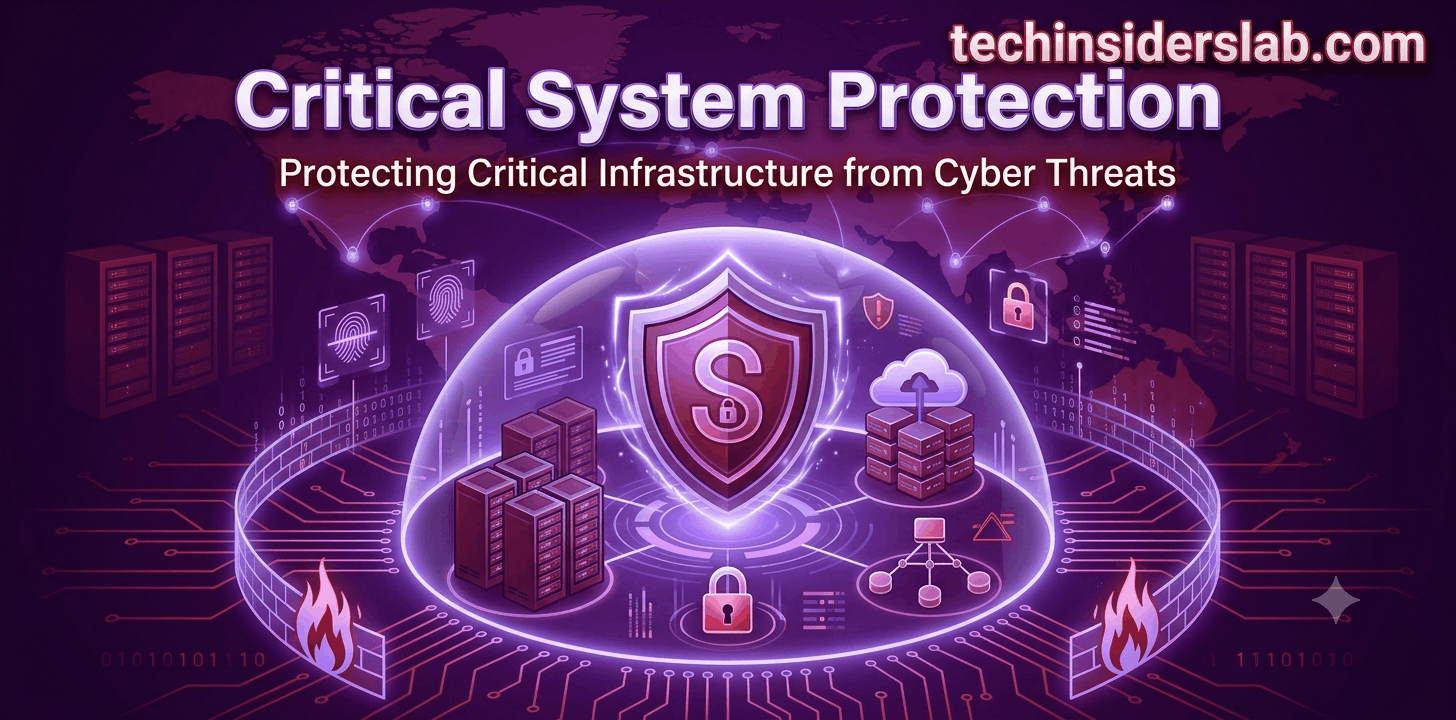
Critical System Protection: A Complete Guide to Securing Mission
Introduction
Critical systems power essential services such as healthcare, banking, government, energy, and telecommunications. A cyberattack, hardware failure, or human error can disrupt operations, cause financial losses, and compromise sensitive data.
Critical system protection combines cybersecurity, risk management, monitoring, and disaster recovery to keep these systems secure, available, and resilient.
This guide explains what critical system protection is, why it matters, common threats, and the best practices for securing mission-critical infrastructure.
What Is Critical System Protection?
Critical system protection is the process of securing systems that are essential to an organization’s operations or public services.
Examples include:
- Banking systems
- Hospital information systems
- Industrial Control Systems (ICS)
- SCADA environments
- Government databases
- Cloud infrastructure
- Data centers
- Telecommunications networks
Failure or compromise of these systems can lead to serious operational and financial consequences.
Why Is Critical System Protection Important?
Strong protection helps organizations:
- Prevent cyberattacks
- Reduce downtime
- Protect sensitive data
- Meet compliance requirements
- Ensure business continuity
- Maintain customer trust
Without proper security, even a small incident can disrupt critical operations.
Types of Critical Systems
Operational Technology (OT)
OT controls physical equipment used in industries such as:
- Manufacturing
- Power plants
- Water treatment
- Oil and gas
Because these systems interact with real-world equipment, attacks can have physical consequences.
Information Technology (IT)
IT systems support daily business operations, including:
- Email servers
- Databases
- HR systems
- Enterprise applications
- CRM platforms
Protecting them keeps business operations running smoothly.
Healthcare Systems
Hospitals rely on secure systems for:
- Electronic health records
- Medical imaging
- Patient monitoring
- Pharmacy management
Security failures can delay treatment and impact patient safety.
Financial Systems
Banks protect systems used for:
- Online banking
- Credit card processing
- ATM networks
- Fraud detection
Strong security helps prevent financial fraud.
Government Infrastructure
Government agencies secure systems related to:
- National security
- Public records
- Emergency response
- Tax services
These systems are frequent targets of cyberattacks.
Common Threats to Critical Systems
Malware
Malware includes harmful software such as:
- Viruses
- Worms
- Trojans
- Spyware
- Rootkits
Ransomware
Ransomware locks files and demands payment, often disrupting business operations.
Phishing
Attackers trick users into revealing passwords or installing malicious software through fake emails and websites.
Insider Threats
Employees or contractors may accidentally or intentionally compromise systems through:
- Weak passwords
- Misconfigurations
- Unauthorized access
- Data theft
DDoS Attacks
Distributed Denial-of-Service (DDoS) attacks overload systems with traffic, making services unavailable to legitimate users.
Core Principles of Critical System Protection
Confidentiality
Only authorized users should access sensitive information.
Common controls include:
- Encryption
- Multi-Factor Authentication (MFA)
- Access permissions
Integrity
Organizations maintain accurate and trustworthy data through:
- Audit logs
- Digital signatures
- File integrity monitoring
Availability
Critical systems should remain operational using:
- Backups
- Redundant infrastructure
- Failover systems
- Disaster recovery plans
These three principles form the CIA Triad, the foundation of cybersecurity.
Risk Assessment
Regular risk assessments help organizations:
- Identify critical assets
- Detect vulnerabilities
- Evaluate threats
- Prioritize security improvements
Proactive assessments reduce the risk of successful attacks.
Identity and Access Management (IAM)
Controlling user access is essential.
Best practices include:
- Least privilege access
- Role-Based Access Control (RBAC)
- Strong password policies
- Multi-Factor Authentication
- Regular account reviews
IAM minimizes unauthorized access and insider threats.
Network Security Best Practices
Protect critical systems by implementing:
- Firewalls
- Intrusion Detection Systems (IDS)
- Intrusion Prevention Systems (IPS)
- Virtual Private Networks (VPNs)
- Network segmentation
- Secure Wi-Fi
Separating critical systems from regular office networks reduces the attack surface.
Continuous Monitoring
Cybersecurity requires ongoing monitoring to detect threats early.
Monitoring tools can identify:
- Unauthorized logins
- Malware infections
- Unusual network traffic
- Failed login attempts
- Configuration changes
Real-time alerts allow security teams to respond before incidents escalate.
Endpoint Security
Every device connected to a network can become a target for cyberattacks. Endpoint security helps protect laptops, desktops, servers, mobile devices, and IoT equipment from malware, ransomware, and unauthorized access.
Key security measures include:
- Next-Generation Antivirus (NGAV)
- Endpoint Detection and Response (EDR)
- Device encryption
- USB device control
- Regular software updates
- Remote device management
Keeping endpoints updated and monitored significantly reduces security risks.
Data Encryption
Encryption protects sensitive information by making it unreadable to unauthorized users.
Data at Rest
Protects stored information such as:
- Databases
- Hard drives
- Backup files
Data in Transit
Protects data while it moves across networks using technologies like:
- HTTPS
- TLS
- VPNs
- Secure email protocols
Encryption helps safeguard confidential information even if attackers gain access to the data.
Backup and Disaster Recovery
Reliable backups are essential for recovering from cyberattacks, hardware failures, or accidental data loss.
A good backup strategy should include:
- Daily automated backups
- Multiple backup locations
- Offline or immutable backups
- Regular recovery testing
Many organizations follow the 3-2-1 Backup Rule:
- Keep 3 copies of your data.
- Store them on 2 different media types.
- Keep 1 copy off-site or offline.
Business Continuity Planning
Business continuity ensures critical operations continue during disruptions.
A strong plan should define:
- Critical business functions
- Recovery priorities
- Communication procedures
- Employee responsibilities
- Emergency contacts
- Recovery timelines
Regular testing helps organizations recover more quickly from unexpected events.
Security Frameworks and Standards
Many organizations follow recognized security frameworks to strengthen protection.
NIST Cybersecurity Framework
The NIST Framework is built around five core functions:
- Identify
- Protect
- Detect
- Respond
- Recover
ISO/IEC 27001
ISO 27001 helps organizations establish an Information Security Management System (ISMS) to manage security risks and improve compliance.
CIS Controls
The CIS Controls provide practical recommendations for:
- Asset management
- Secure configurations
- Vulnerability management
- Access control
- Continuous monitoring
IEC 62443
Designed for Industrial Control Systems (ICS) and Operational Technology (OT), IEC 62443 focuses on:
- Network segmentation
- Secure system design
- Risk assessment
- Access management
Cloud Security Best Practices
As organizations move critical systems to the cloud, security becomes even more important.
Recommended practices include:
- Enable Multi-Factor Authentication (MFA)
- Encrypt cloud data
- Monitor user activity
- Apply least-privilege access
- Secure APIs
- Review cloud configurations regularly
- Protect cloud backups
Understanding the cloud provider’s shared responsibility model is also essential.
AI in Critical System Protection
Artificial Intelligence (AI) helps organizations detect and respond to threats faster.
AI-powered tools can:
- Detect unusual behavior
- Analyze network traffic
- Identify malware
- Prioritize threats
- Automate incident response
- Reduce false positives
AI strengthens cybersecurity by improving speed and accuracy.
Employee Security Awareness
Human error remains one of the biggest cybersecurity risks.
Organizations should train employees to:
- Recognize phishing emails
- Create strong passwords
- Use Multi-Factor Authentication
- Report suspicious activity
- Handle sensitive data securely
- Follow company security policies
Regular awareness training helps reduce successful cyberattacks.
Incident Response Planning
Even well-protected organizations may experience security incidents.
A typical incident response process includes:
- Preparation
- Detection
- Containment
- Eradication
- Recovery
- Post-incident review
Having a tested response plan minimizes downtime and business impact.
Common Security Mistakes
Avoid these common mistakes:
- Using weak or reused passwords
- Ignoring software updates
- Failing to patch vulnerabilities
- Giving users excessive permissions
- Not encrypting sensitive data
- Skipping backup testing
- Disabling security logs
- Ignoring third-party risks
Correcting these issues greatly improves overall security.
Future Trends
Critical system protection continues to evolve. Important trends include:
- Zero Trust Architecture
- AI-powered threat detection
- Extended Detection and Response (XDR)
- Secure Access Service Edge (SASE)
- Quantum-resistant encryption
- Security automation (SOAR)
- Predictive threat intelligence
Organizations adopting these technologies will be better prepared for future cyber threats.
Conclusion
Critical system protection is essential for organizations that rely on digital infrastructure to deliver critical services. A strong security strategy combines risk assessment, access control, network security, encryption, endpoint protection, regular backups, continuous monitoring, and employee awareness to reduce cyber risks.
By following recognized frameworks, adopting modern security technologies, and preparing for potential incidents, organizations can improve resilience and maintain secure, reliable operations. Protecting mission-critical systems isn’t just about preventing attacks—it’s about ensuring business continuity, safeguarding sensitive information, and keeping essential services available when they’re needed most.
Frequently Asked Questions (FAQs)
It is the process of securing essential systems from cyber threats, failures, and unauthorized access.
It protects sensitive data, reduces downtime, and ensures business continuity.
Examples include hospitals, banks, government databases, industrial control systems, cloud platforms, and telecommunications networks.
The CIA Triad consists of Confidentiality, Integrity, and Availability, the three core principles of cybersecurity.
MFA adds an extra layer of security by requiring additional verification beyond a password.
It divides a network into smaller sections to reduce the spread of cyberattacks.
It is a documented process for detecting, containing, and recovering from cybersecurity incidents.
Backups allow organizations to recover quickly after cyberattacks, hardware failures, or accidental deletion.