introduction
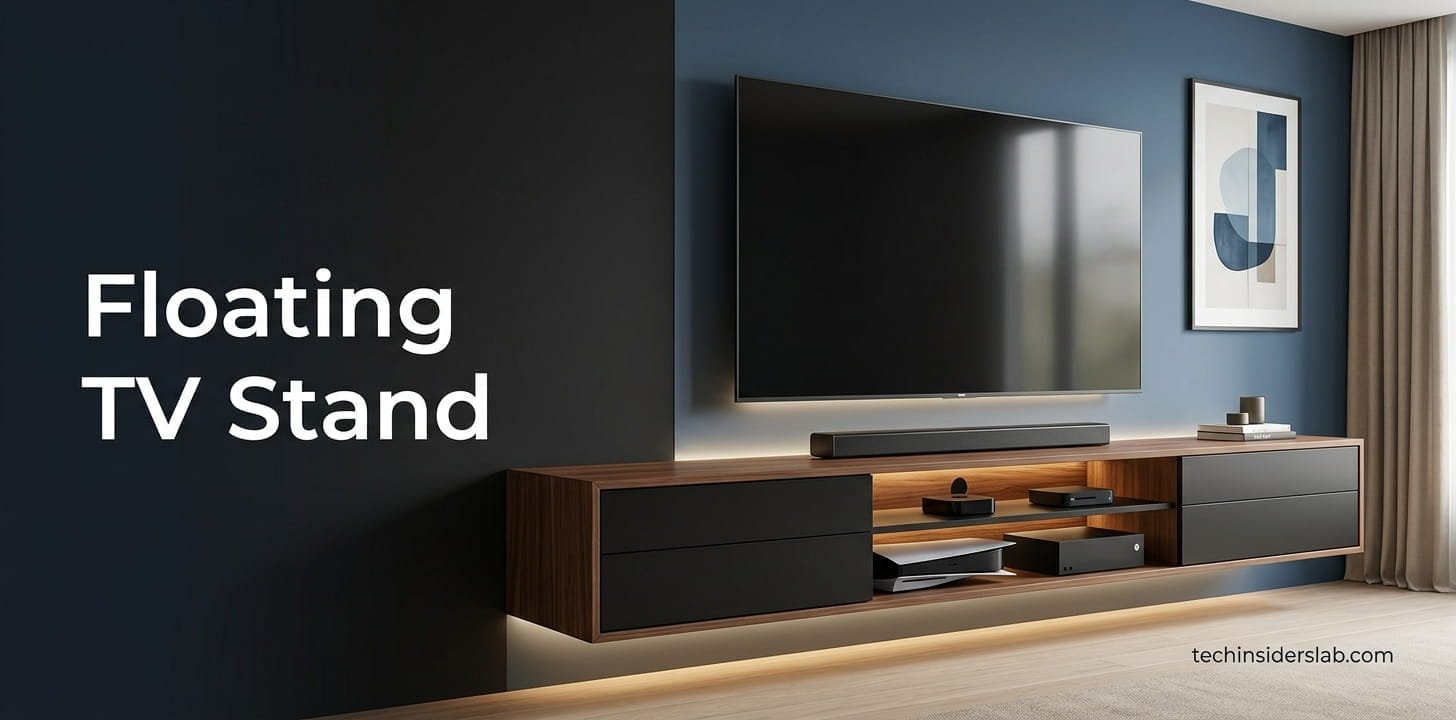
A floating TV stand is a wall-mounted media console designed to create a clean, modern appearance while keeping the floor underneath the television open. Unlike traditional TV cabinets that sit directly on the floor, a floating stand is attached to the wall, giving the furniture a suspended appearance.
Beyond its visual appeal, a floating TV stand can provide practical storage for streaming devices, gaming consoles, remotes, soundbars, and other entertainment equipment. Many modern designs also include cable-management features that help keep wires organized and hidden.
As televisions have become thinner and living spaces have become more focused on minimalist design, floating TV stands have become a popular option for modern entertainment setups. However, choosing the right one involves more than simply selecting a style you like. Dimensions, wall construction, weight capacity, storage, cable management, and installation method all deserve consideration.
What Is a Floating TV Stand?
A floating TV stand is essentially a wall-mounted TV console or media cabinet that does not use traditional floor legs. It is secured to a wall at a selected height, leaving visible floor space underneath.
Some models consist of a simple shelf, while others are complete media consoles with cabinets, drawers, open compartments, and dedicated areas for entertainment equipment.
Wall-mounted TV furniture can also help create a cleaner visual arrangement around the television. IKEA, for example, offers TV units that can be mounted on the wall and include cable outlets designed to help keep cords organized. (IKEA)
The floating design is particularly useful for people who want their entertainment area to look less crowded.
Why Choose a Floating TV Stand?
One of the biggest reasons homeowners choose floating TV furniture is its combination of style and functionality.
1. Saves Visible Floor Space
Because the unit is attached to the wall, there are no traditional legs occupying the floor underneath it. This can make a room feel more open and easier to clean.
IKEA specifically notes that a wall-mounted TV unit creates a clean, airy appearance and eliminates legs that can interfere with vacuuming. (IKEA)
This can be especially useful in smaller living rooms, apartments, bedrooms, and entertainment spaces where every bit of visible floor area matters.
2. Creates a Modern Appearance
Floating furniture naturally gives a room a contemporary appearance. The gap between the bottom of the console and the floor creates a visual sense of space.
A simple white, black, walnut, or natural-wood floating TV stand can also become part of a larger media-wall design.
Instead of having a television, cabinet, cables, and accessories scattered around the room, a floating console can visually combine these elements into one organized entertainment zone.
3. Helps Organize Entertainment Equipment
A floating TV stand can provide storage for devices that would otherwise sit on a separate table or directly on the floor.
Depending on the design, storage may include:
- Open shelves
- Closed cabinets
- Drawers
- Soundbar compartments
- Media-device shelves
- Decorative display areas
Wall-mounted storage systems can also be designed around different uses, including television equipment, music systems, charging areas, and other media accessories. (IKEA)
Cable Management Is an Important Feature
A beautiful TV setup can quickly look messy when power cords, HDMI cables, Ethernet cables, and other wires are visible.
For this reason, cable management should be one of the first features to check when choosing a floating TV stand.
Some designs include cable openings at the rear or top of the cabinet. These openings allow cables to pass through the furniture instead of hanging visibly around the television.
IKEA’s current TV units, for example, include cable outlets that allow cords to be routed through the furniture and toward the wall connection. (IKEA)
A good cable-management system can help create a cleaner appearance while also making it easier to connect several entertainment devices.
Choosing the Right Size Floating TV Stand
Size is one of the most important factors when purchasing a floating TV stand.
The stand should be wide enough to complement the television rather than making the TV appear oversized relative to the furniture.
IKEA recommends that a TV bench be somewhat wider than the television placed on it. (IKEA)
Before purchasing, measure:
- The TV’s overall width
- The available wall space
- The desired height
- The stand’s depth
- The available space for cables and plugs
- The location of electrical outlets
Do not rely only on the television’s advertised screen size. A “65-inch TV,” for example, refers to the diagonal screen measurement, not the actual width of the complete television.
Measuring the television itself will give you a much better idea of how the furniture will look once installed.
Consider Weight Capacity
A floating TV stand must be capable of supporting the equipment placed on or inside it.
The manufacturer’s stated weight capacity should always be checked before installation. This is particularly important if the console will hold gaming consoles, receivers, speakers, books, or other heavy equipment in addition to the television.
Some floating media consoles have substantial weight ratings. For example, one current Wayfair floating TV stand listing specifies a 100-pound weight capacity and provides installation options involving wall studs or drywall, depending on the mounting system. (Wayfair)
However, weight capacity is not the only consideration. The wall and mounting hardware must also be appropriate for the load.
Wall Type Matters
The type of wall where you plan to install a floating TV stand can affect the installation method.
Common wall structures include:
- Drywall
- Wood-stud walls
- Concrete
- Brick
- Other masonry surfaces
For stud-based walls, mounting hardware can often be secured directly into the structural studs. Lowes recommends locating wall studs when installing floating shelves because studs provide strong support. (Lowe’s)
If studs are not available at the required locations, appropriate wall anchors may be necessary, but the anchor must be rated for the intended load and compatible with the wall material.
Never assume that every wall anchor can safely support a heavy media console.
Installation Safety
Installing a floating TV stand is not simply a matter of drilling a few holes into the wall.
Before drilling, check for possible electrical wires, pipes, and ducts behind the installation area. Lowes specifically recommends considering the possibility of wiring, plumbing, and ductwork behind walls and suggests using appropriate detection tools where necessary. (Lowe’s)
A level is also important because even a small installation error can make a long floating console look noticeably crooked.
The basic installation process generally involves:
- Measuring the desired position
- Locating suitable structural support
- Marking the mounting points
- Checking the mounting plate or bracket for level
- Installing the appropriate hardware
- Attaching the console
- Checking stability
- Organizing cables and equipment
Always follow the manufacturer’s specific installation instructions because mounting systems differ between products.
Floating TV Stand vs. Traditional TV Stand
Both styles can work well, but they provide different benefits.
A traditional TV stand sits directly on the floor and is usually easier to move. It may also offer substantial storage without requiring wall installation.
A floating TV stand, on the other hand, provides a more minimalist appearance and leaves the floor underneath open.
Floating TV Stand
Advantages:
- Modern appearance
- Open floor underneath
- Easier floor cleaning
- Good cable-management potential
- Can make smaller rooms feel less crowded
- Flexible wall-mounted design
Possible disadvantages:
- Requires secure wall installation
- Less convenient to move
- Wall type can affect installation
- Weight capacity must be carefully considered
Traditional TV Stand
Traditional units are generally easier to reposition and may be preferable for renters or people who do not want to drill into walls.
The best option depends on the room, wall structure, storage requirements, and personal design preferences.
Choosing the Right Material
Floating TV stands are available in many materials and finishes.
Common choices include:
Wood and Wood-Based Materials
Wood or engineered-wood furniture can provide a warm appearance and works well with traditional, Scandinavian, farmhouse, and contemporary interiors.
MDF and Manufactured Wood
Manufactured wood is widely used for modern media furniture because it can provide a consistent finish and allow manufacturers to produce different shapes and storage configurations.
Glass and Metal
Some minimalist entertainment designs combine metal frames or glass elements for a more industrial or contemporary appearance.
The most important consideration is not simply the material but how well the complete structure, mounting hardware, and finish suit the intended environment.
Storage: Open Shelves or Closed Cabinets?
Your choice between open and closed storage depends on what you want to keep inside the console.
Open shelves are useful for devices that require ventilation or remote-control access. A streaming box, gaming console, or media receiver may be easier to use when positioned in an open compartment.
Closed cabinets provide a cleaner appearance by hiding accessories, remotes, cables, and other items.
Some modern wall-mounted storage systems combine both options, allowing users to display selected equipment while keeping less attractive items hidden. IKEA’s wall-mounted media storage systems, for example, combine storage compartments with cable-management features. (IKEA)
Floating TV Stand for Small Rooms
A floating TV stand can be particularly effective in a small living room.
Because the furniture does not occupy floor space, the room can maintain a more open appearance. A compact wall-mounted console can provide enough room for a streaming device, router, gaming system, or decorative accessories without requiring a large floor cabinet.
For a small room, avoid choosing a console that is unnecessarily deep. Measure the available wall space and choose a design that provides enough storage without making the entertainment area feel crowded.
Floating TV Stand for Large TVs
Large televisions need appropriately sized furniture.
A wide TV usually looks better when paired with a console that has enough width to balance its proportions. Larger units can also provide additional storage for soundbars, game consoles, receivers, and other equipment.
For very large televisions, check the stand’s maximum supported TV size and weight rather than assuming that a wider console will automatically be suitable.
Some current floating TV stands are designed to accommodate televisions up to approximately 78 inches, but specifications vary considerably between models. (Wayfair)
How to Style a Floating TV Stand
The clean design of a floating TV stand gives you several opportunities to improve the overall appearance of your entertainment wall.
Keep decorative items limited rather than filling every shelf.
Useful styling ideas include:
- Add a small plant
- Use one or two decorative objects
- Keep remote controls organized
- Hide unnecessary cables
- Place a soundbar beneath the TV
- Use matching storage boxes
- Combine wood tones with neutral colors
- Leave some empty shelf space
Minimal decoration generally works better with floating furniture because the open space underneath is already part of the design.
Common Mistakes to Avoid
Before installing a floating TV stand, avoid these common mistakes.
Choosing the Stand Before Measuring
Always measure the television and wall first.
Ignoring Weight Limits
Check both the furniture’s capacity and the mounting system.
Using Incorrect Wall Hardware
A screw or anchor that works for a lightweight shelf may not be suitable for a heavy media console.
Forgetting Cable Access
A beautiful wall-mounted console can become frustrating if there is no practical route for HDMI and power cables.
Mounting It Too High
The ideal TV and console height depends on viewing position, room layout, and personal preference. Consider the sofa height and viewing angle before drilling.
Ignoring Ventilation
Electronic equipment can produce heat. Make sure devices such as game consoles and receivers have sufficient ventilation according to their manufacturers’ requirements.
Is a Floating TV Stand Worth It?
For many homeowners, a floating TV stand offers a strong combination of appearance and practicality.
It can help organize entertainment equipment, reduce visible cable clutter, free up floor space, and create a modern media wall. However, the benefits depend on choosing the right size and mounting it correctly.
The most important factors to evaluate are wall compatibility, weight capacity, dimensions, storage, cable management, ventilation, and installation requirements.
A floating TV stand is therefore more than a decorative piece of furniture. It is part of the overall entertainment setup and should be selected with both design and functionality in mind.
Conclusion
A floating TV stand can transform an ordinary television area into a cleaner, more organized, and modern entertainment space. Its wall-mounted design eliminates traditional legs, opens up visible floor space, and can make cable management and media storage easier.
The best floating TV stand is not necessarily the most expensive or most stylish model. It is the one that fits your television, wall, equipment, storage needs, and room layout.
Before buying one, carefully check its dimensions, weight capacity, mounting system, material, cable-management options, and compatibility with your wall. If the installation involves a heavy console or you are unsure about the wall structure, professional installation can be a sensible choice.
With the right planning, a floating TV stand can provide both practical storage and a minimalist look that complements almost any modern living space.