Tablo TV: Guide to Free Live TV, Streaming, and DVR Recording
Introduction
Tablo TV is a television streaming and recording solution designed for people who want to watch live television without paying for an expensive cable or satellite subscription. It combines traditional over-the-air television with modern streaming technology, allowing users to watch local broadcast channels and record programs for later viewing on compatible devices.
As more households look for affordable entertainment options, Tablo TV offers an alternative to subscription-based television services. Instead of relying entirely on paid streaming platforms, viewers can use a compatible Tablo device and a TV antenna to access available broadcast channels. Supported models can also include free streaming channels in the same television guide.
However, Tablo TV is not simply an application that provides every television channel for free. Its features depend on the device model, antenna reception, location, internet connection, and compatible viewing equipment. Understanding these requirements can help users decide whether Tablo TV is the right entertainment solution for their homes.
What Is Tablo TV?
Tablo TV is a television technology platform that uses an over-the-air digital video recorder, commonly called an OTA DVR, to receive, stream, and record broadcast television.
The system connects a TV antenna to a Tablo device, which distributes television content across a home network. Users can then watch available live channels through the Tablo app on supported smart TVs, streaming devices, smartphones, and tablets.
The fourth-generation Tablo system is particularly useful for people who want to watch television on multiple screens without connecting a separate antenna to every television. It also provides recording features that allow viewers to save programs and watch them later.
Depending on the model, Tablo can offer built-in recording storage, additional storage through a compatible USB hard drive, and access to selected free streaming channels. The fourth-generation devices are designed to work without a recurring subscription fee for their standard core features.
According to Tablo’s official product information, the fourth-generation system includes more than 50 hours of built-in HD recording capacity, with expandable storage available through compatible external drives. Actual recording capacity depends on video quality and available storage.
How Does Tablo TV Work?
Tablo TV works by combining three essential components: a television antenna, a Tablo DVR, and a compatible device running the Tablo app.
1. TV Antenna
The antenna receives local over-the-air television broadcasts. These broadcasts may include news, entertainment, sports, and other programs, depending on the channels available in the viewer’s area.
The number of channels received depends on several factors, including distance from broadcast towers, antenna placement, nearby buildings, terrain, and signal strength.
An indoor antenna may be sufficient in areas with strong reception, while a larger outdoor antenna may be necessary in locations with weaker signals.
2. Tablo DVR Device
The Tablo device receives television signals from the antenna and processes them for viewing and recording. It connects to the home network through Wi-Fi or Ethernet, depending on the model and setup.
Once connected, the device makes available television programming accessible through supported Tablo applications. Users can browse channels, schedule recordings, and watch previously recorded programs.
3. Compatible Viewing Device
The third component is a screen that supports the Tablo app. Depending on the model, this could be a compatible smart TV, streaming player, smartphone, or tablet.
After installation and configuration, users can browse available programming and watch television without connecting an antenna directly to every screen.
Tablo’s fourth-generation setup requires a compatible smartphone or tablet for initial configuration, a private home Wi-Fi network with internet access, and an appropriate TV antenna. Some compatible televisions and streaming devices can then be used for everyday viewing.
Key Features of Tablo TV
Tablo TV offers several features that make it appealing to households interested in flexible television viewing.
1. Free Over-the-Air Television
One of Tablo’s main advantages is its ability to receive available broadcast television channels without a traditional cable subscription.
Users can access supported local channels through an antenna, subject to regional availability and signal quality. This can reduce monthly entertainment expenses for households that mainly watch free broadcast programming.
However, free over-the-air television does not mean that every premium channel is included. Cable networks and subscription services generally require separate access.
2. Live TV Streaming Around the Home
Tablo allows users to watch available television programming on compatible devices connected to their home network.
For example, someone can watch a program on a supported smart TV while another household member uses a compatible phone or tablet. The number of simultaneous streams and available features depends on the particular Tablo model and network conditions.
This flexibility is useful for families who prefer watching different programs on different screens.
3. DVR Recording
Digital video recording is one of Tablo TV’s most useful capabilities. Instead of watching every program at its scheduled broadcast time, users can record selected shows and watch them later.
The fourth-generation system includes built-in storage, while compatible external USB hard drives can provide additional recording space.
Recording is particularly helpful for viewers who want to save television episodes, watch programs after work, or avoid missing important broadcasts.
4. Pause and Replay
Supported Tablo configurations provide recording and playback controls that make television viewing more flexible.
Depending on the program and device, users can navigate recorded content and replay portions they want to see again. These capabilities are helpful when watching sports, news, and other live events.
The exact controls available can vary by model and software version.
5. Integrated Channel Guide
Tablo provides an electronic program guide that helps users discover available television content.
Instead of manually switching between channels without information, viewers can browse scheduled programs and check what is airing. Supported guide features can also help users organize recordings and find programs they want to watch.
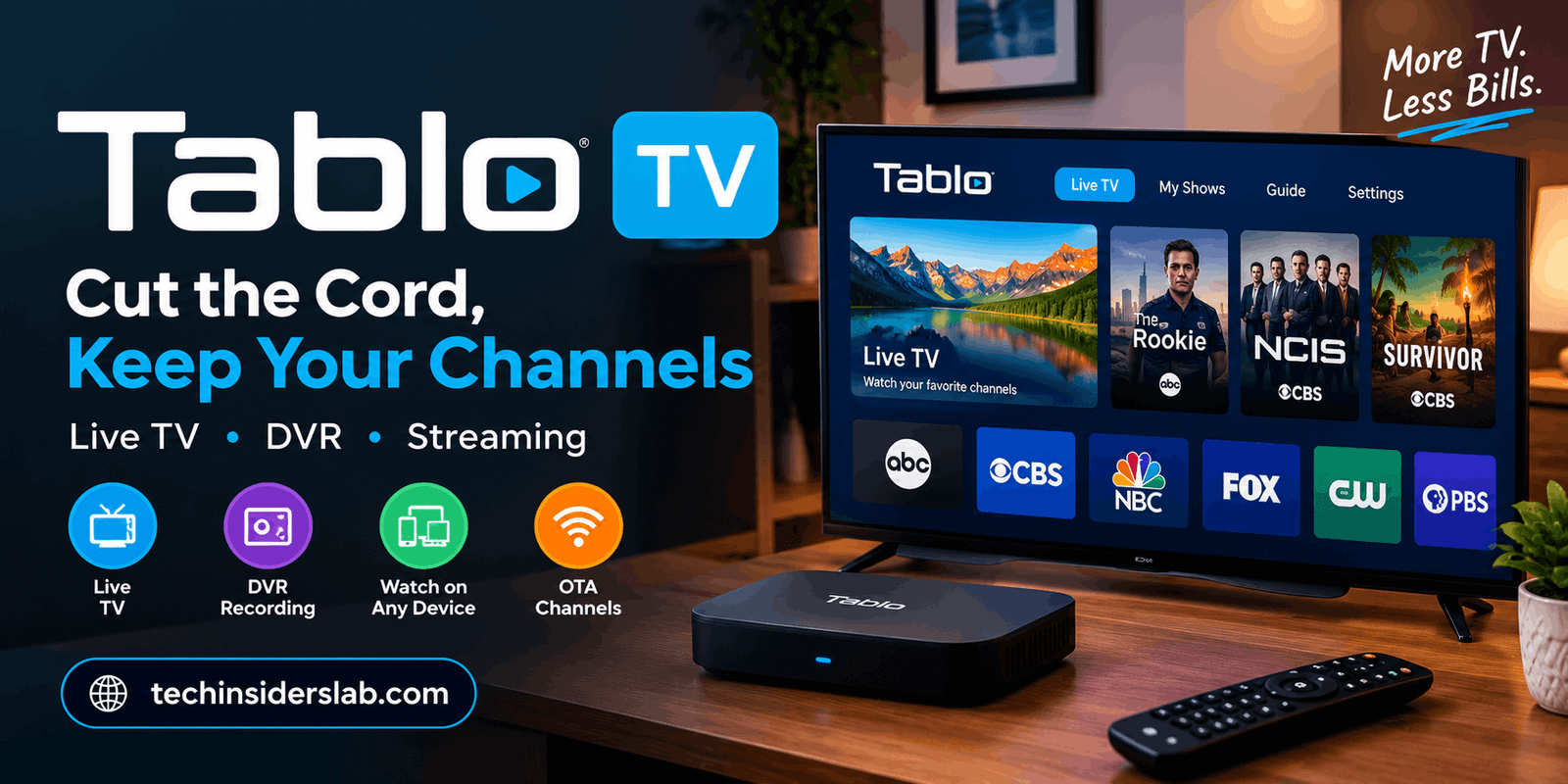
Fourth-generation Tablo devices combine available antenna channels with supported free streaming channels in their viewing interface, making content discovery more convenient.
6. Expandable Storage
Built-in storage provides a convenient starting point, but people who record many programs may need additional capacity.
Compatible fourth-generation Tablo devices support external USB hard drives, allowing users to expand recording space. Tablo’s documentation specifies support for compatible drives ranging from 1 TB to 8 TB.
Users should check their specific device’s requirements before purchasing storage equipment.
7. No Recurring Subscription for Core Fourth-Generation Features
A major selling point of the fourth-generation Tablo system is that its standard core features do not require a monthly subscription.
After purchasing the hardware, users can access supported live television and recording features without paying a recurring fee for the core service.
Nevertheless, buyers should distinguish fourth-generation devices from older Tablo models. Legacy products may have different service requirements, app compatibility, and feature limitations.
What Channels Can You Watch on Tablo TV?
The channels available through Tablo depend on the viewer’s location, antenna reception, device model, and supported streaming content.
In supported areas, an antenna may receive local broadcast networks such as ABC, CBS, FOX, and NBC. These examples primarily relate to the United States, where Tablo’s fourth-generation service is designed around the local broadcast television system.
The available channels are not identical for every household. A viewer living near broadcast towers may receive more stations than someone in a remote or obstructed location.
Fourth-generation Tablo devices also provide access to supported free internet-based streaming channels. These channels can add entertainment options beyond what the antenna receives.
However, Tablo is not designed to stream or record paid services such as Netflix or cable and satellite channels such as ESPN through the device. Users should not expect it to replace every subscription service.
International users should pay particular attention to regional availability. In Pakistan, for example, local channel availability, broadcast standards, and service compatibility may differ from the United States. Prospective buyers should verify local requirements before purchasing a Tablo device.
How to Set Up Tablo TV
Setting up Tablo TV is relatively straightforward when the required equipment is available.
Step 1: Prepare the Equipment
Before starting, make sure you have a compatible Tablo device, a suitable TV antenna, a private home Wi-Fi network with internet access, and a compatible smartphone or tablet.
You should also confirm that your television or streaming device supports the appropriate Tablo app.
Step 2: Position the Antenna
Place the antenna where it can receive a strong broadcast signal. Near a window or in an elevated position may work well for indoor antennas.
The best location depends on nearby broadcast towers and physical obstacles. You may need to test different positions to find the strongest reception.
Step 3: Connect the Tablo Device
Connect the antenna cable to the appropriate input on the Tablo device. If your model supports external storage and you want additional recording capacity, connect a compatible USB hard drive according to the manufacturer’s instructions.
Connect the Tablo device to your home network using supported Wi-Fi or Ethernet options, then power it on.
Step 4: Install the Tablo App
Download the compatible Tablo app on your smartphone or tablet and follow the setup instructions.
The app guides users through connecting the device to the home network and completing the initial configuration. The system may also install available firmware updates.
Step 5: Scan for Channels
Run the channel scan to identify available over-the-air stations. The results depend on the antenna’s position, local signal strength, and regional broadcasts.
If important channels are missing, adjust the antenna position and scan again.
Step 6: Start Watching and Recording
Once setup is complete, open the Tablo app on a supported viewing device. Browse the channel guide, select available programs, and schedule recordings when needed.
For the best experience, keep the Tablo device and viewing equipment connected to a stable home network.
Advantages of Tablo TV
Tablo TV offers several benefits for people who want more control over their television experience.
Potential savings: Users can watch available free broadcast channels without paying for a traditional cable package. The initial hardware and antenna costs still need to be considered.
Flexible viewing: Supported devices allow television to be watched on different screens around the home.
Convenient recording: Built-in and expandable storage make it possible to save programs for later.
Simplified content discovery: The electronic program guide helps viewers find scheduled programs and manage recordings.
Reduced subscription dependence: Fourth-generation Tablo users can access core features without a recurring service subscription.
Whole-home access: One compatible device can distribute supported television programming to multiple screens, depending on the model and network.
These advantages make Tablo particularly attractive to households that regularly watch local broadcast television.
Disadvantages and Limitations of Tablo TV
Although Tablo TV can be useful, it has limitations that buyers should understand.
Antenna Reception Is Essential
The quality and quantity of over-the-air channels depend on antenna reception. Users in areas with weak signals may need a more capable antenna or may receive fewer channels than expected.
Not Every Channel Is Available
Tablo does not provide unrestricted access to every cable channel or premium streaming platform. Its content selection is limited to available broadcasts and supported streaming channels.
Internet and Network Requirements
Fourth-generation Tablo requires a consistent internet connection through a private, password-protected home router. Network problems can interfere with setup and access to supported internet-based content.
Device Compatibility Matters
Not every smart TV or streaming device supports every Tablo app. Buyers should verify compatibility before purchasing hardware, particularly if they use an older television.
Regional Availability Can Be a Problem
Tablo’s broadcast-focused features are closely tied to the television standards and channel availability of supported markets. Users outside those markets should not assume that the service will work exactly as it does in the United States.
Initial Setup Takes Some Effort
Although installation is designed to be user-friendly, choosing the correct antenna position, connecting devices, scanning channels, and configuring the network can require some troubleshooting.
Tablo TV vs. Traditional Cable TV
Tablo TV and traditional cable television provide different approaches to home entertainment.
Cable TV generally delivers a provider-managed package of channels, often for a monthly fee. Tablo focuses on receiving free over-the-air broadcasts and making them accessible across compatible devices.
With Tablo, users have more control over recording and can reduce recurring television costs if the channels they want are available free through an antenna. However, cable services may offer premium networks, broader channel packages, and specialized programming that Tablo does not provide.
Tablo also requires compatible hardware and suitable antenna reception, while cable service typically depends on a provider’s connection and equipment.
The right choice depends on viewing habits. People who mainly watch local news, broadcast entertainment, and available free channels may appreciate Tablo. Those who need premium sports networks, specialized cable channels, or a large paid-channel package may prefer a different solution.
Is Tablo TV Worth It?
Tablo TV can be worth considering for households that want to watch and record free broadcast television without committing to a monthly cable subscription.
Its strongest advantages are home-network streaming, recording capabilities, a program guide, and the ability to use compatible devices throughout the home. The fourth-generation system is especially appealing to users who want these features without a recurring subscription fee for the core service.
However, the value depends on location and viewing needs. Someone who receives many local channels and watches them regularly may get considerable use from the device. Someone who relies mainly on premium streaming platforms or lives in an unsupported broadcast market may find it less useful.
Before purchasing, check channel availability, antenna requirements, compatible devices, storage needs, and regional restrictions. Comparing the initial equipment cost with the cost of existing television subscriptions can also help determine whether Tablo offers meaningful savings.
Conclusion
Tablo TV is a practical television technology solution that combines over-the-air broadcasting, DVR recording, and home-network streaming. It gives viewers a way to watch available free television channels, save programs for later, and access supported content on compatible screens without depending entirely on traditional cable services.
Its recording features, expandable storage, and subscription-free core functionality make the fourth-generation system attractive to cord-cutters. Nevertheless, antenna reception, internet requirements, device compatibility, and regional availability remain important considerations.
Overall, Tablo TV is best suited to people who want a flexible way to enjoy local broadcast television and record their favorite programs. By understanding its capabilities and limitations before buying, users can make a more informed decision about whether it fits their entertainment needs.