Copliot: Complete Guide to Meaning, Technology, Uses, Features
Introduction
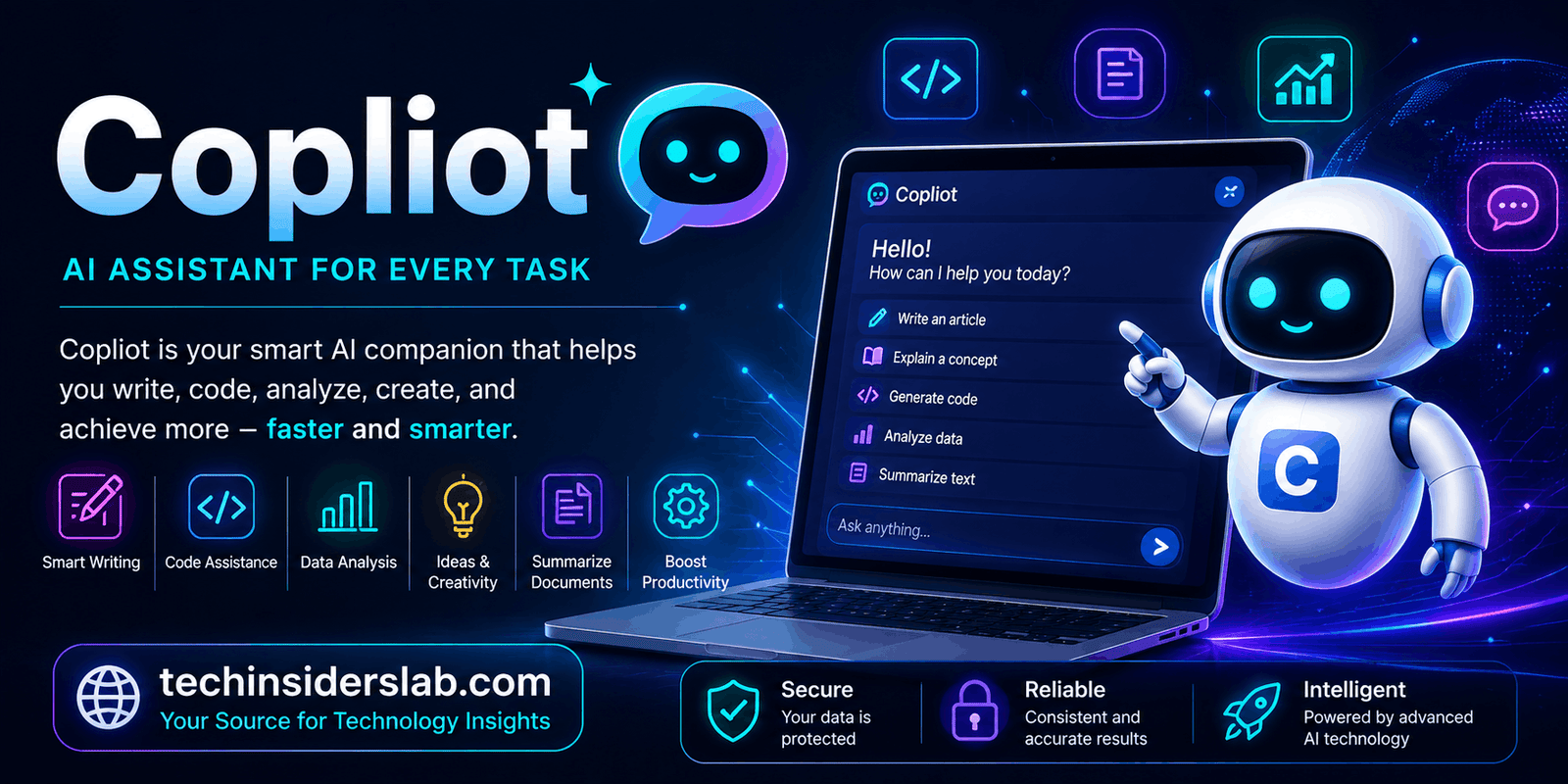
The technology industry is changing rapidly, and artificial intelligence has become one of the most important developments of the digital age. People now use AI tools for writing, research, coding, productivity, data analysis, communication, and many other tasks. Within this growing AI landscape, the keyword Copliot is increasingly searched by people who are looking for information about modern AI assistant technology.
In most cases, Copliot refers to “Copilot,” which is the commonly used spelling for a range of AI-powered assistant technologies. The spelling “Copliot” is often used as a typo or alternative search query, while “Copilot” is the standard spelling used by technology companies and software platforms.
The idea behind a copilot is straightforward: artificial intelligence works alongside a human user to make digital tasks easier, faster, and more efficient. Instead of completely replacing people, AI assistants are designed to provide suggestions, generate content, analyze information, solve problems, and support users during their everyday work.
This guide explains what Copliot means, how the technology behind Copilot works, its major uses, benefits, limitations, and why AI copilots are becoming an important part of modern technology.
What Does Copliot Mean?
Copliot is generally a misspelled or alternative spelling of “Copilot.” The correct and widely recognized spelling in the technology industry is Copilot.
The word itself comes from aviation. A copilot is a person who works alongside the main pilot. The technology industry uses the same concept to describe AI assistants that work alongside human users.
In technology, a copilot can help a person complete tasks without necessarily taking complete control.
For example, an AI copilot can help someone:
- Write an article
- Draft an email
- Summarize a document
- Analyze information
- Generate computer code
- Create ideas
- Prepare presentations
- Answer questions
- Automate repetitive tasks
- Explain complicated topics
Therefore, when someone searches for Copliot, they are often looking for information about AI-powered Copilot technology.
Why Is Copliot Related to Artificial Intelligence?
Copilot technology is closely connected with artificial intelligence (AI) because modern copilots rely on AI models to understand instructions and generate useful responses.
Traditional software normally requires users to operate menus, buttons, commands, and predefined functions. AI copilots introduce a more conversational approach.
A user can describe what they want in normal language, and the AI attempts to understand the request.
For example, instead of manually creating an outline, a user might tell an AI assistant:
“Create an outline for an article about artificial intelligence.”
The copilot can then generate a starting structure.
This ability to understand natural-language instructions is one of the main reasons AI copilots have become popular.
How Does Copliot Technology Work?
Although different Copilot products use different technologies, the basic process is similar.
First, the user provides a prompt or instruction. The AI system analyzes the request and determines what type of response or action may be appropriate.
Depending on the specific platform, the system may also use additional context, such as documents, files, conversations, code, business information, or other authorized data.
The AI model then generates a response.
A simplified process looks like this:
User Prompt → AI Understanding → Context Processing → Response Generation → Human Review
The final step is particularly important.
AI-generated content should not automatically be assumed to be correct. Users should review important information before using it.
Main Uses of Copliot
AI copilot technology can be used in many different areas.
1. Writing and Content Creation
One of the most common applications is writing assistance.
A copilot can help users create:
- Blog outlines
- Articles
- Emails
- Product descriptions
- Reports
- Social media content
- Summaries
- Business documents
It can also rewrite existing content and adjust its tone or structure.
For writers, this can reduce the time required to create an initial draft.
2. Programming and Coding
AI copilots have become particularly important in software development.
Coding assistants can suggest code, explain programming concepts, identify possible problems, and help developers complete repetitive coding tasks.
A developer can describe what they want to build, and the AI may provide a code suggestion.
However, developers should always test and review AI-generated code because it can contain bugs, security problems, or incorrect assumptions.
3. Research and Information
Copilot-style AI tools can help users understand complicated subjects.
They can summarize information, explain concepts in simpler language, organize ideas, and help users identify important points.
This can be useful for students, researchers, professionals, and general technology users.
AI research assistance is most effective when users verify important information using reliable sources.
4. Productivity
Another major purpose of Copilot technology is improving productivity.
An AI assistant can help users organize information, create plans, draft communications, summarize meetings, and complete repetitive digital tasks.
Instead of spending a large amount of time on preparation, users can use AI to create a starting point and then focus on reviewing and improving the result.
5. Data Analysis
Some AI copilots can assist with data-related tasks.
Users may ask questions about datasets, request explanations of trends, or ask for help creating formulas and analytical approaches.
This makes complex data easier for non-technical users to explore.
However, important business or financial decisions should not depend entirely on AI-generated analysis.
Benefits of Copliot
Saves Time
One of the biggest advantages of AI assistants is speed.
Tasks that previously required significant manual effort can sometimes be completed much faster with AI assistance.
Improves Productivity
Copilots can help users handle repetitive tasks while allowing them to focus on more important activities.
Supports Creativity
AI can provide brainstorming ideas, alternative approaches, headlines, outlines, and creative suggestions.
This can be especially useful when someone is struggling to get started.
Makes Technology Easier
People who are not highly technical can use natural language to interact with AI tools.
They do not necessarily need to understand complex commands before asking for assistance.
Helps With Learning
A copilot can explain complicated concepts in different ways.
For example, a student can ask for a technical explanation, then request a simpler version with examples.
Copliot in Modern Business
Businesses are increasingly interested in AI copilots because they can potentially improve employee productivity.
Different departments can use AI assistance for different purposes.
Marketing teams can use AI for content ideas. Sales teams can use it to organize information and prepare communications. Developers can use coding assistants. Customer service teams can use AI to summarize conversations and support responses.
Businesses can also use specialized AI assistants for cybersecurity, data analysis, automation, and enterprise applications.
However, organizations need clear rules for AI usage. Data privacy, access permissions, security, accuracy, and human oversight are important considerations.
Copliot vs Traditional Software
Traditional software generally works according to predefined commands and interfaces.
AI copilots provide a more flexible interaction model.
For example, traditional software may require users to navigate several menus to perform a task. A copilot may allow the user to describe the desired result in natural language.
This does not mean traditional software is becoming unnecessary. Instead, AI can become an additional layer that makes existing software easier to use.
The future may involve people using traditional applications while AI assistants help them interact with those applications more efficiently.
Limitations of Copliot
Although AI copilots are powerful, they are not perfect.
AI Can Make Mistakes
AI systems can produce incorrect information. Sometimes the response may sound confident even when the underlying information is wrong.
Important information should therefore be verified.
Poor Prompts Can Produce Poor Results
The quality of an AI response often depends on the quality of the instruction.
A vague prompt may produce a generic answer.
Clear instructions usually provide better results.
Privacy Needs Attention
Users should understand what information their AI tool can access and how that information is handled.
Sensitive information should only be shared when permitted by the applicable privacy and organizational policies.
Human Judgment Remains Important
AI can provide suggestions, but people should remain responsible for important decisions.
This is especially important in areas involving financial, legal, medical, security, or business-critical information.
How to Get Better Results From Copliot
Users can improve AI results by writing clear prompts.
Instead of:
“Write about technology.”
A better instruction would be:
“Write a beginner-friendly 1,000-word article about artificial intelligence with clear headings, practical examples, benefits, limitations, and a short conclusion.”
A strong prompt can include:
- The exact task
- Topic
- Audience
- Desired format
- Length
- Tone
- Important requirements
Users can also ask follow-up questions. If the first response is too complicated, they can ask the AI to simplify it. If it is too short, they can request more detail.
Is Copliot the Same as Copilot?
For most searches, Copliot and Copilot are not two separate technologies.
“Copilot” is the standard spelling used for AI assistant products and services, while “Copliot” is generally a misspelling or alternative search spelling.
This distinction is important for people researching the keyword.
If someone searches for “Copliot,” they will usually find information about Copilot technology.
For SEO purposes, content targeting the keyword Copliot should therefore address the user’s likely intent while naturally explaining the correct spelling.
The Future of Copliot Technology
AI copilots are likely to become more deeply integrated into everyday software.
Instead of using AI only as a chatbot, people may increasingly use AI assistants that can understand context, interact with applications, analyze information, and help complete multi-step workflows.
This development could affect many industries.
Education may use AI for personalized learning. Businesses may use AI for productivity and automation. Developers may rely on AI coding assistance. Security professionals may use AI to investigate threats. Content creators may use AI for research and production.
The long-term goal is not simply to create software that can answer questions, but to create digital assistants that can meaningfully support people in completing complex tasks
Conclusion
Copliot, commonly written as Copilot, represents the growing concept of AI-powered digital assistance. The technology allows people to work alongside artificial intelligence instead of relying entirely on manual processes.
From writing and research to programming, productivity, data analysis, automation, and business workflows, Copilot-style tools can help users complete many tasks faster and more efficiently.
However, AI should be treated as an assistant rather than an unquestionable source of truth. Users should verify important information, protect sensitive data, and apply human judgment to significant decisions.
As artificial intelligence continues to develop, Copilot technology is likely to become an increasingly familiar part of modern computing. Understanding what Copliot means and how Copilot-style AI assistants work can help users make better use of the rapidly changing technology landscape.