introduction
When professionals need dependable equipment for demanding jobs, choosing the right tools can make a major difference. RIDGID Tools are widely recognized in the professional tool industry, particularly for plumbing, pipework, construction, maintenance, inspection, and mechanical applications.
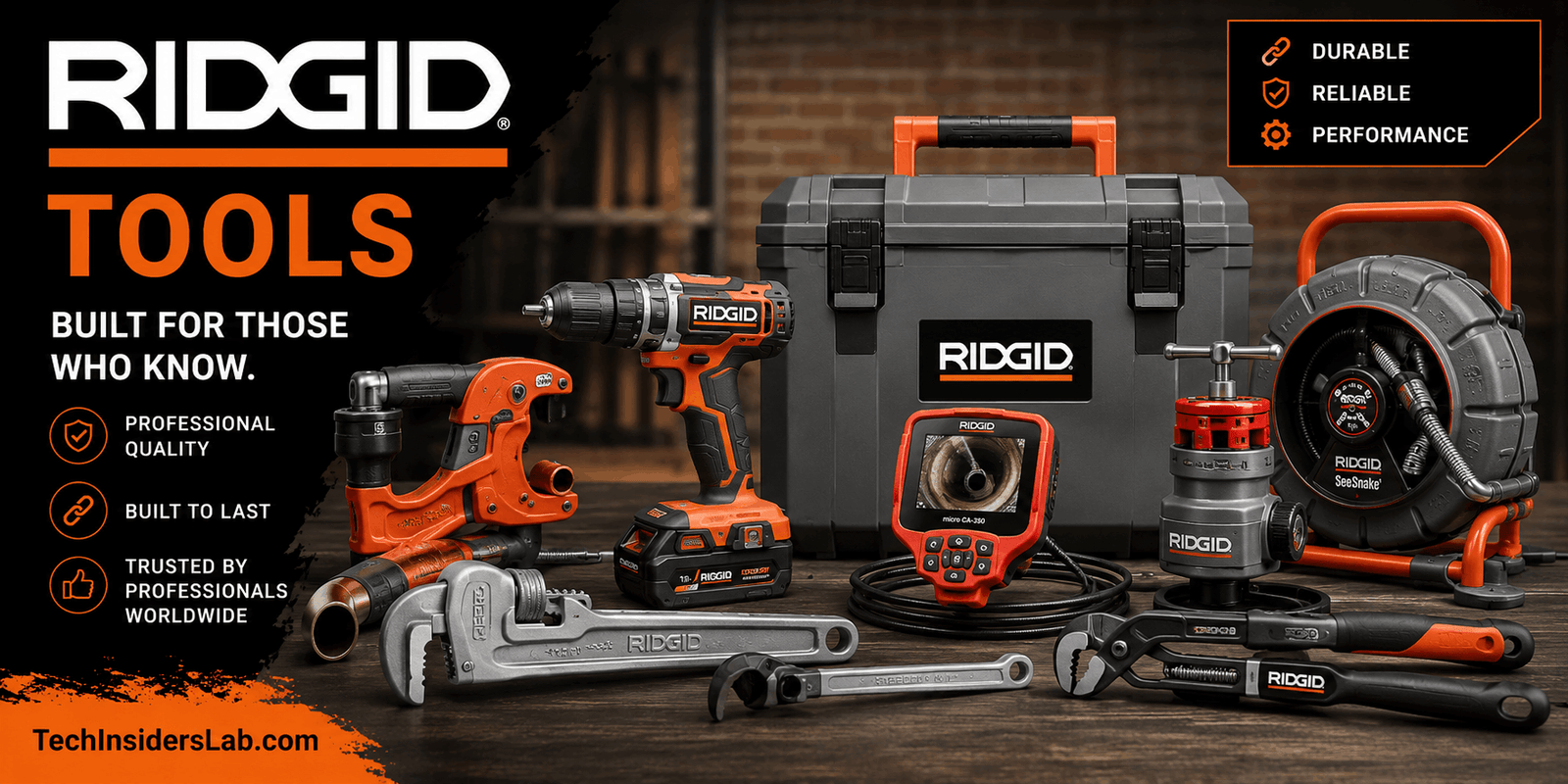
RIDGID has built its reputation around durable equipment designed for challenging working environments. Its product range includes everything from traditional pipe tools and wrenches to modern inspection cameras, drain-cleaning machines, presses, diagnostic equipment, and cordless solutions.
Whether you are a professional plumber, contractor, technician, maintenance worker, or serious DIY user, understanding the different types of RIDGID Tools can help you select equipment that matches your specific job.
What Are RIDGID Tools?
RIDGID Tools are professional-grade tools and equipment produced under the RIDGID brand. The brand is especially associated with plumbing and pipeworking equipment, although its product portfolio extends into several other professional industries.
RIDGID products are designed around practical job-site requirements. Many tools are built to withstand frequent use, demanding workloads, and environments where reliability is important.
The brand’s product categories include:
- Pipe and tubing tools
- Plumbing tools
- Drain-cleaning equipment
- Power tools
- Hand tools
- Inspection equipment
- Pressing and joining tools
- Threading machines
- Diagnostic equipment
- Job-site and storage solutions
This broad selection makes RIDGID relevant to both specialized tradespeople and professionals who need dependable equipment for maintenance and construction work.
A Brief History of RIDGID
RIDGID has a long history in the professional tool market. The brand became particularly well known for equipment used by plumbers and pipefitters.
One of the important characteristics of RIDGID’s development has been its focus on tools designed for real-world trade applications. Instead of concentrating only on general-purpose equipment, the brand has developed specialized products for tasks such as pipe threading, drain cleaning, inspection, pressing, cutting, and pipe preparation.
Over time, the product range expanded as professional trades changed. Modern RIDGID equipment now combines traditional mechanical designs with newer technologies, including digital inspection systems, electronic diagnostics, and cordless equipment.
This combination of traditional expertise and modern technology is one reason the brand remains relevant to professional users.
Major Categories of RIDGID Tools
1. RIDGID Plumbing Tools
Plumbing is one of the areas most strongly associated with RIDGID.
Professional plumbers can find equipment designed for cutting, joining, threading, gripping, inspecting, and maintaining pipe systems.
Common plumbing-related tools include:
- Pipe wrenches
- Tubing cutters
- Pipe cutters
- Reamers
- Press tools
- Threading equipment
- Drain-cleaning machines
- Inspection cameras
A quality pipe wrench, for example, can provide the strong grip required to tighten or loosen threaded pipe connections. Tubing cutters allow professionals to make controlled cuts without unnecessarily damaging the pipe.
2. Pipe Threading Tools
Pipe threading is another important application for RIDGID equipment.
Threading machines are designed to create accurate threads on pipe so fittings can be securely connected. Professional threading equipment can be particularly useful on construction sites, plumbing projects, industrial installations, and maintenance jobs.
For businesses that regularly work with threaded pipe, having appropriate threading equipment can improve productivity while helping maintain consistency between connections.
3. Drain Cleaning Equipment
Blocked drains are a common plumbing problem, and professional drain-cleaning equipment can make difficult jobs considerably easier.
RIDGID offers various types of drain-cleaning solutions, including equipment designed for different pipe sizes and blockage conditions.
Depending on the application, professionals may use:
- Drain snakes
- Cable machines
- Sectional machines
- Water-jetting equipment
- Drain inspection systems
The right drain-cleaning tool depends on the size of the drain, type of blockage, access point, and working environment.
4. Inspection Cameras
Modern plumbing and maintenance work often requires professionals to inspect areas that cannot easily be seen with the naked eye.
RIDGID inspection equipment can help technicians examine pipes, drains, and other difficult-to-access spaces.
Inspection cameras can provide visual information about problems such as:
- Cracks
- Blockages
- Corrosion
- Root intrusion
- Damaged pipe sections
- Structural problems
Instead of immediately opening walls or excavating an area, technicians can sometimes use inspection technology to identify the problem first.
This can save time and help professionals make more informed decisions about repairs.
5. Hand Tools
RIDGID also offers a variety of hand tools for professional applications.
Examples include wrenches, cutters, pliers, screwdrivers, and other equipment used during installation and maintenance.
Hand tools remain important even when a job involves advanced technology because many tasks still require manual adjustment, tightening, cutting, or positioning.
For professional users, durability and comfortable handling are especially important because tools may be used repeatedly throughout the workday.
6. Press Tools
Press technology has become increasingly important in modern plumbing and mechanical installations.
Press tools can join compatible pipe and fitting systems without requiring traditional methods such as soldering or threaded connections in certain applications.
The advantages of press systems can include:
- Faster installation
- Consistent connections
- Reduced preparation time
- Less dependence on open flames in applicable systems
- Convenient operation in confined areas
However, professionals should always use the correct tool, jaws, fittings, and manufacturer-approved procedures for the specific piping system.
Why Do Professionals Choose RIDGID Tools?
Durability
Professional tools need to survive demanding working conditions. RIDGID has built much of its reputation around durable equipment intended for frequent professional use.
Durability is particularly valuable for contractors and technicians who depend on their tools for daily work.
Professional Design
Many RIDGID products are designed around specific trade applications rather than being generic tools.
This specialized approach can make equipment easier to select for particular jobs.
Wide Product Range
Another benefit is the variety of products available under the RIDGID name.
A professional may be able to use products from the same brand for different stages of a project, including preparation, installation, inspection, and maintenance.
Specialized Solutions
Some jobs require specialized equipment that ordinary household tools cannot provide.
For example, clearing a serious drain blockage or inspecting the inside of a pipe may require equipment specifically designed for that purpose.
RIDGID’s specialized product categories address many of these professional requirements.
RIDGID Tools for Construction Professionals
Construction professionals often work with plumbing systems, mechanical installations, piping, and maintenance tasks.
The right RIDGID equipment can support activities such as:
- Pipe preparation
- Pipe cutting
- Threading
- Fitting installation
- Drain maintenance
- Inspection
- Mechanical work
- Job-site repairs
Contractors should choose tools based on the project’s specifications rather than simply selecting the most powerful or expensive option.
How to Choose the Right RIDGID Tool
Choosing the right tool begins with understanding the job.
Identify the Application
First determine what you need to accomplish. A drain-cleaning machine, pipe wrench, inspection camera, and threading machine all perform completely different functions.
Consider Pipe Size and Material
For plumbing and pipework, pipe diameter and material are important factors.
A tool designed for one application may not be appropriate for another. Always check the manufacturer’s specifications before purchasing or operating equipment.
Evaluate Frequency of Use
A homeowner who occasionally performs basic maintenance may have different requirements from a professional plumber using equipment every day.
Frequent users should consider durability, ergonomics, maintenance requirements, and long-term operating costs.
Consider Portability
Some jobs happen inside workshops, while others take place in cramped rooms, basements, commercial buildings, or outdoor construction sites.
Portable and cordless options may be more convenient when mobility is important.
Check Compatibility
Compatibility is particularly important with specialized equipment such as press tools, jaws, batteries, accessories, and pipe systems.
Using incompatible components can lead to poor results or equipment damage.
RIDGID Tools vs. Basic DIY Tools
The biggest difference between professional-grade RIDGID equipment and basic DIY tools is generally the intended use.
DIY tools are often designed for occasional household tasks. Professional tools are typically developed for repeated use, demanding environments, and specialized applications.
That does not mean every homeowner needs professional equipment. If you only need to tighten a fitting occasionally, a basic tool may be sufficient.
However, professionals who depend on their equipment every day may benefit from investing in tools designed for heavier workloads.
Maintenance Tips for RIDGID Tools
Even high-quality tools require proper care.
Clean Tools After Use
Remove dirt, moisture, oil, and debris after completing a job. Cleaning helps keep moving components operating properly.
Inspect Before Operation
Look for damaged handles, worn components, loose parts, damaged cables, or other signs of trouble before using equipment.
Lubricate When Required
Certain mechanical tools require lubrication. Follow the applicable manufacturer’s instructions rather than applying random lubricants.
Store Tools Properly
Keep equipment in a dry and protected environment. Proper storage can reduce corrosion and unnecessary wear.
Replace Worn Parts
Do not continue using severely worn components simply because the tool still operates. Replacing consumable or worn parts can improve performance and safety.
Safety Considerations
Professional tools can be powerful, and improper use can cause injuries or equipment damage.
Before using RIDGID equipment:
- Read the relevant instructions.
- Wear appropriate personal protective equipment.
- Inspect the tool before operation.
- Use the correct accessories.
- Keep hands away from moving components.
- Maintain a clean working area.
- Disconnect or secure equipment when performing maintenance.
- Follow applicable workplace safety procedures.
Electrical, powered, cutting, drain-cleaning, and mechanical equipment require particular attention to safe operating practices.
Are RIDGID Tools Good for Homeowners?
RIDGID Tools can be useful for homeowners, but whether they are the right choice depends on the task.
For simple household repairs, purchasing specialized professional equipment may not always be necessary. On the other hand, homeowners who regularly work on plumbing, renovation, workshop, or maintenance projects may appreciate professional-grade equipment.
The key is to match the tool to the actual requirement instead of buying equipment simply because it has a professional reputation.
Conclusion
RIDGID Tools represent a broad range of professional equipment designed for plumbing, pipework, construction, maintenance, inspection, and mechanical applications. From traditional pipe wrenches and cutters to modern inspection systems and press technology, the brand offers solutions for many demanding jobs.
The best RIDGID tool is not necessarily the largest or most expensive model. The right choice depends on the application, material, pipe size, frequency of use, portability requirements, and compatibility with the system being worked on.
For professionals, investing in reliable tools can improve productivity and make difficult tasks more manageable. With proper selection, safe operation, regular maintenance, and appropriate storage, RIDGID equipment can remain a valuable part of a professional or serious DIY toolkit for years to come.