introduction
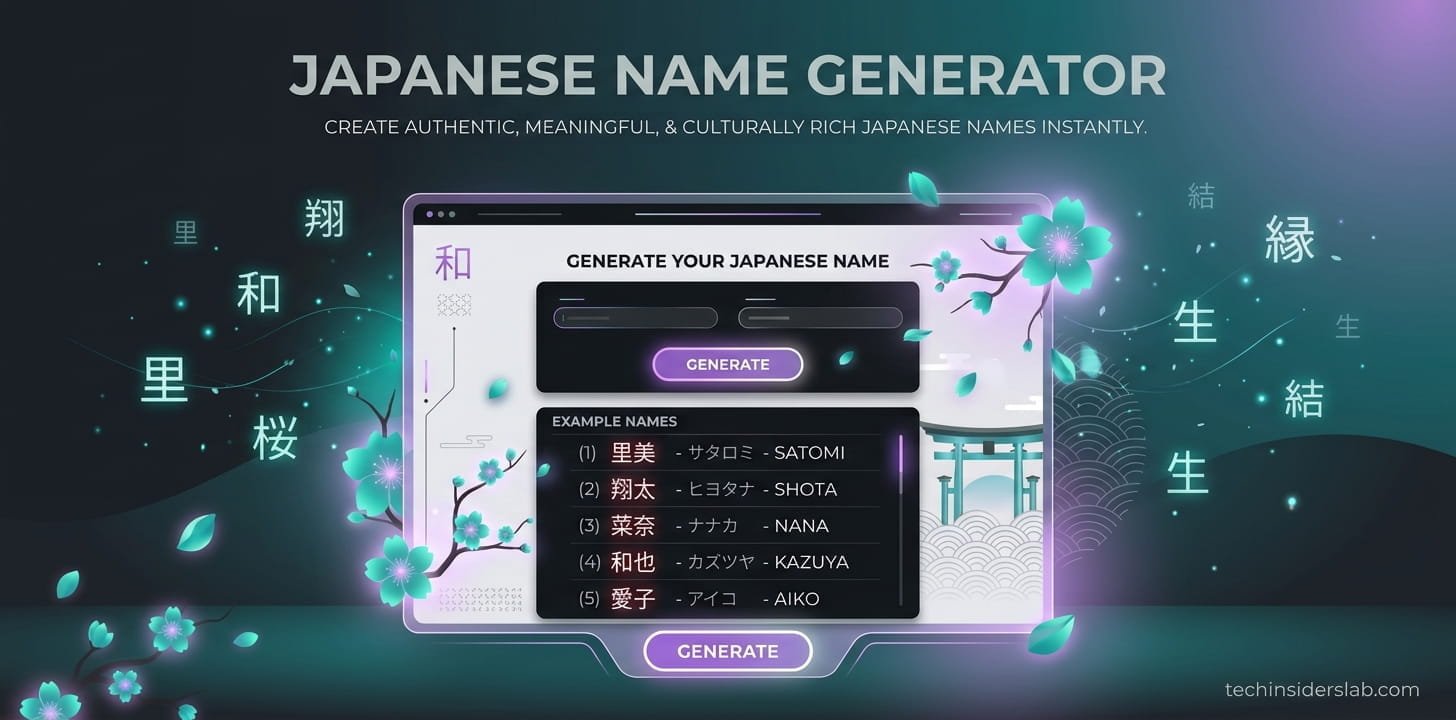
A Japanese Name Generator is an online tool designed to create Japanese-style names for different purposes, including characters, usernames, stories, games, creative projects, social profiles, and cultural exploration. Instead of choosing a name randomly, a good generator can combine Japanese-sounding readings with commonly used name elements and, in some cases, provide meanings or Kanji suggestions.
Japanese names are especially interesting because their appearance and pronunciation can change depending on the characters used. A name may sound simple when written in Roman letters, but its Kanji can add a completely different layer of meaning and visual identity.
For people who are unfamiliar with Japanese naming conventions, a Japanese Name Generator can be a convenient starting point. However, understanding how Japanese names actually work makes generated results much more useful and authentic.
What Is a Japanese Name Generator?
A Japanese Name Generator is an online name-generation tool that creates names inspired by Japanese naming patterns. Depending on the tool, users may be able to select preferences such as gender, style, meaning, personality, or name length.
Some generators produce names written in Roman letters, while more advanced tools may include Kanji, Hiragana, Katakana, pronunciation, and English meanings.
For example, a generator might suggest a name such as:
- Haruto
- Yuki
- Sakura
- Ren
- Aoi
- Akira
These names can then be presented with possible Japanese characters and meanings. However, it is important to understand that the same pronunciation can sometimes be represented by different Kanji. Japanese naming therefore involves more than simply translating an English name into Japanese.
Why Are Japanese Names Different?
One of the most important characteristics of Japanese names is the relationship between sound, writing, and meaning.
Japanese names are commonly written using Kanji, although Hiragana and Katakana can also be used. Kanji characters carry meanings, so the characters selected for a name can influence how that name is interpreted.
For example, different Kanji can have different meanings even when they share the same pronunciation. This means two people could have names that sound similar but are written differently.
Japanese names also traditionally follow a different order from the common English-language format. In Japanese contexts, the family name normally comes before the given name. For example, a person whose family name is Suzuki and given name is Ichiro would traditionally be written as Suzuki Ichiro.
This is an important detail for anyone using a Japanese Name Generator for a realistic character or fictional identity.
Understanding Kanji in Japanese Names
Kanji is one of the most important parts of Japanese naming.
Kanji characters originated from Chinese writing but are an essential part of modern Japanese written language. Individual characters can communicate meanings or concepts, which is why they are often carefully selected when creating names.
Japanese given names commonly use Kanji associated with ideas such as:
- Nature
- Light
- Beauty
- Strength
- Intelligence
- Love
- Seasons
- Flowers
- Water
- Sky
- Hope
However, the meaning of a Kanji character should not be treated as a complete translation of the person’s name. A name is a combination of its characters, pronunciation, cultural usage, and context.
Japan’s Ministry of Justice maintains information about Kanji that can be used in children’s names. It explains that characters listed in the commonly used Kanji list and the Kanji specifically designated for personal names can be used for children’s names.
This distinction is useful when evaluating the quality of an online Japanese Name Generator.
Japanese Name Generator With Meanings
One of the most useful features a name generator can offer is name meaning.
Instead of generating only a word that sounds Japanese, a quality tool can show:
Name: Haruto
Romanization: Haruto
Possible Kanji: 陽翔
Style: Modern
Meaning: A name associated with ideas such as sunlight and soaring
The exact meaning depends on the Kanji selected. This is why users should not assume that every Japanese name has one fixed English translation.
A generator that provides multiple Kanji possibilities can be particularly helpful for writers and gamers because it gives them greater control over the personality or symbolism associated with a character.
Hiragana, Katakana, and Kanji: What’s the Difference?
Understanding the three major Japanese writing systems can help users get more from a Japanese Name Generator.
Kanji
Kanji characters generally carry meaning and are commonly used in Japanese names.
For example, a name can be written using characters that represent concepts such as light, flowers, mountains, or other ideas.
Hiragana
Hiragana is a phonetic Japanese writing system. It is often used for grammatical elements and words that are not written with Kanji.
Names can also be written in Hiragana, particularly when a softer or simpler visual style is desired.
Katakana
Katakana is another phonetic writing system and is frequently used for foreign words, loanwords, and some names or stylistic purposes.
Japan’s Geospatial Information Authority explains that Japanese pronunciation can be represented using Kana characters and describes the rules for sounds such as long vowels, contracted sounds, and double consonants.
For a name generator, this means accurate pronunciation and transliteration matter just as much as the visual appearance of the name.
How Does a Japanese Name Generator Work?
Different generators use different methods, but a typical system can work through several stages.
First, the tool identifies the user’s preferences. These might include gender, naming style, personality, meaning, or whether the user wants a traditional or modern name.
Next, the generator selects suitable Japanese name components from its database.
If Kanji support is available, the system can associate the selected pronunciation with possible Kanji combinations.
Finally, the generator presents the result, often with Romanized spelling and an explanation of the suggested meaning.
More advanced AI-based generators may use language models to produce suggestions based on a description such as:
“Create a Japanese name for a calm and intelligent fantasy character.”
The result can then be refined by changing the desired personality, historical period, or aesthetic.
Traditional vs Modern Japanese Names
A useful Japanese Name Generator should ideally distinguish between traditional and modern naming styles.
Traditional names may have a more classic sound and may be associated with older naming patterns.
Modern names can have different phonetic structures and may be influenced by contemporary naming preferences.
Some names remain popular across generations, while others are strongly associated with particular periods.
This matters for fiction writers. If you are creating a character who lives in historical Japan, a modern-sounding name may feel out of place. Likewise, a contemporary character might sound unnatural if given an extremely old-fashioned name.
Therefore, a good generator should ideally provide style options such as:
- Traditional Japanese
- Modern Japanese
- Classic
- Elegant
- Nature-inspired
- Anime-inspired
- Fantasy
- Strong
- Cute
- Gender-neutral
These categories help users narrow down results according to their specific project.
Japanese Name Generator for Characters
One of the most popular uses for Japanese name generators is character creation.
Writers, game developers, anime fans, and role-playing communities often need names that match a character’s personality.
For example, a writer might need:
A brave male warrior: a strong-sounding Japanese name
A peaceful female character: a softer nature-inspired name
A mysterious character: a name with an unusual but believable style
A fantasy hero: a Japanese-inspired name with symbolic Kanji
A generator can provide inspiration much faster than manually searching through hundreds of names.
However, writers should research the final name before publishing a culturally important story. A name that sounds Japanese does not necessarily mean it is a natural or commonly used Japanese personal name.
Japanese Name Generator for Gaming
Gamers can also use Japanese Name Generators to create usernames, character names, clan identities, or role-playing characters.
A short name is often more practical for gaming because it is easier to remember and type.
For example, a generator might produce names inspired by:
- Samurai themes
- Ninja characters
- Anime-style heroes
- Fantasy warriors
- Japanese mythology
- Nature
- Cyberpunk themes
Users can then choose whether they want the name displayed in English letters, Japanese characters, or both.
One useful approach is to keep the generated name short while using Kanji or a meaningful Japanese word as part of the visual identity.
Are AI Japanese Name Generators Accurate?
AI can be useful for generating creative suggestions, but creativity and linguistic accuracy are not the same thing.
An AI system may produce a combination that looks Japanese but is uncommon, unnatural, or culturally inappropriate. It may also assign a meaning to Kanji without sufficiently explaining how native Japanese speakers would interpret the combination.
Therefore, users should treat AI-generated names as suggestions rather than guaranteed authentic Japanese names.
This is especially important if the name will be used professionally, legally, or for a real child.
Japan has introduced rules concerning the reading, or furigana, of names in the family registry. The Ministry of Justice states that name readings should be generally recognized as readings that can be used for names, and gives examples of readings that are considered problematic because they have little or no connection with the Kanji.
The new system began on May 26, 2025, making the connection between a name’s written characters and its reading an especially relevant topic when discussing authentic Japanese naming.
What Makes a Good Japanese Name Generator?
Not every generator produces equally useful results. A high-quality tool should ideally provide more than random Japanese-looking words.
Here are some features users should look for:
1. Meaning
The tool should explain the meaning or symbolism associated with the suggested Kanji.
2. Pronunciation
A Romanized pronunciation or phonetic guide makes the name easier for non-Japanese speakers to understand.
3. Kanji Options
Providing multiple Kanji possibilities for a similar pronunciation gives users more flexibility.
4. Name Style
Options such as traditional, modern, masculine, feminine, neutral, elegant, or fantasy can make the results more relevant.
5. Cultural Context
The best tools should clearly distinguish between authentic Japanese names and names that are merely Japanese-inspired.
6. Simple Interface
Users should be able to enter their preferences and generate results without complicated steps.
Common Mistakes When Using a Japanese Name Generator
There are several mistakes people can make when selecting a generated name.
Mistake 1: Choosing a Name Only Because It Sounds Cool
A name may sound attractive to an English speaker but have an unusual or unintended meaning in Japanese.
Mistake 2: Ignoring Kanji
If the generator provides Kanji, users should check what those characters mean rather than choosing them only because they look interesting.
Mistake 3: Assuming Every Japanese Name Is Traditional
Some names commonly seen in anime or fantasy content may not represent ordinary contemporary Japanese naming practices.
Mistake 4: Treating AI Output as a Native Verification
AI can generate creative combinations, but it does not automatically guarantee that a native Japanese speaker would consider the name natural.
Mistake 5: Using a Real Name Without Understanding It
If a generated name is intended for a real person, legal document, business, or official identity, additional verification is essential.
Why Use a Japanese Name Generator?
The biggest advantage is convenience.
Researching Japanese names manually can take considerable time, especially when the user wants a specific meaning, pronunciation, and writing style.
A generator can provide dozens of possibilities in seconds. This makes it useful for brainstorming and creative projects.
It can also help users discover Japanese vocabulary, Kanji, pronunciation patterns, and cultural naming concepts along the way.
For writers, the tool can speed up character development. For gamers, it can provide memorable character names. For students, it can be a starting point for learning about Japanese writing and naming traditions.
Conclusion
A Japanese Name Generator is a useful online tool for quickly discovering Japanese-style names for characters, games, stories, usernames, and creative projects. The best generators go beyond random words by providing Kanji, pronunciation, meanings, and different naming styles.
However, a generated name should be treated as a starting point rather than a guarantee of authentic Japanese usage. Japanese names can have different meanings depending on the Kanji and reading, so important or real-world names should be verified before use.
Overall, a good Japanese Name Generator saves time, provides creative inspiration, and helps users explore Japanese naming traditions in a simple way.