introduction
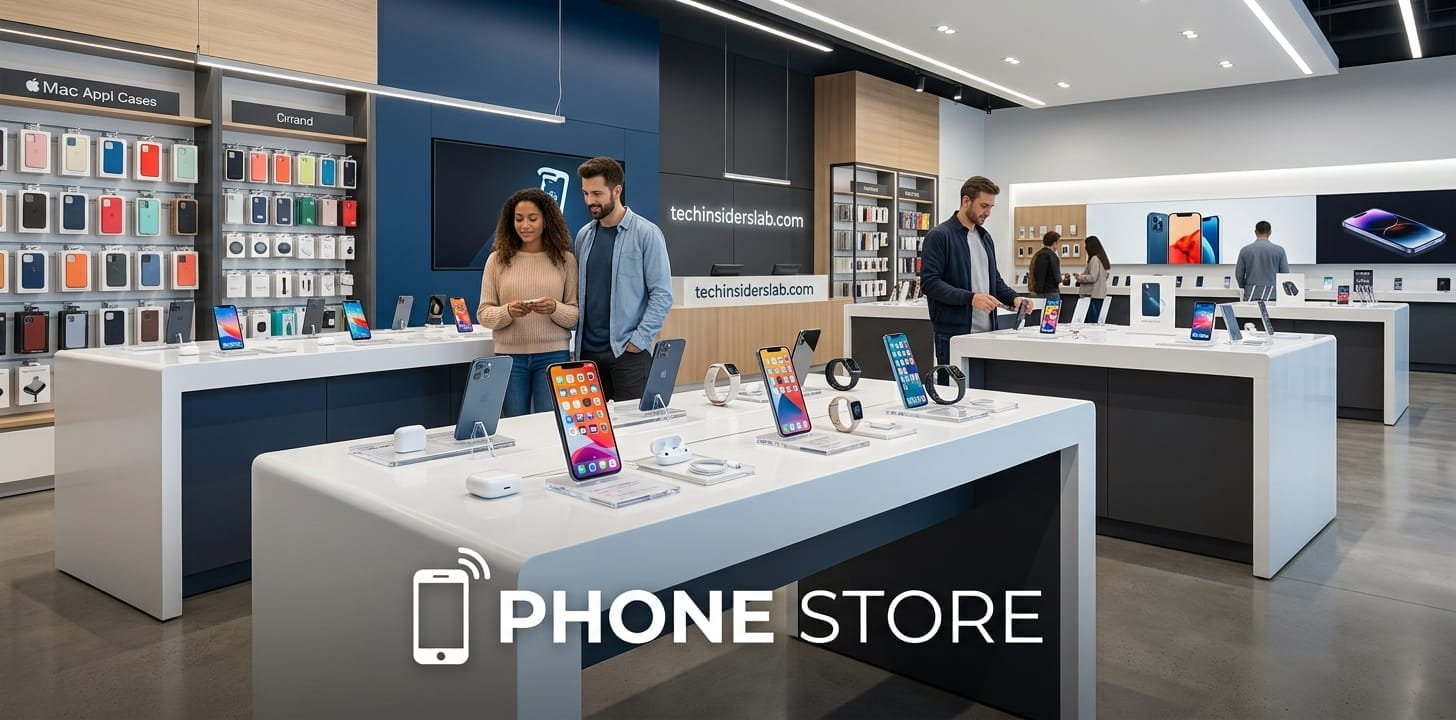
A Phone Store is more than a place to purchase a mobile phone. Today, a modern phone store can provide smartphones, accessories, device upgrades, trade-in options, warranties, technical guidance, and other mobile technology products. With so many smartphone models available, choosing the right device can sometimes be confusing. A good phone store can make that decision easier by helping customers compare features, prices, and specifications according to their needs.
Smartphones have become essential everyday devices. People use them for communication, online shopping, banking, photography, entertainment, education, business, gaming, and social media. Because of this, buying a phone is no longer simply about choosing the newest model. The right smartphone depends on how a person plans to use it, how much they want to spend, and which features matter most.
What Is a Phone Store?
A Phone Store is a retail business that sells mobile phones and related technology products. Depending on the store, customers may find smartphones from brands such as Apple, Samsung, Google, Xiaomi, OnePlus, Motorola, and other manufacturers.
A typical phone store may offer new smartphones as well as accessories such as chargers, cables, cases, screen protectors, wireless earbuds, power banks, and smartwatches.
Some stores also provide additional services, including phone repairs, software assistance, SIM-related services, trade-ins, data transfers, and device setup.
The biggest advantage of visiting a phone store is that customers can compare different devices and receive guidance before making a purchase.
Why Choosing the Right Phone Matters
A smartphone can remain part of your daily routine for several years, so choosing the right model is important. A phone that looks attractive may not necessarily be the best option for your specific needs.
For example, a mobile gamer may prioritize a powerful processor, high refresh-rate display, and reliable cooling. A photography enthusiast may care more about camera quality, image processing, storage, and display accuracy. Someone who primarily uses a phone for calls, messaging, and social media may prefer a reliable mid-range phone with strong battery life.
Official smartphone buying guides similarly recommend considering factors such as budget, screen size, camera quality, battery life, storage, and connectivity when selecting a phone.
Popular Types of Smartphones
Phone stores usually organize smartphones into different price and performance categories.
Budget Smartphones
Budget phones are designed for customers who want essential smartphone functionality without spending heavily.
They can be suitable for calling, messaging, social media, browsing, video streaming, and everyday applications. Although they may not offer the most advanced cameras or processors, modern budget phones can provide a useful combination of performance and affordability.
Mid-Range Smartphones
Mid-range smartphones provide a balance between price and performance. They often include better displays, cameras, processors, and battery systems than entry-level devices.
For many customers, this category offers the best overall value because it provides useful modern features without the price of a premium flagship.
Flagship Smartphones
Flagship phones represent the premium end of the smartphone market. They generally focus on advanced processors, high-quality displays, sophisticated camera systems, premium materials, AI features, and long-term software support.
For customers who want the latest technology and are comfortable paying more, flagship smartphones can be attractive.
Foldable Phones
Foldable smartphones use flexible displays and specialized designs that allow a phone to open into a larger screen or fold into a more compact form.
They can be particularly interesting for users who want a combination of portability, multitasking, and larger display space. Samsung, for example, separates its Galaxy lineup into different experiences, including its traditional flagship S range and foldable Z range.
How to Choose a Smartphone
Choosing a phone becomes much easier when you focus on the features that actually matter to you.
1. Set Your Budget
The first step is deciding how much you can comfortably spend.
Having a clear budget prevents you from focusing only on expensive flagship devices when a more affordable phone may provide everything you need.
A good phone store should ideally offer options at different price levels so customers can compare value rather than simply choosing the most expensive device.
2. Check the Display
The display is one of the most frequently used parts of a smartphone.
Important factors include screen size, resolution, brightness, display technology, and refresh rate.
A larger screen can be useful for video, gaming, reading, and productivity, while a smaller phone may be easier to carry and operate with one hand.
A higher refresh rate can also make scrolling and supported animations feel smoother.
3. Consider Camera Quality
Camera specifications can be complicated because megapixels alone do not determine overall image quality.
When comparing phones, consider the main camera, ultrawide camera, telephoto capability, low-light performance, stabilization, video recording, and image-processing features.
For people who regularly create social media content, record videos, or take family photographs, camera performance may be one of the most important buying factors.
4. Look at Battery Life
Battery capacity is important, but it is not the only factor affecting battery life.
Screen technology, processor efficiency, software optimization, network usage, gaming, camera use, and background applications can all influence how long a phone lasts between charges.
Customers who spend long hours away from a charger should prioritize reliable battery performance and fast charging where available.
5. Choose the Right Storage
Storage determines how much space is available for applications, photos, videos, documents, games, and other files.
A customer who takes lots of photos and videos or installs many large applications may benefit from higher storage.
Buying a phone with enough storage from the beginning can help avoid running out of space later.
6. Check Performance
The processor and memory affect how smoothly a phone handles applications and multitasking.
Basic users may not need the most powerful chipset, while gamers, creators, and professionals may benefit from stronger performance.
RAM is another specification to consider, especially for users who regularly switch between multiple applications.
7. Consider 5G and Connectivity
Modern smartphones may support different generations of mobile connectivity, including 4G and 5G.
If your network and location support 5G, purchasing a compatible phone can provide access to faster mobile connectivity where available.
Other connectivity features worth checking include Wi-Fi, Bluetooth, NFC, GPS, and USB connectivity.
Android vs. iPhone
One of the biggest decisions customers make in a phone store is choosing between Android and iPhone.
Android smartphones are produced by many manufacturers and are available across a broad range of prices and designs. Android also provides considerable customization and supports devices ranging from budget models to premium foldables.
iPhone models are developed by Apple and are closely integrated with Apple’s wider ecosystem of products and services.
Neither platform is automatically best for everyone. The better choice depends on personal preference, existing devices, preferred applications, budget, and desired features.
Phone Store Accessories
A phone purchase often goes beyond the handset itself.
Phone Cases
A protective case can help reduce the risk of scratches and physical damage.
Cases are available in different styles, materials, colors, and protection levels.
Screen Protectors
Screen protectors can provide an additional layer of protection against scratches and minor impacts.
Chargers and Cables
Customers should make sure that chargers and cables are compatible with their smartphone’s charging requirements.
Using appropriate accessories can help ensure reliable charging performance.
Wireless Earbuds
Wireless earbuds are popular smartphone accessories for music, calls, podcasts, gaming, and video.
Many manufacturers now offer earbuds designed to integrate closely with their smartphone ecosystems.
Power Banks
A power bank can be useful for travelers, students, outdoor workers, and anyone who spends long periods away from a power outlet.
Buying a Phone From a Physical Store
One advantage of a physical phone store is the ability to see and handle a device before purchasing it.
Customers can evaluate the display, weight, design, camera placement, button positioning, and overall feel.
A physical store may also provide staff assistance, making it easier to compare several models.
Before purchasing, customers should confirm the exact model, storage capacity, color, warranty coverage, accessories included in the box, and return or exchange policy.
Buying a Phone Online
Online phone stores can provide a convenient way to compare multiple devices without visiting a physical location.
Online listings may also make it easier to compare specifications and prices.
However, customers should verify that they are purchasing from a reputable seller. Product authenticity, warranty coverage, return policies, seller reputation, and secure payment options are important considerations.
Buying directly from an official manufacturer can also provide additional benefits such as official warranty support and manufacturer-backed service. Samsung, for example, highlights official warranty, support, delivery, and trade-in benefits for customers purchasing directly through its platform.
New vs. Used Phones
A Phone Store may sell both new and pre-owned smartphones.
A new phone generally provides the newest condition, manufacturer warranty where applicable, and original packaging.
A used or refurbished phone can be less expensive, but customers should inspect its condition carefully.
Important things to check include battery health, screen condition, cameras, charging port, speakers, buttons, network compatibility, and whether the device is properly reset and unlocked.
The warranty and return policy are particularly important when purchasing a pre-owned device.
Phone Trade-In Programs
Trade-in programs allow customers to exchange an existing smartphone for credit or a discount toward another device.
This can reduce the effective cost of upgrading to a newer phone.
Trade-in values usually depend on factors such as model, age, storage, physical condition, and functionality.
Before trading in a phone, customers should back up their data, sign out of personal accounts, remove security locks, and perform a proper factory reset.
Official manufacturer programs can also offer trade-in options. Samsung, for example, currently promotes mobile trade-in options in Pakistan for customers upgrading to newer Galaxy devices.
Warranty and After-Sales Support
A phone’s price is not the only thing customers should consider.
Warranty and after-sales support can become extremely important if a device develops a hardware problem.
Before buying, ask about:
- Warranty duration
- What the warranty covers
- Authorized repair options
- Return or exchange period
- Battery coverage
- Accidental damage policies
- Software support
A reliable Phone Store should clearly explain these policies rather than leaving customers uncertain after purchase.
How to Find a Reliable Phone Store
Whether shopping online or in person, customers should evaluate the seller before making a purchase.
Look for a store with clear product information, transparent pricing, authentic products, reasonable return policies, and reliable customer support.
It is also useful to compare prices across multiple sellers rather than assuming the first offer is the best deal.
A trustworthy store should be able to answer basic questions about specifications, warranty, compatibility, accessories, and after-sales service.
Phone Store and Modern Technology
The smartphone market continues to evolve rapidly.
Artificial intelligence, improved cameras, foldable displays, faster connectivity, better battery efficiency, and ecosystem integration are becoming increasingly important parts of the mobile experience.
Current smartphone platforms increasingly highlight AI-powered features, connected devices, and specialized experiences for photography, productivity, gaming, and communication.
This means that a modern Phone Store is becoming more than a simple mobile retailer. It can serve as a technology destination where customers explore smartphones and related connected devices.
Why a Good Phone Store Matters
The right phone can improve communication, productivity, entertainment, photography, and everyday convenience.
However, the best smartphone is not necessarily the most expensive model. It is the device that provides the features you actually need at a price that fits your budget.
A good Phone Store helps customers make that decision by providing choices, accurate information, product comparisons, accessories, and after-sales support.
Instead of focusing only on specifications, customers should consider the complete ownership experience, including software support, warranty, battery performance, accessories, repair options, and long-term usability.
Conclusion
A Phone Store is an important destination for anyone looking to purchase a smartphone or upgrade their mobile technology. From budget-friendly devices to premium flagship phones and foldable models, customers now have more choices than ever.
The best way to choose a smartphone is to begin with your budget and daily requirements. Consider the display, camera, battery, storage, performance, connectivity, operating system, and software support before making a decision.
Accessories such as cases, screen protectors, chargers, earbuds, and power banks can also improve the overall smartphone experience. For customers upgrading from an older device, trade-in programs may provide another way to reduce the cost of a new phone.
Most importantly, choose a Phone Store that provides authentic products, transparent pricing, reliable warranty information, and good customer support. With the right research and a clear understanding of your needs, finding the right smartphone can be much easier and more rewarding.