
Bass Clarinet Bass: The Complete Guide to the Bass Clarinet
Introduction
The bass clarinet is one of the most unique and expressive instruments in the woodwind family. Famous for its rich, dark, and resonant tone, it extends the clarinet family’s range into lower registers while maintaining the flexibility and warmth that clarinets are known for. Most modern bass clarinets are pitched in B♭, sounding one octave plus a major second lower than written notes.
Today, the bass clarinet is widely used in symphony orchestras, concert bands, jazz ensembles, chamber groups, film scores, and contemporary music. Whether providing deep harmonic support or performing lyrical solo passages, it has become an essential instrument for composers and performers alike.
If you’re considering learning the instrument, purchasing your first bass clarinet, or simply want to understand how it works, this guide covers everything you need to know.
What Is a Bass Clarinet?
A bass clarinet is a larger member of the clarinet family designed to produce notes much lower than the standard B♭ soprano clarinet.
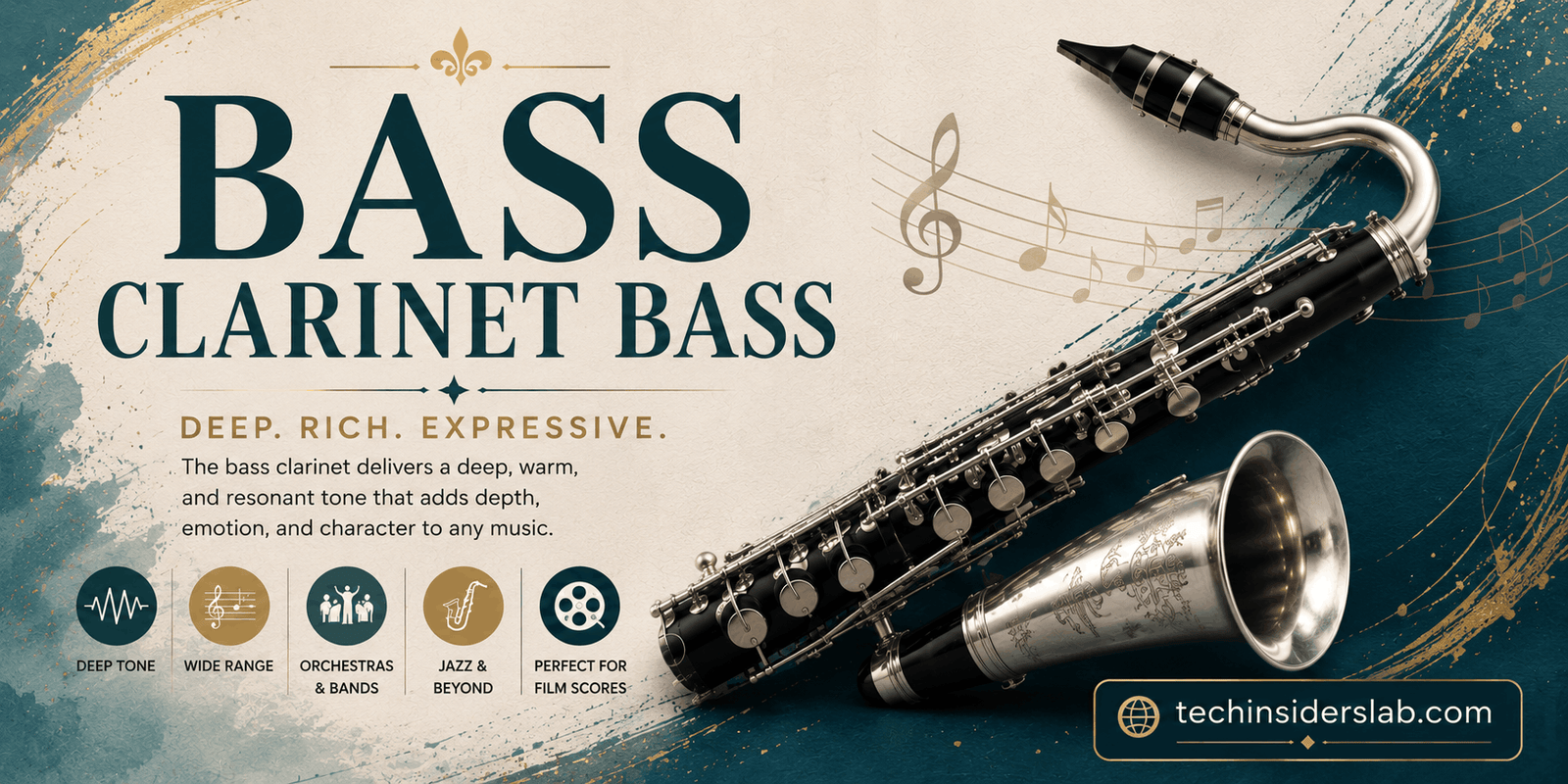
Unlike the traditional clarinet, it features:
- Long cylindrical body
- Curved metal neck
- Upturned metal bell
- Single-reed mouthpiece
- Extended key mechanism
Its larger body and longer air column allow it to create a warm, deep, and powerful sound that blends beautifully with both woodwind and brass instruments.
History of the Bass Clarinet
The bass clarinet originated during the late eighteenth century as instrument makers searched for ways to expand the lower range of the clarinet family.
Early versions suffered from limited range and inconsistent tuning, but throughout the nineteenth century manufacturers introduced significant improvements, including:
- Better key systems
- Improved intonation
- Stronger construction
- More comfortable playing design
- Extended lower register
As the instrument improved, composers began writing increasingly important parts for it. Today it appears regularly in:
- Symphony orchestras
- Concert bands
- Military bands
- Jazz groups
- Chamber ensembles
- Film and television soundtracks
Its popularity continues to grow because of its remarkable tonal versatility.
Parts of a Bass Clarinet
Understanding the instrument’s components helps players improve performance and maintain the instrument properly.
Mouthpiece
The mouthpiece holds the reed and has a major influence on tone quality, response, and articulation. Different mouthpieces are designed for classical, jazz, and contemporary playing styles.
Reed
The bass clarinet uses a single reed made from cane or synthetic material. Reed strength affects response, control, articulation, and tone. Beginners often start with softer reeds before moving to stronger options.
Curved Neck
Unlike the standard clarinet’s straight barrel, the bass clarinet features a curved metal neck that improves airflow, comfort, and intonation.
Upper and Lower Joint
These sections contain most of the tone holes and keys used to produce different pitches and execute technical passages.
Bell
The upturned metal bell projects the instrument’s lowest notes while contributing to its distinctive appearance.
Key System
Modern bass clarinets include complex keywork that allows players to perform chromatic passages smoothly. Professional instruments often include additional keys extending the range down to low C.
Bass Clarinet Range and Sound
One of the bass clarinet’s greatest strengths is its wide playing range.
Most student models extend to low E♭, while professional instruments usually reach low C, providing additional flexibility for advanced repertoire.
The instrument covers four expressive registers:
- Rich low register
- Warm middle register
- Bright upper register
- Powerful altissimo register
Its tone is commonly described as:
- Warm
- Dark
- Rich
- Resonant
- Smooth
- Mellow
- Expressive
The lowest notes can sound mysterious and dramatic, while the upper register remains clear and lyrical without losing its characteristic depth.
Bass Clarinet vs. Standard Clarinet
Although they belong to the same family, there are several important differences.
| Feature | Bass Clarinet | B♭ Clarinet |
|---|---|---|
| Size | Larger | Smaller |
| Pitch | Lower | Higher |
| Tone | Deep and dark | Bright and clear |
| Neck | Curved metal | Straight barrel |
| Bell | Upturned metal | Straight bell |
| Main Role | Harmony and bass lines | Melody and solos |
Many clarinet players eventually learn both instruments because the fingering system is largely similar.
Where Is the Bass Clarinet Used?
The bass clarinet’s versatility makes it valuable across many musical genres.
Symphony Orchestra
Composers use it to add warmth and depth to orchestral textures. It blends naturally with bassoons, cellos, double basses, and low brass while occasionally performing beautiful solo passages.
Concert Bands
Within concert bands, the bass clarinet strengthens the lower woodwind section and often supports bassoons, euphoniums, tubas, and baritone saxophones.
Jazz
Jazz musicians appreciate its smooth tone and expressive range. It works exceptionally well for improvisation, ballads, modern jazz, and fusion performances.
Film and Television Music
Film composers frequently rely on the bass clarinet to create suspense, mystery, emotional depth, and dramatic atmosphere. Its unique tone has become a favorite in cinematic soundtracks.
Choosing the Right Bass Clarinet
Selecting the right instrument depends on your experience, musical goals, and budget.
Consider:
- Skill level
- Material quality
- Key mechanism
- Comfort
- Weight
- Budget
- Maintenance requirements
Trying multiple instruments before buying is often the best way to find the right fit.
Student Models
Student bass clarinets are designed for beginners and school programs.
Advantages include:
- Affordable pricing
- Durable construction
- Easy response
- Reliable tuning
- Simplified keywork
Intermediate Models
Intermediate instruments provide:
- Better materials
- Improved intonation
- Higher-quality keywork
- Enhanced tonal consistency
They are ideal for advancing students and community musicians.
Professional Models
Professional bass clarinets typically feature:
- Extended low C range
- Premium grenadilla wood or composite construction
- Precision keywork
- Superior projection
- Rich tonal color
- Greater dynamic control
These models are commonly used by orchestral performers, recording artists, and soloists.
Maintenance and Care
Proper maintenance helps preserve both tone quality and the instrument’s lifespan.
Follow these simple habits:
- Swab the instrument after every practice session.
- Wipe the keys with a soft microfiber cloth.
- Store the bass clarinet in its protective case.
- Avoid excessive heat and humidity.
- Inspect pads regularly for leaks.
- Replace worn reeds when necessary.
- Rotate several reeds instead of using only one.
Routine care reduces repair costs and keeps the instrument performing consistently.
Common Beginner Mistakes
Many new players experience similar challenges.
Avoid these common mistakes:
- Taking too much mouthpiece into the mouth.
- Using weak or inconsistent air support.
- Maintaining poor posture.
- Skipping warm-up exercises.
- Neglecting instrument maintenance.
- Using worn-out reeds for too long.
Daily practice with proper technique leads to faster improvement and better tone production.
Why Learn the Bass Clarinet?
The bass clarinet offers many advantages for musicians of all skill levels.
Benefits include:
- Rich, expressive tone
- Wide playing range
- High demand in orchestras and concert bands
- Solo performance opportunities
- Versatility across multiple musical genres
- Development of advanced woodwind skills
Because fewer musicians specialize in bass clarinet, skilled players are often highly valued in educational and professional ensembles
Conclusion
The bass clarinet is a unique and versatile woodwind instrument known for its rich, deep, and expressive sound. Whether used in orchestras, concert bands, jazz ensembles, or film scores, it adds depth and character to any performance. With the right instrument, regular practice, and proper maintenance, players of all skill levels can enjoy its wide range and musical flexibility. As its popularity continues to grow, the bass clarinet remains an excellent choice for anyone looking to explore the lower voice of the clarinet family.
Frequently Asked Questions(FAQS)
Most modern bass clarinets are pitched in B♭
It requires consistent practice, but players with clarinet experience usually adapt quickly.
Student models generally extend to low E♭, while professional models often reach low C.
It is used in orchestras, concert bands, jazz ensembles, chamber music, and film scores.
A bass clarinet is a larger clarinet that plays lower notes and produces a deep, rich sound
Yes. Beginners can learn the bass clarinet with proper instruction, regular practice, and the right instrument.