introduction
The internet has transformed the way people learn, practice, and interact with language. From traditional dictionaries to modern digital vocabulary tools, users now have access to resources that make working with words faster and more convenient. Wordie is a name associated with word-focused digital tools and language experiences, making it relevant to people interested in vocabulary, word discovery, language learning, and word-based activities.
For someone searching for “Wordie,” understanding exactly what the platform offers is important because the name can be used for different word-related products and services. In general, Wordie can be understood within the broader category of Technology → Education & Language Tools, where digital platforms use technology to make language-related activities more accessible.
This guide explores Wordie, its possible uses, benefits, features, and the reasons word-based digital tools continue to attract students, writers, educators, puzzle enthusiasts, and everyday internet users.
What Is Wordie?
Wordie is a word-centered digital concept designed around interacting with, discovering, learning, or organizing words. Depending on the particular Wordie service a user is accessing, its functionality can differ, but the underlying idea remains focused on making words more useful and engaging through technology.
Digital word tools have become increasingly popular because they provide instant access to vocabulary resources without requiring users to carry physical dictionaries or reference books.
A modern word platform can potentially help users discover unfamiliar vocabulary, understand meanings, explore related words, practice spelling, or participate in word-based activities.
This makes Wordie especially relevant to people who enjoy language and want a convenient digital environment for exploring words.
Why Are Word Tools Becoming Popular?
Language is an essential part of communication, education, entertainment, and professional life. However, improving vocabulary traditionally requires regular reading, memorization, and practice.
Technology has made this process more interactive.
Instead of simply reading a definition in a dictionary, users can now interact with words through digital games, quizzes, flashcards, challenges, and personalized learning experiences.
This approach can make vocabulary practice less repetitive.
Word-based platforms are particularly useful because they can fit into short periods of free time. A student might practice vocabulary for a few minutes, while a writer could explore alternative words while working on an article.
Wordie and Vocabulary Learning
One of the most natural applications of a word-focused platform is vocabulary development.
Vocabulary is not simply about memorizing a large number of words. Effective vocabulary development also involves understanding how words are used in context.
For example, learning the word “innovative” is more useful when a learner understands that it describes something new, creative, or different from traditional approaches.
Digital word tools can support this process by encouraging users to repeatedly encounter and interact with vocabulary.
Regular exposure can help learners become more comfortable recognizing and using unfamiliar words.
Wordie for Students
Students can benefit from word-based technology in several ways.
Vocabulary plays an important role in subjects such as English, literature, writing, history, and social sciences. Students who understand a wider range of words can often read complicated material more comfortably and communicate their ideas more clearly.
A platform such as Wordie can complement traditional study methods by giving students another way to engage with language.
Instead of studying vocabulary only from a textbook, students can use digital tools for:
- Word discovery
- Spelling practice
- Vocabulary revision
- Word games
- Language exercises
- Memory-based activities
- General language exploration
However, digital tools work best when they complement rather than completely replace structured learning.
Wordie for Writers
Writers frequently need to find the right word.
Sometimes a sentence is grammatically correct but does not communicate the intended feeling or meaning. In those situations, exploring vocabulary can help a writer improve clarity and style.
For example, the words “big,” “large,” “massive,” “enormous,” and “substantial” may have related meanings, but each creates a slightly different impression.
A writer who understands these differences can select words more precisely.
Word-based platforms can therefore be useful during brainstorming and editing. They may help writers think beyond the most obvious vocabulary and discover alternative ways of expressing an idea.
Wordie and Word Games
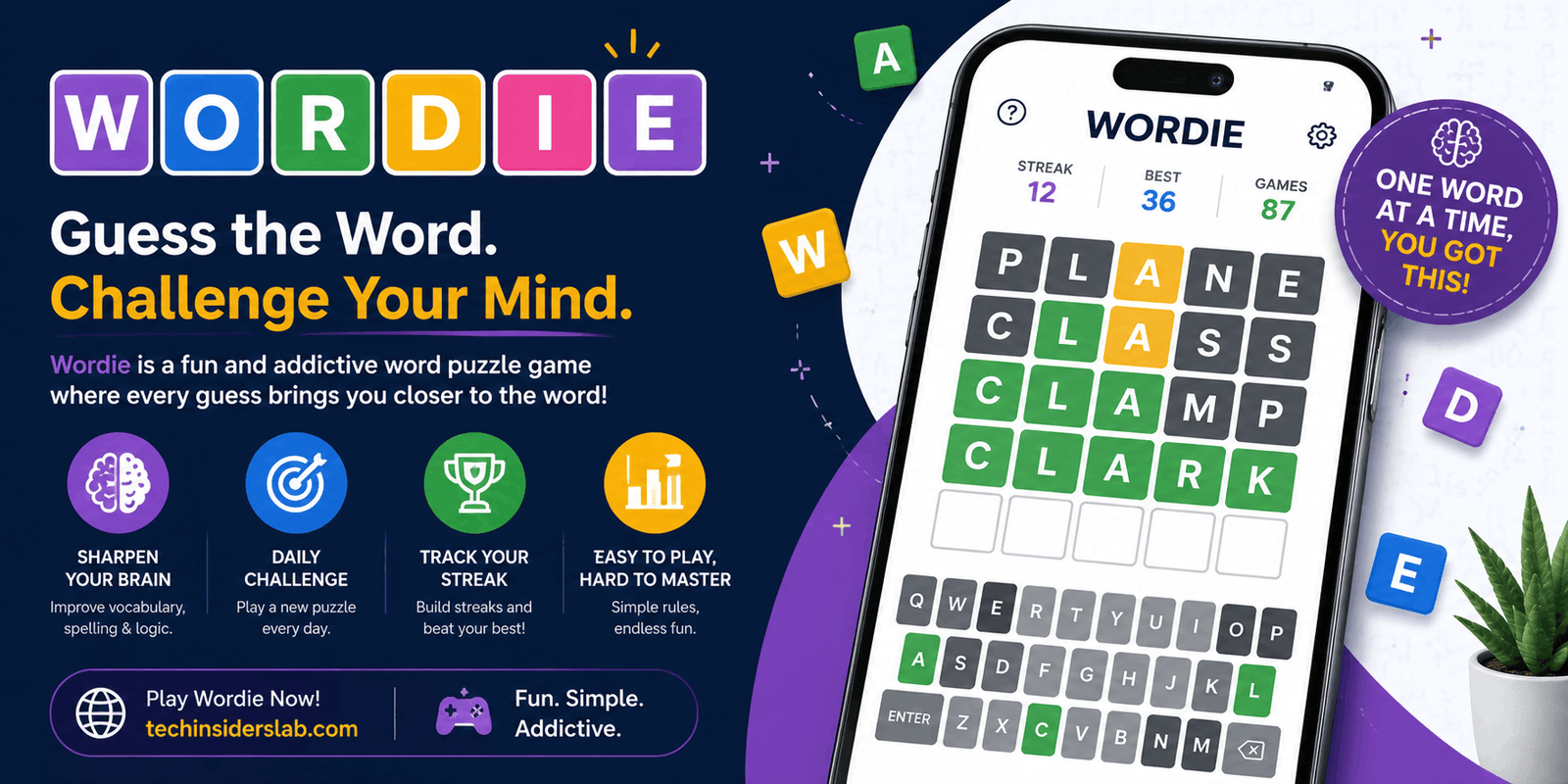
Word games have always been popular, from crossword puzzles to anagrams and spelling challenges.
Digital technology has expanded this category considerably.
Online word games can turn vocabulary practice into entertainment. Instead of feeling like formal studying, players may interact with letters and words while trying to achieve a score, complete a challenge, or solve a puzzle.
This combination of learning and entertainment is sometimes called edutainment.
A word-based platform can be particularly appealing when it provides simple challenges that users can complete quickly.
Benefits of Using Digital Word Tools
There are several potential advantages to using a digital platform focused on words.
Easy Accessibility
Online tools can generally be accessed from devices such as computers, tablets, and smartphones, depending on the service.
This makes vocabulary resources available in more situations than traditional printed materials.
Interactive Learning
Interactive activities can make language practice more engaging than simply reading definitions.
Users can actively solve problems, identify words, answer questions, or complete challenges.
Repetition
Vocabulary improves through repeated exposure.
Digital platforms can make it easier to encounter the same words multiple times in different activities.
Convenience
A user does not necessarily need to dedicate an entire hour to vocabulary practice. Even short sessions can provide opportunities to discover and review words.
Entertainment
When word learning is combined with games and challenges, users may be more motivated to return regularly.
How Wordie Can Support Language Development
Learning a language involves several connected skills, including reading, writing, listening, speaking, grammar, pronunciation, and vocabulary.
Word-focused tools primarily contribute to vocabulary development.
A stronger vocabulary can support other language skills because understanding words is essential for comprehension and communication.
For example, a learner may know English grammar rules but still struggle to communicate effectively because they lack the vocabulary needed to express their thoughts.
Expanding vocabulary can therefore provide a stronger foundation for practical language use.
Wordie for Everyday Users
You do not need to be a student or professional writer to benefit from word-related tools.
Everyday users encounter unfamiliar vocabulary through:
- News articles
- Books
- Social media
- Movies
- Podcasts
- Academic material
- Workplace communication
- Online discussions
When users encounter unfamiliar terms, digital language resources can help them investigate the meaning and usage.
Over time, this habit can gradually expand vocabulary.
Wordie and Productivity
Words are also important in professional communication.
Emails, reports, presentations, marketing content, documentation, and business proposals all depend on clear language.
Using precise vocabulary can make professional communication more effective.
However, stronger writing does not necessarily mean using complicated words. In many situations, simple and direct language is better.
The real goal should be clarity and accuracy.
A good vocabulary tool should therefore be treated as a resource for choosing the right word, not simply the most sophisticated word.
Is Wordie an Educational Platform?
Wordie can reasonably be placed within the broader educational technology ecosystem when its purpose involves vocabulary learning or language development.
The larger category is commonly known as EdTech, short for educational technology.
EdTech includes digital platforms that help people learn, practice, teach, or organize educational information.
Within that ecosystem, language-learning applications form a major category.
Wordie fits naturally into the Language & Vocabulary Tools segment when used for word exploration and learning.
Technology Behind Modern Word Platforms
Modern language applications can use several technologies to improve the user experience.
Depending on the particular platform, these may include databases of words, search systems, recommendation algorithms, user accounts, progress tracking, interactive interfaces, and automated language processing.
Natural language processing has also changed the way software can work with language.
Computer systems can now analyze relationships between words, identify patterns, process text, and provide increasingly sophisticated language-related experiences.
These technologies make digital vocabulary tools more flexible than traditional static reference materials.
How to Get Better Results from Wordie
Simply opening a word tool occasionally is unlikely to transform vocabulary overnight.
Consistent practice is more useful.
A learner can create a simple routine:
Step 1: Discover New Words
Choose a small number of unfamiliar words rather than trying to memorize dozens at once.
Step 2: Understand Meaning
Learn what each word means and pay attention to how it is used.
Step 3: Study Context
Look at examples and determine whether the word is formal, informal, technical, positive, negative, or neutral.
Step 4: Use the Word
Try creating your own sentence.
Step 5: Review Later
Return to previously learned vocabulary to strengthen memory.
This approach turns a simple word lookup into a more complete learning activity.
Wordie vs. Traditional Dictionaries
Traditional dictionaries remain valuable because they provide detailed definitions, pronunciation information, grammatical details, usage examples, and historical context.
Digital tools have a different advantage: convenience and interactivity.
A printed dictionary may provide excellent reference information, while an interactive word platform may make practice more engaging.
The two approaches do not necessarily compete.
They can work together.
A learner might use a digital platform for daily practice and consult a comprehensive dictionary when they need deeper information about a word.
Privacy and Account Security
If a Wordie service requires users to create an account, basic online-security practices are important.
Users should avoid reusing passwords across multiple websites and should be cautious about suspicious login pages.
Before entering personal information, users should verify that they are using the legitimate website or application.
It is also useful to review the platform’s privacy policy to understand what information is collected and how it is used.
These precautions apply to Wordie as well as other online educational and language platforms.
Who Can Benefit from Wordie?
A word-focused platform can potentially be useful for a wide range of users.
Students can use vocabulary tools for academic development.
English learners can use them to discover and practice unfamiliar words.
Writers can explore vocabulary while drafting and editing.
Teachers can use digital resources to supplement classroom activities.
Puzzle enthusiasts can enjoy word-based challenges.
Professionals can improve their familiarity with language used in workplace communication.
Casual users can simply explore interesting words and learn something new.
This broad audience is one reason language technology continues to grow.
Conclusion
Wordie represents the growing role of technology in language and vocabulary development. Word-based digital platforms make it easier for users to explore language, practice vocabulary, discover unfamiliar terms, and turn learning into an interactive experience.
Its potential audience is broad. Students can use vocabulary resources to support their studies, language learners can practice new words, writers can improve word selection, and casual users can enjoy word-based activities for entertainment.
The biggest advantage of digital language tools is convenience. Instead of depending entirely on traditional study methods, users can interact with vocabulary whenever they have a few spare minutes.
At the same time, Wordie should be viewed as a supporting language resource rather than a complete replacement for reading, writing, conversation, and structured language education. The strongest results come when digital practice is combined with real-world language exposure.
For website categorization, the most appropriate classification for Wordie is Technology → Education & Language Tools, with related topics including Vocabulary, Language Learning, Word Games, Educational Technology, and Online Learning.