
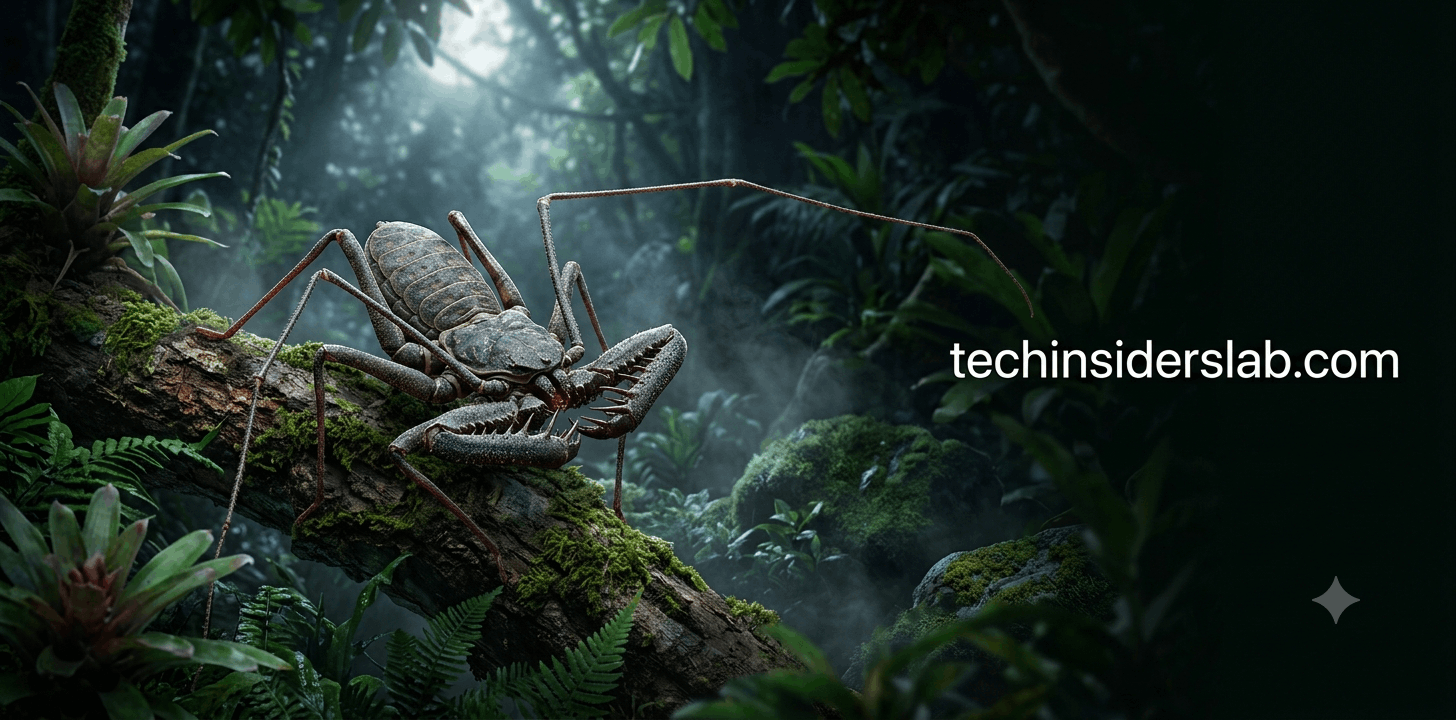
Tailless Whip Scorpion: Complete Guide to Fascinating Arachnid
Introduction
The Tailless Whip Scorpion is one of the most unusual and misunderstood arachnids in the world. Although its frightening appearance makes many people think it is dangerous, this fascinating creature is completely harmless to humans. It has no venom, no stinger, and does not spin webs like spiders. Instead, it relies on speed, powerful pedipalps, and highly sensitive front legs to hunt insects at night.
Belonging to the order Amblypygi, tailless whip scorpions have existed for over 300 million years, making them one of the oldest living arachnids on Earth. They are often called “living fossils” because their body structure has changed very little over millions of years.
In this guide, you’ll learn everything about the Tailless Whip Scorpion, including its appearance, habitat, behavior, diet, and why it has become a popular exotic pet.
What Is a Tailless Whip Scorpion?
A Tailless Whip Scorpion is an arachnid belonging to the order Amblypygi. Despite its name, it is neither a true scorpion nor a spider.
Unlike true scorpions, it has no tail or stinger. Unlike spiders, it cannot produce silk or inject venom. Instead, it captures prey using large spiny pedipalps and long sensory legs that function much like insect antennae.
Scientists have identified more than 220 species, with new ones still being discovered in tropical forests and caves around the world.
Scientific Classification
- Kingdom: Animalia
- Phylum: Arthropoda
- Class: Arachnida
- Order: Amblypygi
Why Is It Called a Tailless Whip Scorpion?
The name comes from three unique features:
- Tailless because it lacks the stinging tail found in true scorpions.
- Whip because its first pair of legs are extremely long and resemble flexible whips.
- Scorpion because its body shape and large pedipalps resemble those of a scorpion.
These whip-like legs are not used for walking. Instead, they constantly move around to detect vibrations, obstacles, and prey.
Physical Appearance
The unusual appearance of a Tailless Whip Scorpion often scares people, but it is actually a shy and harmless animal.
Body Size
Most species measure between 1 and 8 cm (0.4–3 inches) in body length. When the long sensory legs are fully extended, their total leg span can exceed 25 cm (10 inches).
Flattened Body
Their flat body allows them to hide beneath rocks, inside tree bark, caves, and narrow crevices during the day. This body shape also helps them escape predators quickly.
Large Pedipalps
The large claw-like appendages at the front are called pedipalps. They are covered with sharp spines and are used for:
- Catching prey
- Holding insects
- Defense
- Courtship displays
Unlike crab claws, pedipalps trap prey instead of crushing it.
Long Sensory Legs
The first pair of legs are extremely thin and flexible. Instead of walking, they act as sensory organs that detect:
- Vibrations
- Air movement
- Chemicals
- Obstacles
- Nearby prey
These specialized legs allow the arachnid to hunt even in complete darkness.
Habitat and Distribution
The Tailless Whip Scorpion prefers warm and humid environments where it can remain hidden during daylight hours.
It commonly lives in:
- Tropical rainforests
- Dense jungles
- Limestone caves
- Hollow trees
- Forest floors
- Under rocks
- Fallen logs
Humidity is essential because these arachnids lose moisture easily through their exoskeleton.
Where Are They Found?
Tailless whip scorpions live in many tropical and subtropical regions, including:
- Central America
- South America
- Mexico
- Florida
- Caribbean Islands
- Africa
- India
- Southeast Asia
- Australia
Many cave-dwelling species have adapted to life in complete darkness.
Behavior
The Tailless Whip Scorpion is mainly active at night. During the day, it hides in dark and damp places to avoid sunlight and predators.
Although it looks aggressive, it is actually very shy and prefers escaping rather than fighting.
Most species live alone and only meet during the breeding season.
How Does a Tailless Whip Scorpion Hunt?
Unlike spiders, tailless whip scorpions do not build webs. They are active hunters that rely on their sensitive front legs to locate prey.
Their hunting process is simple:
- Detect movement using sensory legs.
- Quietly approach the prey.
- Grab it instantly with spiny pedipalps.
- Feed using digestive fluids that break down the prey.
This entire attack happens in just a fraction of a second.
Diet
The Tailless Whip Scorpion is a carnivorous predator that mainly feeds on small invertebrates.
Its diet includes:
- Crickets
- Cockroaches
- Beetles
- Grasshoppers
- Moths
- Termites
- Small spiders
- Centipedes
Large species may occasionally eat tiny frogs or small lizards, but insects make up most of their diet.
Are Tailless Whip Scorpions Dangerous?
One of the biggest myths about the Tailless Whip Scorpion is that it is dangerous.
The truth is:
- It has no venom.
- It has no stinger.
- It does not bite like spiders.
- It usually runs away when disturbed.
If handled carelessly, it may pinch with its pedipalps, but the pinch is generally mild and causes little harm.
Because they are harmless and fascinating to observe, many arachnid enthusiasts keep them as exotic pets.
Reproduction and Life Cycle
The Tailless Whip Scorpion has one of the most interesting breeding behaviors among arachnids. Instead of direct mating, the male performs a courtship ritual by gently touching the female with his long sensory legs. He then places a sperm packet, called a spermatophore, on the ground and guides the female over it for fertilization.
After mating, the female carries her eggs in a protective brood sac beneath her body. Depending on the species, she may produce 15 to 60 eggs, while larger species can carry even more.
When the eggs hatch, the young climb onto their mother’s back and remain there until they complete their first molt. This form of parental care is rare among arachnids and greatly increases the survival of the offspring.
Molting and Growth
Like all arthropods, a Tailless Whip Scorpion grows by shedding its hard outer shell, a process known as molting.
During molting:
- The old exoskeleton splits open.
- The arachnid slowly emerges.
- Its new shell remains soft for several hours.
- It hides until the new exoskeleton hardens.
Young individuals molt several times before reaching adulthood, while mature adults molt less frequently.
Lifespan
The lifespan of a Tailless Whip Scorpion depends on its environment and species.
Average lifespan:
- Wild: 5–10 years
- Captivity: 10–15 years with proper care
Their long lifespan makes them a popular choice for experienced exotic pet keepers.
Natural Predators
Although they are skilled hunters, tailless whip scorpions are also prey for many animals.
Common predators include:
- Birds
- Bats
- Lizards
- Frogs
- Snakes
- Large spiders
- Small mammals
To survive, they rely on camouflage, nocturnal behavior, and their flattened bodies, which allow them to hide in narrow cracks where predators cannot reach.
Ecological Importance
The Tailless Whip Scorpion plays an important role in nature.
Natural Pest Control
They feed on insects such as:
- Cockroaches
- Crickets
- Beetles
- Termites
- Other small arthropods
By controlling insect populations, they help maintain a healthy ecosystem.
Part of the Food Chain
They also serve as food for birds, reptiles, and mammals, making them an important link in the natural food web.
Environmental Indicators
Because they require clean and humid habitats, their presence often indicates a healthy ecosystem.
Can You Keep a Tailless Whip Scorpion as a Pet?
Yes. Many people keep Tailless Whip Scorpions as exotic pets because they are quiet, non-venomous, and easy to care for. However, they are best suited for people who enjoy observing animals rather than handling them.
Basic Care Tips
Enclosure
- 10–20 gallon terrarium
- Secure lid
- Good ventilation
- Cork bark or rocks for hiding
Temperature
Maintain 72–82°F (22–28°C).
Humidity
Keep humidity between 70–85% by misting the enclosure regularly.
Substrate
Suitable options include:
- Coconut fiber
- Organic soil
- Moss
These materials help retain moisture.
Diet
Feed once or twice a week with:
- Crickets
- Roaches
- Mealworms
- Small locusts
Always remove uneaten insects after feeding.
Water
Provide a shallow water dish and keep the enclosure lightly misted.
Are Tailless Whip Scorpions Venomous?
No. This is one of the most common questions people ask.
A Tailless Whip Scorpion:
- Has no venom glands
- Has no stinger
- Cannot inject venom
- Is generally harmless to humans
Its only defense is using its spiny pedipalps to scare away predators.
Tailless Whip Scorpion vs. True Scorpion
| Feature | Tailless Whip Scorpion | True Scorpion |
|---|---|---|
| Tail | None | Long segmented tail |
| Stinger | No | Yes |
| Venom | No | Usually yes |
| Sensory Legs | Long whip-like legs | Normal walking legs |
| Webs | No | No |
| Danger to Humans | Very low | Depends on the species |
Understanding these differences helps clear up many common misconceptions.
Interesting Facts About Tailless Whip Scorpions
Here are some fascinating facts:
- They have existed for over 300 million years.
- They survived multiple mass extinction events.
- Their first pair of legs work like antennae.
- They can detect tiny air vibrations.
- Some cave species have poor eyesight due to living in darkness.
- Mothers carry their babies on their backs.
- They move surprisingly fast.
- They are completely non-venomous.
- They are sometimes called whip spiders, even though they are not true spiders.
Common Myths
Myth 1: They Can Sting
False. They have no tail or stinger.
Myth 2: They Are Deadly
False. They are completely harmless to humans.
Myth 3: They Chase People
False. They usually run away when disturbed.
Myth 4: They Are Spiders
False. They belong to the order Amblypygi, not the spider order.
Conclusion
The Tailless Whip Scorpion is one of the most unique arachnids on Earth. Despite its intimidating appearance, it is harmless to humans and plays an important role in controlling insect populations. Its long sensory legs, spiny pedipalps, fascinating hunting techniques, and unusual parental care make it a remarkable creature.
Whether found in tropical forests, caves, or kept in a carefully maintained terrarium, the Tailless Whip Scorpion continues to fascinate scientists, wildlife enthusiasts, and exotic pet keepers. Learning more about this ancient arachnid helps replace myths with facts and highlights the incredible diversity of the natural world.
Frequently Asked Questions (FAQs)
No. They are neither poisonous nor venomous.
They do not bite like spiders. If threatened, they may pinch with their pedipalps.
They are found in tropical and subtropical regions, including Central and South America, Africa, India, Southeast Asia, Australia, and the Caribbean.
Their diet mainly includes insects such as crickets, cockroaches, beetles, termites, and small spiders
Yes. Their strong legs and flat bodies allow them to climb rough vertical surfaces.
No. Unlike spiders, they do not build webs to catch prey.