Replit: Guide to the AI-Powered Cloud Development Platform
introduction
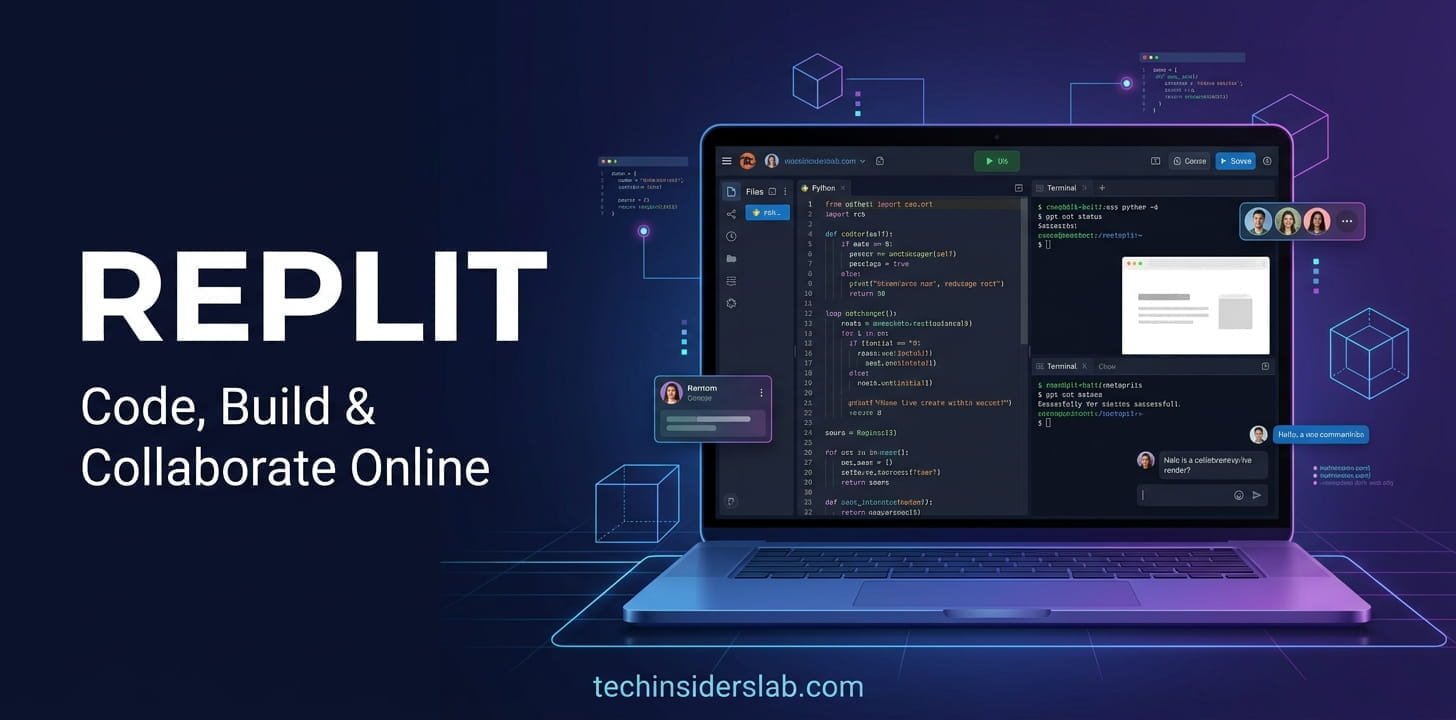
Replit has become a popular platform for people who want to create websites, applications, and software without dealing with complicated development setups. What started as a browser-based coding environment has developed into a broader platform that combines coding, artificial intelligence, collaboration, databases, and application deployment.
One of the main reasons Replit has attracted attention is its ability to make software development more accessible. Users can start projects directly from a browser instead of spending a lot of time installing programming languages, configuring development environments, and setting up different development tools.
Replit is useful for beginners, students, experienced developers, entrepreneurs, and anyone who wants to experiment with software ideas. Its AI-powered features have also changed how users can approach application development because people can describe what they want to build using natural language and receive assistance with creating the project.
What Is Replit?
Replit is a cloud-based software development platform that allows users to create, edit, run, test, and deploy software projects online.
Traditional software development often requires several tools. A developer may need a code editor, programming language runtime, package manager, terminal, database, hosting service, and other development utilities. Replit brings many of these functions into one online environment.
Users can create a project, select a development environment, write code, run their application, identify errors, and make changes without leaving the platform.
Replit supports many programming languages and development technologies. This makes it useful for projects ranging from simple programming exercises to websites and more complex applications.
How Does Replit Work?
Replit works through a cloud-based development environment. Instead of depending entirely on the computer being used, projects are stored and managed through Replit’s online platform.
A typical workflow can look like this:
- Create a new project.
- Select the appropriate programming environment.
- Write or generate code.
- Run the project.
- Test its functionality.
- Fix errors and improve the application.
- Add databases or other services when required.
- Deploy the finished project.
This workflow can save time because users do not necessarily have to configure every component manually.
For beginners, this can make the first steps into programming easier. For experienced developers, it can provide a convenient environment for testing ideas and creating prototypes.
Replit and Artificial Intelligence
Artificial intelligence has become an important part of Replit.
The platform includes AI-powered development features that can help users generate code, modify existing files, understand errors, and develop applications from natural-language instructions.
Instead of writing every requirement manually as code, users can explain their idea in ordinary language.
For example, someone could describe a simple task management application and specify that it should have tasks, categories, a dashboard, and a database. The AI development tools can then assist with creating the necessary project structure and functionality.
This approach can make software creation more accessible to people who do not have extensive programming experience.
However, AI-generated code should always be reviewed and tested. Artificial intelligence can misunderstand requirements, create incorrect implementations, or introduce security and performance problems.
Replit Agent
Replit Agent is one of the platform’s most important AI development features.
It allows users to communicate with an AI agent about the software they want to create. Instead of simply generating a small piece of code, an AI development agent can work across different parts of a project.
Depending on the task, the agent can help with:
- Creating project files
- Writing code
- Modifying existing code
- Installing required packages
- Finding errors
- Testing functionality
- Improving application features
- Connecting services
- Building interfaces
This makes Replit Agent particularly interesting for people who want to transform an idea into a functional prototype quickly.
The user still plays an important role because they need to provide requirements, review results, test the application, and decide whether the generated implementation is appropriate.
Replit Agent and Modern AI Development
The development of Replit’s AI tools reflects a broader change in software development.
Previously, programming generally required developers to translate an idea into programming instructions manually. Modern AI development tools allow users to describe an objective in natural language and let an AI system handle part of the implementation.
This approach is sometimes called AI-assisted coding or AI-first development.
For example, a user might say:
“Create a simple expense tracker where users can add expenses, categorize them, and view monthly totals.”
An AI development environment can use that description as a starting point for creating the application.
The quality of the final result still depends heavily on the instructions, testing, project requirements, and human review.
Replit for Beginners
Replit is particularly useful for people who are just starting to learn programming.
One of the biggest challenges for beginners is getting a development environment ready. Installing software, configuring programming languages, setting environment variables, and fixing installation errors can be confusing before a learner even writes their first program.
A browser-based environment reduces some of these barriers.
A beginner can open a project, start writing code, run it, and immediately see the result.
Replit can be used to practice:
- HTML
- CSS
- JavaScript
- Python
- Java
- C++
- Other programming languages
The platform can also help learners experiment with small projects such as calculators, games, websites, automation scripts, and simple applications.
Learning With AI
AI can make learning programming more interactive when used correctly.
Instead of simply asking AI to complete an entire project, beginners can use it as an explanation tool.
For example, a learner can ask why a particular function produces an error or request an explanation of a complicated section of code.
Useful learning questions include:
- What does this code do?
- Why is this error appearing?
- Explain this function in simple words.
- How can I improve this code?
- What happens if I change this value?
- Can you explain this programming concept with an example?
This approach allows users to learn while building real projects.
However, depending completely on AI-generated code can slow down learning because the user may end up using code without understanding it.
Replit for Experienced Developers
Replit is not limited to beginners.
Experienced developers can use the platform for rapid prototyping, experimentation, collaborative development, internal tools, and application development.
A developer may use Replit when they want to test an idea without spending a lot of time configuring a local environment.
AI tools can also help experienced developers with repetitive tasks.
For example, AI can assist with:
- Generating boilerplate code
- Refactoring existing code
- Creating components
- Debugging errors
- Writing tests
- Explaining unfamiliar code
- Implementing small features
The developer remains responsible for reviewing the output and ensuring that the resulting application follows the required architecture and security standards.
Building Websites With Replit
Replit can be used to create websites ranging from simple static pages to dynamic web applications.
A beginner might use HTML, CSS, and JavaScript to build a portfolio website.
More advanced users can create applications that include:
- User accounts
- Forms
- Dashboards
- APIs
- Databases
- Authentication
- Interactive interfaces
- External services
Because development and deployment can be handled within the same ecosystem, users can move from an idea to a publicly accessible project without managing as many separate services.
Building Web Applications
Web applications generally require more than a simple webpage.
A complete web application may include a frontend, backend, database, authentication system, API connections, and hosting infrastructure.
Replit provides tools that can help users create these components.
For example, someone could build a small inventory management application where users log in, add products, update quantities, and view inventory information.
AI tools can help generate the initial structure, while the user can then modify the application according to specific requirements.
This makes Replit useful for prototypes and smaller applications where rapid development is important.
Databases in Replit
Many applications need databases to store information.
A database can contain information such as:
- User profiles
- Product information
- Blog posts
- Tasks
- Orders
- Customer records
- Application settings
Replit provides database-related functionality that can be used as part of application development.
For simple applications, having database functionality available alongside the development environment can reduce the number of external services that need to be configured.
However, database design remains an important technical consideration. Developers need to think about data structure, access permissions, performance, backups, and security.
Collaboration Features
Software development is often performed by teams, and Replit includes collaboration capabilities.
Multiple people can work on shared projects, making the platform useful for students, development teams, coding groups, and remote collaborators.
Collaboration can be helpful when several people are working on different parts of the same project.
For example, one person might work on the user interface while another focuses on application logic. Team members can communicate and review changes within the development workflow.
This can be especially useful for educational projects where students need to work together on programming assignments.
Replit for Prototyping
One of the most practical uses of Replit is rapid prototyping.
A prototype is an early version of an idea that can be used to test functionality and gather feedback.
Imagine an entrepreneur has an idea for a productivity application. Instead of spending months developing every possible feature, they can create a smaller version first.
The prototype might contain only the core features needed to demonstrate the idea.
This can help answer important questions:
- Does the concept work?
- Is the interface understandable?
- Which features are actually useful?
- What should be changed?
- What feedback do users provide?
AI-assisted development can make this process faster by helping create the initial application structure.
Replit for Students
Replit can be useful in educational environments because students can access coding projects through a browser.
Teachers can use it for programming exercises, demonstrations, assignments, and group projects.
Students can experiment with different programming languages without spending excessive time configuring their computers.
Replit can also make collaborative programming easier because projects can be shared.
For students, the most important benefit is not simply creating an application quickly. It is understanding the concepts behind the application.
AI should therefore be used as a learning assistant rather than a complete replacement for studying programming.
Replit for Entrepreneurs
Entrepreneurs can use Replit to turn software ideas into early prototypes.
Someone with a startup concept may not have a large development team or extensive technical resources. A cloud development platform combined with AI assistance can help create an initial version of an idea.
For example, an entrepreneur could create:
- A booking system
- A customer dashboard
- A small marketplace
- A productivity tool
- A business calculator
- An internal management tool
- A simple SaaS prototype
The prototype can then be tested and improved based on real requirements.
Deployment and Hosting
Creating software is only one part of development. Eventually, many applications need to be made accessible to users.
Replit provides deployment and hosting capabilities that allow projects to be published online.
This can simplify the process for people who do not want to configure traditional servers manually.
A typical workflow can therefore move from:
Idea → Code → Testing → Deployment
within the same general ecosystem.
Even with simplified deployment, developers still need to consider application security, authentication, performance, data protection, monitoring, and reliability.
Advantages of Replit
Replit provides several advantages for different types of users.
Browser-Based Development
Users can work on projects through a cloud-based environment rather than depending entirely on a local setup.
AI Assistance
AI can help users generate code, modify applications, understand problems, and implement features.
Rapid Prototyping
Ideas can be converted into working prototypes relatively quickly.
Collaboration
Teams and students can work together on shared projects.
Development and Deployment
Users can develop and publish applications within the same broader platform.
Multiple Languages
Replit supports numerous programming languages and development approaches.
Beginner-Friendly Environment
The reduced setup requirements can make programming more approachable for newcomers.
Limitations of Replit
Although Replit offers many useful features, it is important to understand its limitations.
AI Is Not Always Correct
AI-generated code can contain bugs, incorrect assumptions, or security problems.
Users should test generated applications carefully.
Platform Dependency
Projects that rely heavily on platform-specific features may require additional work if they are later moved to another environment.
Production Requirements
A prototype is not automatically ready for large-scale production.
Applications with significant traffic or sensitive information may require additional architecture, security, monitoring, backups, and optimization.
Costs Can Vary
The cost of using the platform can depend on the selected plan, project requirements, AI usage, and other resources.
Users should review current pricing and usage limits before starting a large project.
Is Replit Good for Coding?
Replit can be a practical coding environment for both beginners and experienced developers.
For beginners, it removes some of the technical setup required before programming can begin.
For experienced developers, it can provide a convenient cloud environment for experiments, prototypes, collaboration, and AI-assisted development.
Its usefulness ultimately depends on the type of project and the developer’s preferred workflow.
Is Replit Good for AI Development?
Replit is particularly relevant to AI-assisted software development because its platform allows users to combine natural-language instructions with traditional programming.
Instead of manually implementing every part of an application, users can describe desired features and use AI to assist with implementation.
This can significantly reduce repetitive work.
However, AI development still requires human judgment. Users need to verify functionality, check security, review generated code, and test the final product.
Replit vs Traditional Development
Traditional development generally involves installing and configuring tools locally.
A developer may use a code editor, terminal, package manager, local database, Git repository, hosting service, and several other tools.
Replit attempts to bring many development activities into a unified cloud environment.
This does not necessarily mean traditional development is outdated. Local development remains important for many professional workflows.
Instead, Replit provides another approach that can be especially convenient for learning, experimentation, collaboration, and rapid development.
The Future of Replit
The direction of Replit shows how software development is changing as artificial intelligence becomes more integrated into programming.
Developers are increasingly able to describe requirements in natural language and allow AI systems to handle portions of implementation.
This may change the role of developers over time.
Rather than spending all of their time writing repetitive code, developers can increasingly focus on:
- Understanding requirements
- Designing systems
- Reviewing AI-generated code
- Testing applications
- Managing security
- Improving user experience
- Making technical decisions
Replit is positioned within this broader movement toward AI-assisted software creation.
Who Should Use Replit?
Replit can be useful for:
- Beginners learning programming
- Students
- Teachers
- Web developers
- Software developers
- Entrepreneurs
- Startup teams
- Designers experimenting with interactive ideas
- People creating prototypes
- Teams working remotely
- Users interested in AI-assisted coding
The most suitable use depends on the project’s complexity and technical requirements.
Conclusion
Replit has grown from a simple online coding environment into a broader software development platform that combines cloud-based coding, artificial intelligence, collaboration, databases, and deployment.
Its AI-powered development features make it possible for users to describe software ideas in natural language and receive assistance with turning those ideas into functional applications.
For beginners, Replit can reduce the technical barriers associated with setting up a development environment. For experienced developers, it can provide a convenient place to prototype ideas, collaborate with others, and use AI for repetitive development tasks.
At the same time, users should remember that AI-generated software still requires human review. Testing, security, performance, database design, and application architecture remain important regardless of how the initial code is produced.
Overall, Replit represents an important direction in modern software development where traditional programming and AI-assisted development work together. Its combination of coding tools, cloud infrastructure, collaboration features, and AI makes it a flexible platform for experimenting with ideas and building software projects.