Name Generator: Create Unique Names for Any Purpose
introduction
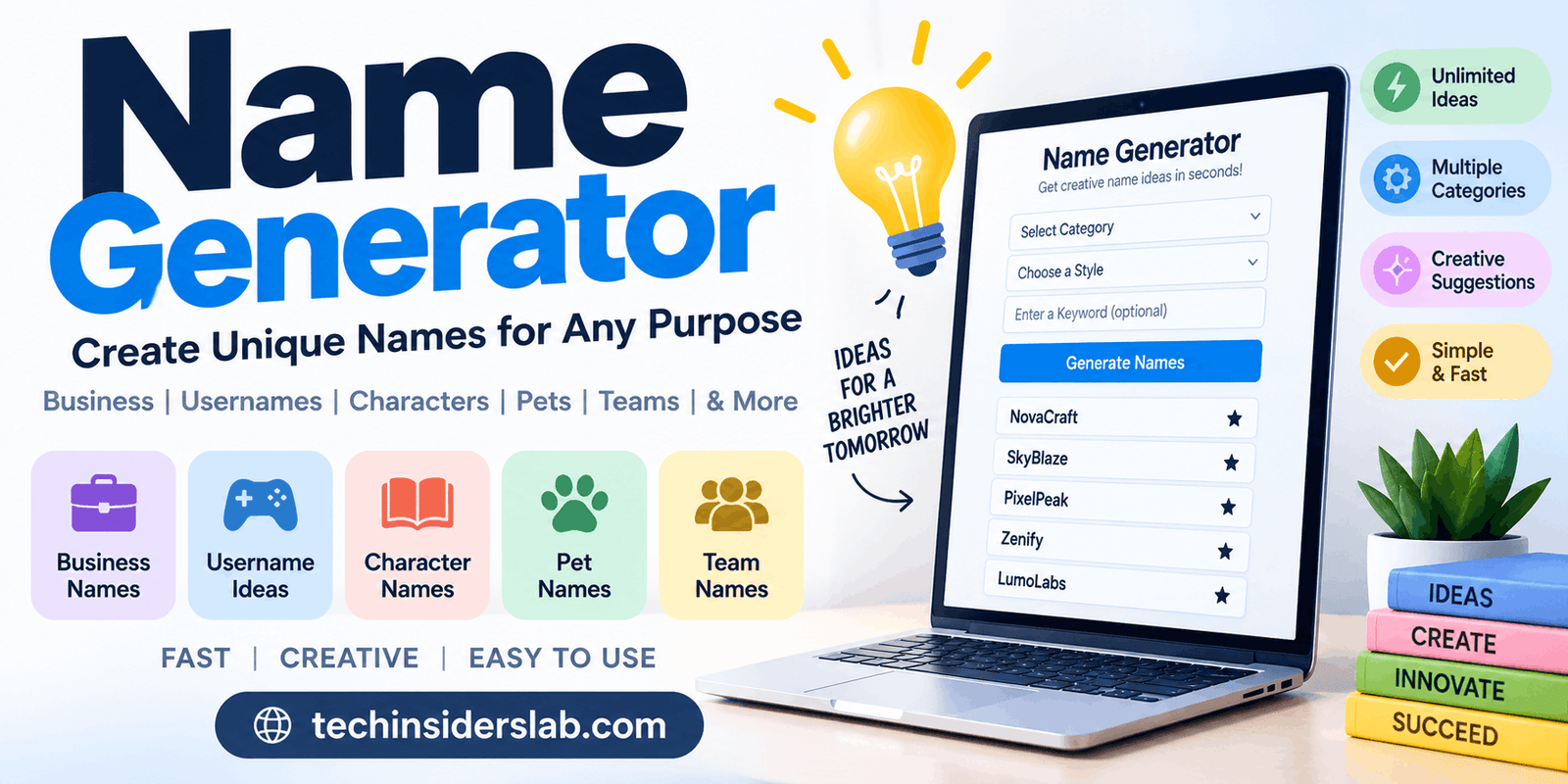
Finding the right name can be surprisingly difficult. Whether you are creating a fictional character, launching a business, choosing a username, naming a pet, or simply looking for creative ideas, the process often involves trying dozens of possibilities before finding one that feels right. A Name Generator can make this process faster by producing relevant ideas based on a selected category, style, theme, or set of preferences.
Modern name generators are designed for many different purposes. They can create personal names, fantasy character names, business and brand names, usernames, team names, pet names, gaming identities, and other creative options. Some tools also allow users to filter results by length, starting letter, culture, tone, gender, theme, or other characteristics.
What Is a Name Generator?
A Name Generator is an online tool that automatically creates name suggestions according to rules, patterns, databases, combinations, or AI-assisted generation methods. Instead of starting with a completely blank page, users can enter a few preferences and receive multiple ideas within seconds.
The purpose is not necessarily to provide one perfect answer. Rather, the generator gives users a starting point that can inspire further creativity. A person might generate 20 or 50 options, select a few favorites, modify them, and eventually develop a name that fits the project.
Different generators are built for different naming goals. A business name generator may focus on memorable and brandable combinations, while a fantasy generator may use fictional naming patterns designed to match a particular world or character type.
How Does a Name Generator Work?
The exact technology varies from one tool to another, but most name generators follow a relatively simple process.
First, the user selects the type of name they need. This could be a business, character, username, pet, baby, team, fantasy character, or another category.
Next, the generator may allow additional preferences. These can include a starting letter, desired length, style, theme, region, gender, keywords, or tone. More specific inputs generally make the results more relevant.
The tool then combines suitable words, names, syllables, patterns, or other data according to its internal rules. Some modern tools use AI to interpret natural-language descriptions and create customized suggestions.
Finally, the user receives a list of potential names. They can review the suggestions, copy useful options, generate another batch, and create a shortlist.
Popular Types of Name Generators
One of the biggest advantages of naming tools is their flexibility. There is no single type of name generator because different situations require different naming approaches.
1. Business Name Generator
Starting a business requires a name that is memorable, understandable, and appropriate for the target audience. A business name generator can provide ideas for startups, online stores, agencies, local businesses, SaaS products, and other ventures.
Business naming tools can be especially useful during brainstorming. They can combine keywords with different naming styles to produce short, modern, professional, creative, or industry-specific ideas.
However, a generated name should not automatically be treated as available. Businesses should independently check domain availability, trademarks, company registrations, and social media handles before making a final decision.
2. Fantasy Name Generator
Writers, gamers, and worldbuilders frequently need names that sound different from ordinary real-world names. Fantasy name generators can create names for elves, dragons, warriors, wizards, kingdoms, villages, fictional races, and other characters or locations.
A good fantasy generator attempts to maintain a consistent style. For example, names created for one fictional culture may share similar sounds or structures, helping an entire fictional world feel more believable.
These tools can save writers significant brainstorming time, particularly when a story contains dozens or hundreds of characters.
3. Username Generator
A unique username is useful for gaming, social media, forums, online communities, and creative platforms. A username generator can combine words, themes, adjectives, numbers, or other elements to create potential handles.
The main challenge is availability. A name may look perfect but already be taken on the platform where it is needed. Therefore, generating several alternatives is often more practical than depending on a single suggestion.
Short, readable, and easy-to-remember usernames are generally easier for people to recognize and share.
4. Character Name Generator
Writers, game developers, roleplayers, and content creators often need character names that match personality and setting.
A character name generator can help create names for protagonists, villains, supporting characters, NPCs, and fictional identities. Some tools allow users to specify characteristics such as historical period, gender, origin, genre, or personality.
The best results usually come when the generated name is treated as inspiration rather than a finished character concept.
5. Baby Name Generator
Baby naming is another common use for naming tools. These generators can help parents explore names according to meaning, origin, style, popularity, or other preferences.
Unlike purely fictional naming, baby names can have cultural, family, and personal significance. A generator can therefore be useful for discovering possibilities, but the final choice should consider pronunciation, meaning, family preferences, and how the name works with the surname.
6. Pet Name Generator
Pet owners can also use name generators for dogs, cats, birds, horses, and other animals.
A pet generator can produce suggestions based on appearance, personality, breed, size, color, or themes. For example, someone looking for a playful dog name might prefer completely different results from someone naming an elegant cat.
7. Team and Group Name Generator
Sports teams, gaming clans, school groups, workplace teams, and online communities often need memorable names.
A team name generator can combine concepts related to strength, speed, humor, competition, or local identity. This is particularly helpful when a group wants several options to vote on rather than having one person choose the name.
Why Use a Name Generator?
The biggest advantage is speed. Brainstorming manually can take hours, especially when the goal is to create something original rather than choosing from a standard list.
A generator can produce many possibilities almost immediately. This gives users a larger creative starting point and helps overcome the common problem of staring at a blank screen.
Another benefit is variety. Users may discover combinations they would not have considered on their own. A business owner might discover an unexpected brand concept, while a writer might find a character name that changes the direction of a story.
Name generators can also be useful when several people are collaborating. Instead of arguing over the first few ideas, a group can generate a large selection and narrow it down through discussion.
How to Get Better Results
The quality of a generated name often depends on the information provided to the tool.
Instead of simply asking for a random name, define what you actually need. Consider the following:
- What is being named?
- Who is the intended audience?
- Should the name be serious, funny, modern, classic, or unusual?
- Is there a preferred length?
- Should it start with a particular letter?
- Are there keywords that should appear?
- Are there words or sounds that should be avoided?
- Does the name need to work internationally?
Modern naming tools increasingly provide controls such as style, origin, length, starting letter, keywords, and exclusions. These filters can help narrow a large pool of ideas into more useful results.
Name Generator vs. Manual Brainstorming
Manual brainstorming gives complete creative control, but it can become repetitive. People often return to the same familiar words and naming patterns.
A generator provides a different approach. It introduces combinations that may not naturally occur during ordinary brainstorming.
The most effective strategy is often to combine both methods. Start with your own ideas, use a generator to expand the list, then manually evaluate and improve the strongest candidates.
This creates a balance between automation and human creativity.
How to Choose the Best Generated Name
Generating names is only the first step. The next challenge is choosing one that actually works.
A strong name should usually be relevant to its purpose. A professional company may need a different tone from a gaming username or fantasy character.
Pronunciation is also important. If people cannot easily say or remember a name, it may be less effective.
Spelling matters as well. A complicated name can make it difficult for people to search for the business, profile, website, or project.
Memorability is another major factor. The best options tend to create a clear impression without being unnecessarily complicated.
For commercial projects, availability is essential. A name can sound excellent but still be unsuitable if it conflicts with an existing trademark or business identity.
Important Checks Before Using a Generated Name
A generated name should be considered an idea, not automatically a cleared name.
For a business or commercial project, check whether the name is already being used by another company. Trademark databases should also be reviewed where appropriate.
If the project needs a website, check the relevant domain name. Social media usernames and platform handles may also need to be checked.
For fictional work, it is useful to search the name as well, especially if the project will be published commercially. A name that accidentally resembles a well-known character, brand, or public identity may create confusion.
These checks are especially important because automated generators can produce names that already exist elsewhere.
Name Generators and AI
Artificial intelligence has expanded what naming tools can do. Traditional generators may rely heavily on predefined lists and combinations, while AI-powered tools can interpret descriptions and generate names based on context.
For example, instead of selecting several fixed filters, a user might describe a desired name as “a short, modern technology brand inspired by speed and simplicity.” An AI-based tool can use that description to produce a more targeted collection.
However, AI-generated names still require human judgment. AI can create creative combinations, but it does not automatically guarantee uniqueness, trademark safety, domain availability, or cultural appropriateness.
The strongest workflow is therefore AI-assisted rather than completely AI-dependent.
Who Can Benefit From a Name Generator?
Name generators are useful for a wide range of people.
Entrepreneurs can use them for startups, products, stores, and services.
Writers can generate names for characters, locations, organizations, and fictional worlds.
Game developers can create names for players, NPCs, clans, factions, weapons, and locations.
Content creators can explore usernames, channel names, podcast titles, and project identities.
Parents can use baby-name tools to discover names based on meaning, origin, or style.
Pet owners can generate fun and personalized animal names.
Students and teams can brainstorm names for clubs, projects, competitions, and group activities.
This broad range of use cases explains why name generators have become a useful category of online creative tools. Modern generator libraries cover everything from babies and businesses to fantasy worlds, usernames, teams, pets, and fictional characters.
Tips for Creating a More Memorable Name
A few simple principles can improve the final result.
Keep it reasonably easy to pronounce. Consider how it sounds when spoken aloud.
Avoid unnecessary complexity. A name does not need unusual spelling to be unique.
Think about the future. A business name that is too specific may become limiting if the company expands into new products or markets.
Consider the audience. A playful name may work perfectly for a gaming community but not for a professional financial service.
Generate multiple options. Comparing ten strong candidates is usually easier than trying to invent one perfect name immediately.
Most importantly, do not rush the final decision. A name can become a major part of a brand, story, community, or online identity.
Conclusion
A Name Generator is a practical creative tool for anyone who needs fresh naming ideas without spending hours brainstorming from scratch. From business brands and usernames to fantasy characters, pets, teams, and personal names, modern generators can provide a wide range of possibilities in seconds.
The best way to use a generator is to treat it as a creative assistant. Start with a clear purpose, apply useful filters, generate several batches, shortlist the strongest ideas, and then evaluate each option manually.
For commercial names, always take the additional step of checking trademarks, domains, business registrations, and social handles. For creative projects, make sure the name fits the world, personality, audience, and overall concept.
Ultimately, the generator provides possibilities, while human judgment determines which name is truly worth keeping.