Introduction
Learning something new has never been easier, but finding the right learning method can still be challenging. Students often struggle with complicated subjects, professionals need to develop new skills, and curious learners want reliable explanations without spending hours searching through different websites. This is where Lumi AI comes in.
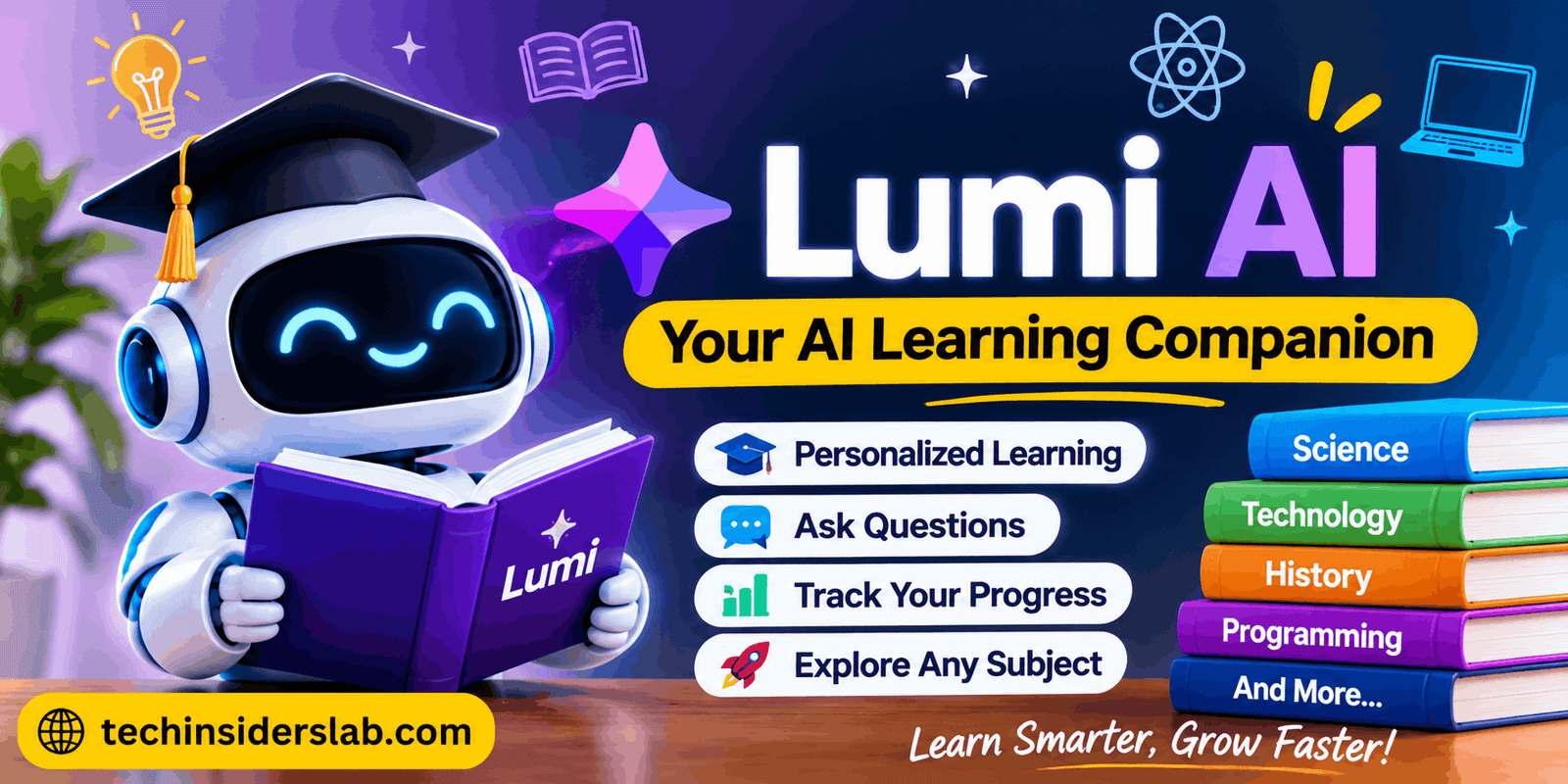
Lumi AI is an AI-powered learning companion designed to make education more accessible, personalized, and engaging. It helps users explore different subjects, ask questions, understand difficult concepts, and develop consistent learning habits. Instead of relying entirely on traditional study methods, learners can use AI-assisted explanations and structured learning activities to make progress at their own pace.
The official Lumi website presents the platform as a companion for learning about subjects ranging from science and history to programming, psychology, and business. Its goal is to support curiosity and help users turn questions into meaningful learning experiences.
In this guide, we will explore Lumi AI, its main features, potential benefits, limitations, and how it may fit into your everyday learning routine.
What Is Lumi AI?
Lumi AI is an artificial intelligence learning companion built to help people understand new topics and pursue personal learning goals. Users can explore subjects, ask questions, receive explanations, and organize their learning into manageable steps.
Unlike a traditional online course that follows a fixed curriculum, Lumi aims to provide a more flexible experience. Learners can start with a simple question, investigate a topic in greater depth, and continue exploring related concepts according to their interests.
For example, a student learning biology might ask Lumi to explain photosynthesis in simple language. Someone studying programming could explore Python fundamentals, while a business professional might use it to understand marketing concepts or financial terminology.
The platform also emphasizes personalized explanations, bite-sized lessons, and progress tracking. These features are intended to help users stay engaged rather than feeling overwhelmed by large amounts of information.
You can explore the platform through . According to the website, its native iOS and Android applications are still being prepared, while the mobile browser experience is available to try.
Key Features of Lumi AI
1. AI-Powered Question Answering
One of Lumi’s central features is the ability to ask questions about subjects you want to understand. Rather than searching through multiple articles, learners can begin with a direct question and use the response as a starting point for further exploration.
For example, you could ask why the sky appears blue, how computer networks communicate, or what causes a particular historical event. The AI can provide an explanation suited to the question and help you explore related ideas.
This conversational approach is particularly useful when a textbook explanation feels too complicated. You can ask follow-up questions, request simpler wording, or investigate a specific part of the topic.
However, AI-generated answers are not always correct. Users should verify important facts, especially when studying academic material or preparing assignments.
2. Personalized Learning Experiences
Every learner has different interests, abilities, and learning goals. Some people prefer short explanations, while others need examples and more detailed discussions before understanding a concept.
Lumi aims to make learning more personalized by offering explanations and lessons that can fit different learning needs. Its approach is designed to help users explore subjects at a comfortable pace.
For instance, a beginner learning programming may need explanations of variables, functions, and basic syntax. An experienced developer might prefer to explore advanced concepts or unfamiliar programming techniques.
Personalization can make learning feel more relevant because users can focus on the information they need instead of following a single rigid learning path.
Still, learners should check whether the available explanations match their actual syllabus, professional requirements, or intended skill level.
3. Bite-Sized Lessons
Large subjects can seem intimidating when presented all at once. Lumi addresses this challenge through bite-sized learning, which breaks information into smaller, more manageable pieces.
Instead of attempting to understand an entire subject in one session, learners can concentrate on a single concept before moving to the next.
Imagine that you want to learn the fundamentals of physics. You could begin with motion, continue with force, and then explore energy. Approaching the subject in smaller sections can make it easier to identify confusing areas and review them when necessary.
Short learning sessions are also convenient for people with busy schedules. Students can review a topic between classes, while professionals can use a few spare minutes to explore a new skill.
The effectiveness of this approach depends on how consistently learners practice and whether they revisit information after their initial study session.
4. Support for Different Subjects
Lumi is designed for broad learning rather than a single academic discipline. Its website highlights several areas that users can explore, including:
- Science and physics
- History and general knowledge
- Programming and technology
- Biology and psychology
- Business and professional learning
This range makes the platform potentially useful for students, independent learners, and people who want to expand their knowledge outside their main field.
For example, a technology enthusiast might explore programming fundamentals, while someone interested in psychology could use AI explanations to understand concepts related to human behavior.
The exact depth and accuracy of the material may vary between topics. Learners working on advanced subjects should supplement AI explanations with textbooks, credible research, and other authoritative educational resources.
5. Learning Goals and Progress Tracking
Developing a new skill requires more than reading a few explanations. Consistent practice and a clear sense of direction are also important.
Lumi’s website highlights learning goals and progress tracking as part of its approach. These features are intended to help users organize their efforts and recognize the progress they make over time.
A learner might set a weekly target, such as completing several lessons or spending a certain amount of time studying Python. Tracking progress can make the goal feel more manageable and encourage regular participation.
Progress indicators may also help users identify whether they are following their intended routine.
It is important to remember that completing lessons does not automatically mean mastering a subject. Learners should also test their understanding by solving problems, explaining concepts in their own words, and applying knowledge to practical situations.
6. Learning With Friends
Lumi also presents learning as an activity that can involve other people. Its website highlights the idea of sharing knowledge and growing together.
Learning with friends can provide additional motivation. People can discuss challenging concepts, exchange explanations, and encourage each other to continue studying.
For example, two students learning programming might explore the same topic and compare how they understand a particular problem. Discussing different approaches can reveal misunderstandings and introduce new perspectives.
The usefulness of collaborative learning depends on the tools available and how learners choose to interact with one another.
How to Get Started With Lumi AI
Getting started with Lumi is relatively straightforward. The following steps provide a practical starting point for exploring the learning companion.
Step 1: Visit the official website
Review the available features and choose the option to try the mobile web experience.
Step 2: Choose a topic
Think about what you want to learn. You could choose a school subject, a professional skill, a programming language, or a topic that interests you personally.
Starting with one specific subject can make your learning experience more focused.
Step 3: Ask a question
Enter a question about the topic you selected. For better results, explain your current knowledge level and the kind of explanation you need.
For example, instead of asking only about machine learning, you could ask for a beginner-friendly explanation of machine learning with a practical example.
Step 4: Explore the explanation
Read the response carefully and identify any terms or concepts you do not understand. Ask follow-up questions when necessary rather than moving forward with unanswered questions.
You can also use examples to connect theoretical ideas with real-world situations.
Step 5: Set a learning goal
Decide what you want to achieve within a reasonable period. A goal such as understanding basic Python syntax over one week is more practical than trying to master an entire programming language in a day.
Step 6: Review your progress
Return to the material regularly and check whether you can explain the concepts without assistance. Use practice questions or independent exercises to determine which areas need more attention.
Benefits of Using Lumi AI
Lumi offers several potential advantages for people who want a more flexible way to learn.
Flexible learning: Users can explore topics according to their interests rather than relying entirely on a fixed lesson sequence.
Accessible explanations: Conversational AI can help break complicated ideas into language that is easier to understand.
Time efficiency: Direct questions may help learners find explanations more quickly than searching through numerous unrelated resources.
Support for curiosity: The ability to explore different subjects encourages independent learning beyond formal education.
Goal-oriented study: Learning goals and progress indicators can help users establish a routine and monitor their activity.
Convenient access: The browser-based experience provides a way to explore the platform without waiting for the advertised native mobile applications to become available.
These benefits depend on how the platform performs for a particular learner, the quality of its responses, and the consistency of the user’s study habits.
Limitations of Lumi AI
Although AI learning tools can be useful, they also have limitations that users should understand before depending on them.
AI Answers May Contain Mistakes
Artificial intelligence can occasionally produce incorrect facts, misleading explanations, or incomplete answers. Students should verify important information through trusted sources instead of assuming every response is accurate.
It Cannot Replace Every Learning Resource
Some subjects require laboratory work, supervised practice, formal assessments, or expert instruction. An AI companion can support these activities, but it cannot automatically provide every element of a complete education.
Learning Still Requires Effort
Receiving a clear explanation is different from mastering a skill. Learners must practice, solve problems, revise important concepts, and apply what they have learned.
Availability and Features May Change
The official website states that Lumi’s native mobile applications are not ready yet. Users should check the website for current availability before expecting a fully developed iOS or Android application.
Verify Privacy and Account Requirements
Before sharing personal information, educational records, or sensitive documents with an AI service, review its privacy policy and terms. Check what information is collected, how it is handled, and which account permissions may be required.
Understanding these limitations helps users approach Lumi with realistic expectations.
Is Lumi AI Worth Trying?
Lumi AI may be worth exploring if you enjoy learning independently and want a convenient way to investigate unfamiliar topics. Its focus on conversational explanations, personalized learning, manageable lessons, and goal tracking makes it relevant to students and lifelong learners.
It may be particularly helpful when you need an initial explanation before moving to more advanced educational resources. For example, beginners can use AI assistance to understand unfamiliar terminology before reading a detailed textbook or following a structured course.
However, whether Lumi is the right choice depends on your learning goals. Someone preparing for a competitive examination may need detailed syllabus coverage and verified practice questions, while a casual learner may be satisfied with introductory explanations.
Before committing significant time or money, explore the available features and determine whether they meet your needs. Compare the experience with other learning resources and check the current pricing, account requirements, and available functionality directly on the official website.
Tips for Getting Better Results From Lumi AI
To make your learning sessions more productive, consider the following practices:
- Ask specific questions: Focus on one concept at a time rather than submitting a broad question with no context.
- Mention your skill level: Explain whether you are a beginner, intermediate learner, or experienced professional.
- Request practical examples: Examples can make abstract concepts easier to understand.
- Use follow-up questions: Ask for clarification whenever an explanation is confusing.
- Practice independently: Try solving a problem without looking at the AI response.
- Verify important information: Consult reliable educational resources when accuracy matters.
- Set realistic goals: Divide large learning objectives into smaller milestones.
- Review regularly: Revisit earlier topics to strengthen your understanding.
These habits can make almost any AI-supported learning experience more effective.
Conclusion
Lumi AI is an AI-powered learning companion designed to make exploring new subjects more flexible and accessible. Its approach combines conversational question answering, personalized explanations, bite-sized lessons, learning goals, and progress tracking to support independent learning.
The platform may be useful for students who need additional explanations, professionals developing new skills, and curious individuals who enjoy exploring unfamiliar topics. Its emphasis on flexible learning also makes it appealing to people who prefer studying at their own pace.
Nevertheless, AI should be treated as a learning assistant rather than an unquestionable source of information. Users should verify important facts, practice independently, and consult reliable educational materials when necessary.
If you want to explore an unfamiliar subject or build a consistent learning routine, Lumi AI is worth investigating. Visit its official website, try the available experience, and decide whether its features match your personal learning objectives.