AVG Antivirus:Guide to Features, Security, Performance, Benefits
introduction
Online security has become an important part of everyday computer and mobile use. From malicious downloads and phishing websites to ransomware and other forms of malware, modern internet users face many different types of digital threats. This is where antivirus software can provide an additional layer of protection.
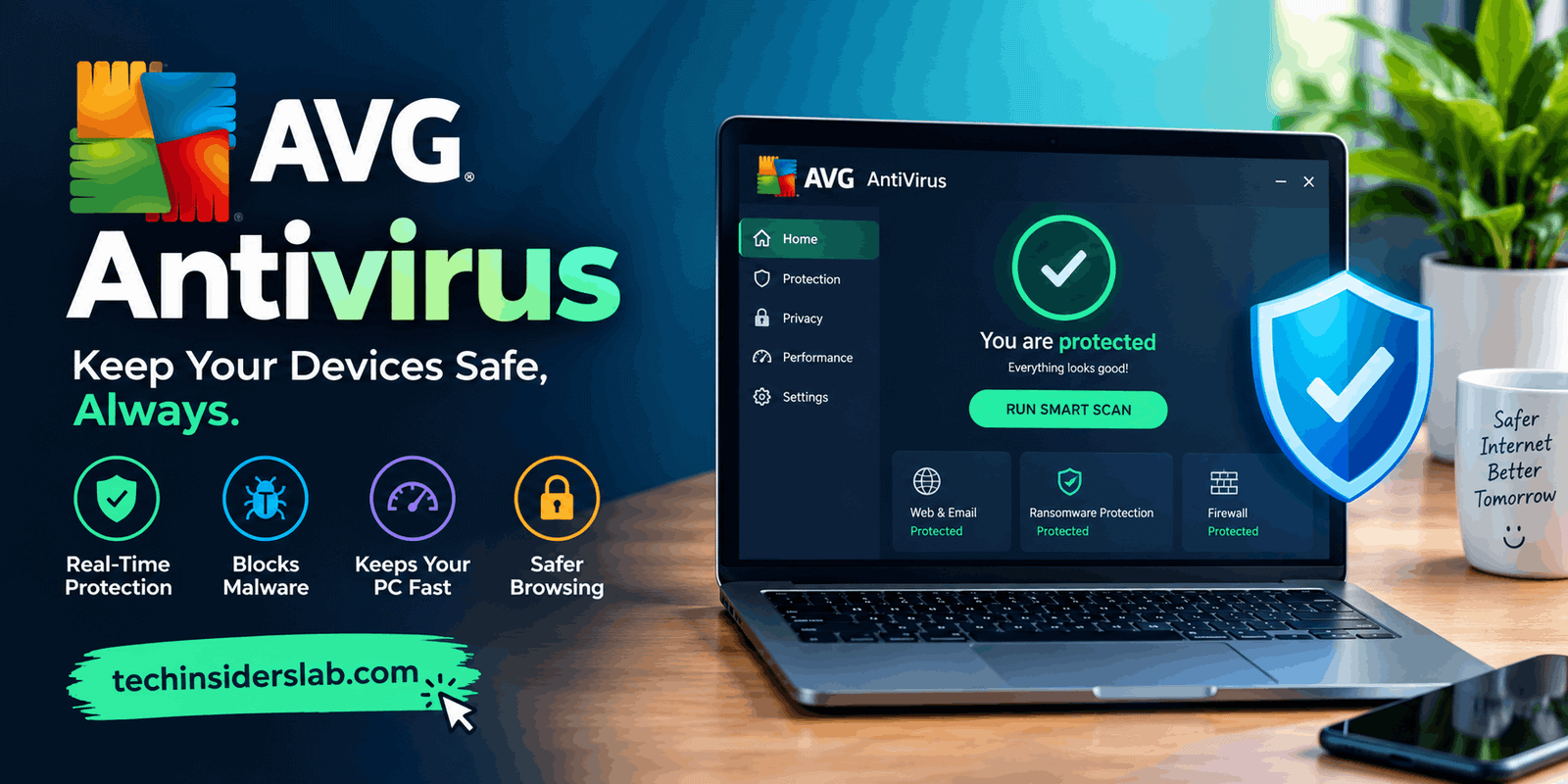
AVG Antivirus is one of the well-known security solutions designed to protect computers and mobile devices from viruses, malware, ransomware, unsafe links, and other online threats. It offers a free antivirus product as well as paid security options with additional features.
For users who want basic protection without immediately paying for a premium security package, AVG AntiVirus Free can be an interesting option. Independent testing has also shown strong recent results. In AV-TEST’s August 2026 Windows 11 evaluation, AVG Antivirus Free received 6/6 for protection, 6/6 for performance, and 6/6 for usability, achieving the maximum possible score in all three categories.
What Is AVG Antivirus?
AVG Antivirus is security software developed to help protect devices against malicious software and online security threats. The product has been available for many years and has evolved from traditional virus scanning into a broader security solution.
Instead of only checking files after they have been downloaded, modern AVG protection works in real time. It can monitor activity, identify suspicious files, detect potentially dangerous websites, and help prevent malware from affecting a device.
AVG is particularly known for its AVG AntiVirus Free product, which provides basic protection without requiring users to purchase a subscription. The company also offers paid security products that provide additional layers of protection and privacy-oriented features.
For a typical home user, AVG can therefore serve as a security tool that works quietly in the background while the user browses websites, downloads files, checks email, and uses everyday applications.
How Does AVG Antivirus Work?
Antivirus software generally relies on several protection techniques rather than one single detection method. AVG uses a combination of malware detection, real-time monitoring, automated updates, and web-related security features.
When a suspicious file or activity is detected, the software can analyze it and take action depending on the type and severity of the threat. Potentially harmful items may be blocked, isolated, or quarantined so they cannot continue affecting the system.
Real-time protection is particularly important because users do not always know when they are interacting with a dangerous file or website. AVG’s Windows product advertises real-time protection against viruses and other malware, automatic updates, and additional web and email security.
This makes antivirus protection more proactive than simply running a manual scan once in a while.
Key Features of AVG Antivirus
1. Real-Time Malware Protection
One of the most important features of AVG is real-time protection. Instead of waiting for the user to start a scan, security software can continuously monitor the system for suspicious activity.
This is useful when downloading applications, opening attachments, browsing unfamiliar websites, or transferring files.
AVG’s free Windows antivirus is designed to provide real-time protection against viruses, malware, and other threats.
2. Virus and Malware Scanning
AVG can scan a computer for malicious software such as viruses, Trojans, and other malware.
A security scan can help identify existing threats that may already be present on a device. This is especially useful if a computer begins behaving unusually, showing unexpected pop-ups, or becoming slower without an obvious reason.
AVG also provides malware-removal capabilities designed to quarantine or remove detected threats.
3. Ransomware Protection
Ransomware is one of the more serious categories of modern malware because it can prevent users from accessing their own files.
AVG includes ransomware protection designed to prevent unauthorized applications from modifying, deleting, or encrypting protected personal files. Users can also specify folders that they want to protect and control which applications are allowed to modify those files.
This type of protection can be particularly useful for people who keep important documents, photographs, projects, or other personal files on their computers.
4. Phishing Protection
Not every cyberattack requires a traditional virus. Phishing attacks often attempt to trick users into entering passwords, financial information, or other sensitive details on fake websites.
AVG provides protection against certain malicious or fraudulent websites, links, downloads, and email attachments. Its security tools are designed to warn users about potentially dangerous online content.
However, antivirus software should not replace common sense. Users should still carefully check website addresses, avoid suspicious attachments, and never enter sensitive information into questionable websites.
5. Web and Email Security
Email remains a common way for attackers to distribute malicious files and links. A single careless click can potentially expose a device to malware or direct a user toward a fraudulent website.
AVG’s Windows security product includes additional protection for web browsing and email-related threats. It can help block unsafe links, downloads, and attachments.
This makes the software useful not only for traditional malware detection but also for everyday internet activity.
6. Automatic Security Updates
Cyber threats change constantly. New malware variants can appear frequently, so an antivirus program needs current threat information to remain effective.
AVG supports automatic updates, helping its protection remain current as new threats emerge. The company specifically describes automatic updating as part of its real-time protection system.
Keeping antivirus software updated is important because an outdated security program may not recognize newer threats as effectively.
AVG Antivirus Performance
A common concern about antivirus software is whether it makes a computer noticeably slower.
Security software has to operate in the background, scan files, monitor applications, and inspect potentially dangerous activity. As a result, some security programs can have a measurable effect on system performance.
Recent independent testing gives AVG encouraging results. In AV-TEST’s February 2026 evaluation, AVG Antivirus Free received 6/6 for protection, 5.5/6 for performance, and 6/6 for usability.
The results improved in later testing. In the June 2026 evaluation, AVG Antivirus Free achieved 6/6 in protection, 6/6 in performance, and 6/6 in usability.
The August 2026 results also gave AVG the maximum 18/18 total score across protection, performance, and usability.
These results suggest that AVG can provide strong security while maintaining a reasonable performance profile, although the actual experience can still vary depending on the computer’s hardware, software configuration, and workload.
Is AVG Antivirus Free Really Free?
Yes, AVG offers a free antivirus product. The free edition is aimed primarily at providing essential protection against common security threats.
The benefit of a free antivirus product is obvious: users can obtain a basic layer of security without committing to a paid subscription.
However, free and premium products are not necessarily identical. Paid versions can provide additional security features, privacy tools, advanced controls, or broader protection.
Therefore, users should select a version based on their actual needs rather than assuming that the free version is automatically the best choice for every situation.
AVG Antivirus for Windows
Windows remains one of the most widely used desktop operating systems, making Windows security an important consideration for many users.
AVG AntiVirus Free is available for Windows 11 and is designed to provide real-time protection against viruses, malware, ransomware, unsafe downloads, and other threats.
Its recent independent test results are particularly notable. AV-TEST’s August 2026 Windows 11 testing awarded AVG Antivirus Free the maximum score in protection, performance, and usability.
For everyday Windows users, this makes AVG a security option worth considering.
AVG Antivirus for Android
AVG is not limited to desktop computers. It also offers mobile security products.
In July 2026, AV-TEST evaluated AVG Antivirus Free on Android 15. The evaluation examined malware protection, performance, and false-positive behavior as part of its mobile security testing. AVG’s tested product was AVG Antivirus Free 26.6.
Mobile security can be useful because smartphones now contain sensitive information such as personal photographs, messages, accounts, documents, and financial applications.
Users should nevertheless remember that mobile security also depends heavily on safe behavior, including installing applications from trusted sources and avoiding suspicious links.
Advantages of AVG Antivirus
AVG has several characteristics that make it attractive to everyday users.
Free basic protection: Users can obtain antivirus protection without purchasing a premium package.
Strong independent testing: Recent AV-TEST evaluations have shown excellent scores for AVG Antivirus Free.
Real-time security: AVG continuously monitors threats rather than relying only on manual scans.
Ransomware protection: The software provides mechanisms designed to protect personal files from unauthorized modification.
Web protection: It can help identify potentially dangerous links, downloads, and websites.
Automatic updates: Keeping threat protection current is an important part of modern antivirus security.
Multiple platforms: AVG provides security products for computers and mobile devices.
Possible Limitations of AVG
No antivirus program should be considered a complete replacement for safe online behavior.
One limitation is that some advanced features may be available only in paid products. Users looking for comprehensive privacy, security, or additional system-management tools may therefore need to consider a premium plan.
Another consideration is that antivirus software can never guarantee protection against every possible threat. New malware, sophisticated social engineering, zero-day vulnerabilities, and user mistakes can still create security risks.
Performance can also vary between devices. Although AVG scored strongly in recent independent testing, the effect of security software can differ depending on hardware and usage patterns.
Finally, users should not assume that an antivirus program can stop every phishing attack. If a person voluntarily gives a password to a fraudulent website, antivirus protection may not always prevent the problem.
Is AVG Antivirus Good for Everyday Users?
For many home users, AVG can be a practical antivirus solution.
Its free version provides essential protection, while recent independent testing demonstrates that the software can perform strongly across protection, performance, and usability. In August 2026, AVG Antivirus Free achieved 6/6 in all three AV-TEST categories.
This makes it especially interesting for people who want straightforward security without immediately paying for a premium antivirus subscription.
However, the right choice depends on the user’s needs. Someone who only needs basic malware protection may find the free version sufficient, while a user looking for a broader collection of privacy and security features may prefer a paid security package.
Tips for Using AVG More Effectively
Installing antivirus software is only one part of maintaining a secure device. Users should also follow several basic security practices.
Keep AVG and the operating system updated. Software updates frequently include security improvements.
Avoid downloading cracked or pirated software because unofficial software packages can contain malware.
Be careful with email attachments and unexpected links.
Use strong, unique passwords for important accounts.
Enable multi-factor authentication whenever it is available.
Back up important files regularly, preferably using a secure backup method.
Do not ignore security warnings simply because a website or message looks familiar.
Regularly review installed applications and remove software that you no longer need.
These habits can work alongside antivirus protection to create a stronger overall security strategy.
AVG Antivirus vs. Built-In Security
Modern operating systems already include built-in security features. This means users should think carefully about what additional protection they actually need.
For some people, built-in security may provide sufficient basic protection. Others may prefer AVG because of its interface, additional scanning tools, web protection, ransomware features, or broader security ecosystem.
The decision should not simply be based on the number of features. Ease of use, independent test performance, system impact, and the user’s personal security habits are also important.
Conclusion
AVG Antivirus is a useful cybersecurity solution for users who want protection against viruses, malware, ransomware, unsafe websites, and other common online threats. Its free version makes basic antivirus protection accessible, while premium options provide additional security features for users with more advanced needs.
Recent independent testing has also shown strong results for AVG, particularly in protection, performance, and usability. However, antivirus software should always be combined with safe browsing habits, strong passwords, regular updates, and reliable backups. Overall, AVG Antivirus is a practical choice for everyday users looking for an additional layer of digital security.