WHOIS Lookup: Complete Guide to Domain Information
introduction
A WHOIS Lookup is an internet tool that helps users find publicly available information about a registered domain name. Whether you own a website, are researching a domain, checking an expired domain, troubleshooting a website, or simply want to understand when a domain was registered, a WHOIS Lookup can provide useful information.
Traditionally, WHOIS was used to retrieve domain registration records. Today, RDAP (Registration Data Access Protocol) has become the modern replacement for WHOIS for many generic domain extensions. However, the term “WHOIS Lookup” remains widely used because it is familiar to website owners, developers, SEO professionals, and everyday internet users.
This guide explains what WHOIS Lookup means, what information it provides, how it works, why people use it, and what you should consider when interpreting its results.
What Is a WHOIS Lookup?
A WHOIS Lookup is a domain research tool that allows you to enter a domain name and view available registration information.
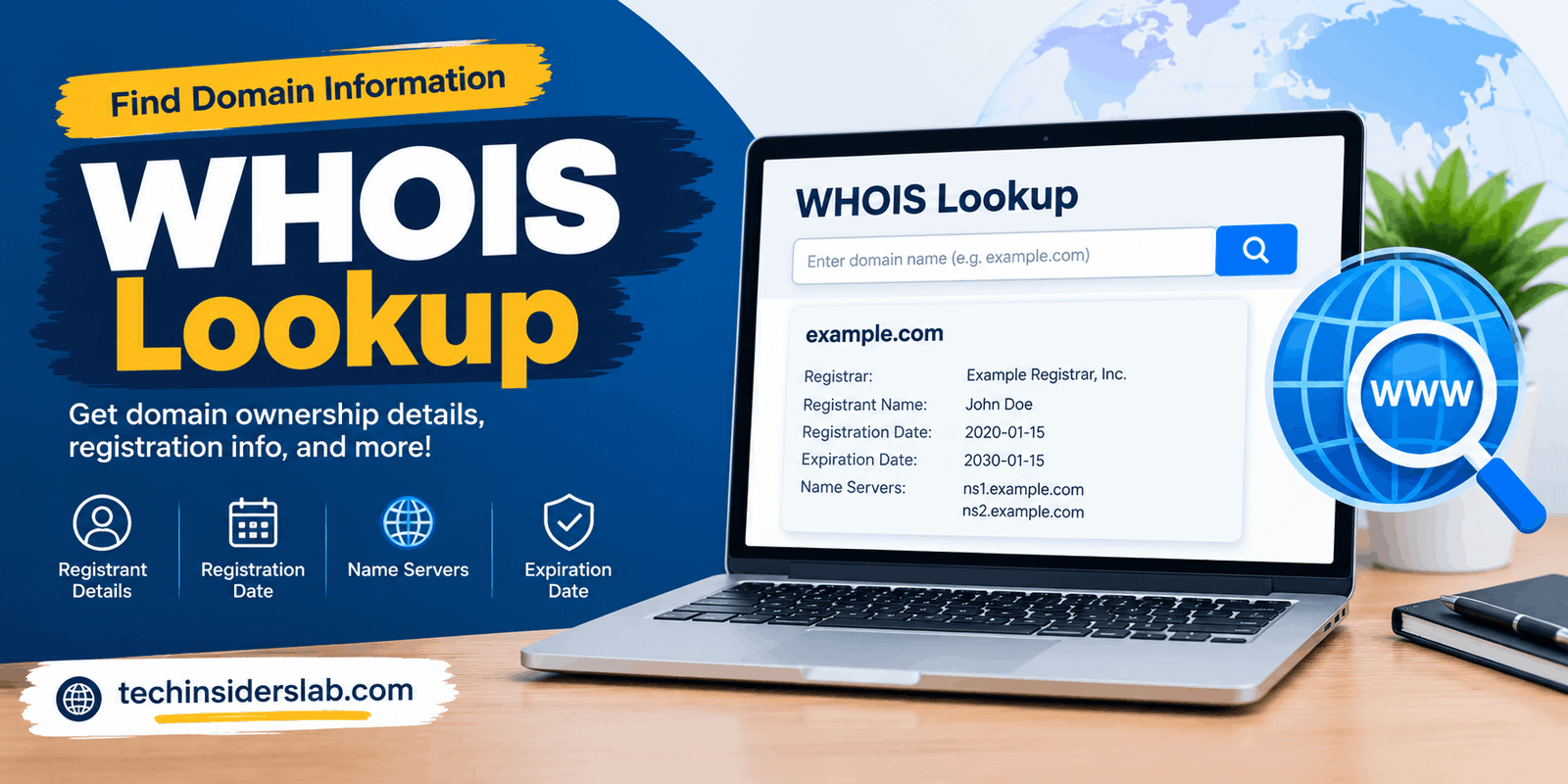
For example, if you want to research a domain such as example.com, a lookup may provide information related to:
- Domain name
- Registrar
- Registration date
- Expiration date
- Last update
- Domain status
- Nameservers
- DNSSEC information
- Available registration details
The exact information shown can vary depending on the domain extension, registry, registrar, privacy policies, and applicable regulations.
WHOIS has existed for many years as a way to access domain registration information. RDAP was later developed as a more modern and structured system for accessing registration data.
For users, the experience can look very similar. A website may still call its service a “WHOIS Lookup” even when it uses RDAP technology to retrieve the information.
What Information Does WHOIS Lookup Provide?
One of the biggest advantages of a WHOIS Lookup is that it can provide several important details about a domain.
Domain Name
The first piece of information displayed is normally the domain name that was searched.
This helps confirm that the correct domain has been queried.
For example:
- example.com
- example.net
- example.org
are separate domains, even though they use the same name.
Registrar Information
The registrar is the company responsible for managing the domain registration.
Knowing the registrar can be useful when dealing with domain management, transfers, renewals, or registration-related problems.
For website owners, this information can also help identify where their domain is currently registered.
Registration Date
The registration date shows when the domain was originally registered.
This information is often useful when researching the age of a domain.
For example, a domain registered many years ago has a different registration history from one that was created recently.
However, domain age should not automatically be considered a measure of quality. An older domain is not necessarily more trustworthy, valuable, or authoritative than a newer domain.
Expiration Date
A WHOIS Lookup can also display the domain’s expiration date.
This is particularly useful for domain owners who want to keep track of their registration period.
If a domain is approaching expiration, the owner should check the renewal requirements through their registrar.
It is important to remember that expiration does not necessarily mean that a domain immediately becomes available for someone else. Registries and registrars can have different processes after expiration.
Domain Status
Domain status codes describe the current state or restrictions associated with a domain.
Some status codes relate to domain transfers, while others can indicate restrictions or stages associated with registration and expiration.
Understanding these statuses can help users determine whether a domain is operating normally or has specific restrictions.
Nameservers
Nameservers are another important part of domain information.
They tell the internet where DNS information for the domain is being managed.
A lookup may display nameservers such as:
- ns1.example.com
- ns2.example.com
This information can be useful when troubleshooting DNS problems or determining which DNS service is associated with a domain.
However, nameserver information should not be confused with complete DNS information. A DNS lookup can provide additional records such as A, AAAA, MX, CNAME, TXT, and CAA records.
Can WHOIS Lookup Show the Owner’s Name?
This is one of the most common questions about WHOIS.
In the past, some WHOIS records could display detailed registrant information. Today, personal information is frequently hidden or redacted because of privacy requirements and registration-data policies.
Depending on the domain and registrar, publicly available information may include organizational or technical details instead of a private individual’s personal information.
You may therefore find that a lookup does not show:
- Full personal name
- Personal address
- Private telephone number
- Personal email address
This does not necessarily mean the lookup is incomplete. The information may simply be protected from public access.
If a person or organization has a legitimate need for nonpublic registration information, special processes may exist for requesting it.
WHOIS Lookup vs RDAP
WHOIS and RDAP are closely related, but they are not the same technology.
WHOIS is the older protocol used to retrieve registration information.
RDAP, or Registration Data Access Protocol, is the newer system designed to provide registration data in a more structured and standardized way.
RDAP offers several advantages, including better support for structured responses, internationalization, secure communication, and identification of authoritative registration-data services.
For ordinary users, the difference may not be noticeable.
Many websites continue to use the term “WHOIS Lookup” because it is the phrase most people recognize when searching for domain registration information.
Why Do People Use WHOIS Lookup?
There are many reasons someone might perform a WHOIS Lookup.
Domain Research
Website owners and researchers can use WHOIS to understand basic registration information.
For example, they may want to know:
- When the domain was registered
- Which registrar manages it
- When the domain expires
- What its current status is
- Which nameservers are being used
Buying a Domain
WHOIS information can be useful when researching a domain that you are interested in purchasing.
It can help you understand whether the domain is currently registered and provide basic registration details.
However, registration information should not be the only factor considered before purchasing a domain.
A potential buyer may also want to investigate the domain’s previous content, backlinks, search history, trademark issues, reputation, and other factors.
Website Management
Website administrators can use WHOIS Lookup to check their own domain information.
This can be helpful for confirming registration details and keeping track of renewal information.
Regular domain monitoring can also help website owners identify unexpected changes.
Troubleshooting
WHOIS information can sometimes help with domain-related troubleshooting.
For example, if a website stops working, checking the registration status and nameserver information may provide useful clues.
However, WHOIS is not a complete website troubleshooting solution. DNS settings, hosting configuration, SSL certificates, server settings, and other technical factors may also need to be checked.
WHOIS Lookup and Domain Expiration
Domain expiration is an important reason people check registration records.
Every registered domain has a registration period. The owner normally needs to renew the domain before or around its expiration period according to the registrar’s policies.
If the domain is not renewed, it may enter different stages before eventually becoming available again.
The exact process can vary depending on the domain extension and registrar.
Therefore, users should not assume that an expired domain immediately becomes available for registration.
For domain investors, expiration information can be useful when monitoring domains that may eventually become available.
WHOIS Lookup for Expired Domains
Expired-domain research is another common use of WHOIS Lookup.
SEO professionals, domain investors, and website owners sometimes investigate expired domains because they may have existing history, backlinks, or brand value.
However, the registration date alone does not tell you whether an expired domain is valuable.
Before purchasing an expired domain, it can be useful to research:
- Previous website content
- Backlink profile
- Spam history
- Search-engine history
- Previous ownership
- Trademark concerns
- Domain reputation
- Historical traffic
- Archived pages
A domain that looks attractive because of its age may still have a poor history.
WHOIS Lookup for Cybersecurity
Security researchers can also use domain registration information during investigations.
For example, researchers may examine recently registered domains connected to suspicious activity or investigate domain infrastructure.
WHOIS or RDAP information can provide useful context during such research.
However, registration information alone does not prove that a domain is malicious.
A newly registered domain may belong to a legitimate new business, while an older domain could potentially be compromised.
For this reason, security professionals normally combine registration information with other technical and investigative data.
How to Perform a WHOIS Lookup
Performing a basic WHOIS Lookup is generally straightforward.
Step 1: Open a Lookup Tool
Start with a reputable WHOIS or RDAP lookup service.
Step 2: Enter the Domain Name
Enter the domain you want to research.
For example:
example.com
You generally do not need to enter a complete webpage address such as:
Step 3: Start the Lookup
Submit the domain name using the search or lookup button.
The service will query the appropriate registration-data source.
Step 4: Review the Results
Look for important information such as:
- Registrar
- Creation date
- Expiration date
- Domain status
- Nameservers
- DNSSEC status
- Available registration information
Step 5: Understand the Results
Not every field has the same meaning for every domain extension.
Different registries and registrars can expose different information.
Therefore, it is important to interpret the results according to the specific domain and its registration system.
Is WHOIS Lookup Free?
Many basic WHOIS Lookup services are free.
Users can often search for a domain and view publicly available registration information without paying anything.
Some third-party services may also offer premium features such as:
- Bulk domain searches
- Historical registration records
- Domain monitoring
- Expiration alerts
- Advanced research tools
These additional features may require a subscription or payment.
For a simple domain check, however, a basic lookup is usually sufficient.
WHOIS Lookup and Privacy
Privacy is an important part of modern domain registration.
The personal details of domain owners are often protected from public access.
This means that a public lookup may still show technical information while hiding sensitive personal information.
For example, a lookup might show:
- Registrar
- Domain status
- Registration dates
- Nameservers
while hiding:
- Private address
- Personal phone number
- Personal email
- Individual registrant name
This privacy protection is particularly important because domain registration information can otherwise expose personal details to anyone who performs a search.
WHOIS Lookup vs DNS Lookup
WHOIS Lookup and DNS Lookup are often confused because both can provide information about a domain.
However, they serve different purposes.
WHOIS/RDAP Lookup
Primarily provides information related to:
- Domain registration
- Registrar
- Registration dates
- Expiration
- Domain status
- Nameservers
- Registration information
DNS Lookup
Primarily provides information related to:
- A records
- AAAA records
- MX records
- CNAME records
- TXT records
- NS records
- CAA records
In simple terms, WHOIS/RDAP helps answer “How is this domain registered?”, while DNS tools help answer “How is this domain configured on the internet?”
Both can be useful when researching or troubleshooting a website.
Limitations of WHOIS Lookup
Although WHOIS Lookup is useful, it has several limitations.
Personal Information May Be Hidden
Privacy policies can prevent personal registration details from being displayed publicly.
Information Can Differ
Different domain extensions may provide different registration information.
It Does Not Show Everything About a Website
WHOIS cannot tell you everything about a website’s traffic, content, reputation, security, or ownership history.
It Is Not a Complete DNS Tool
If you need detailed DNS records, you should use a dedicated DNS lookup service.
Registration Information Can Change
Domains can be transferred between registrars, renewed, updated, or reconfigured.
Therefore, lookup information should be treated as a snapshot of available registration data rather than a permanent record of everything that has happened to a domain.
Things to Check Before Buying a Domain
If you are considering purchasing an existing domain, a WHOIS Lookup can be a useful starting point.
Check the:
Registration Date: Understand how long the domain has existed.
Expiration Date: Determine its current registration period.
Registrar: Identify where the domain is managed.
Status: Look for transfer or other registration restrictions.
Nameservers: Understand which DNS service is associated with the domain.
But do not stop there.
You should also investigate the domain’s historical use, backlinks, reputation, trademark situation, and previous content.
WHOIS Lookup for Website Owners
Website owners can benefit from periodically checking their own domain registration information.
A basic review can help confirm:
- Correct registrar
- Domain expiration information
- Current nameservers
- Domain status
- Registration details
- DNSSEC status when available
Website owners should also protect their registrar accounts with strong passwords and available security features.
Because the domain is often connected to email, hosting, DNS, and business operations, protecting the registrar account is an important part of website security.
Conclusion
WHOIS Lookup is a useful tool for checking important information about a domain, including its registrar, registration date, expiration date, status, and nameservers. It can help website owners, domain buyers, SEO professionals, and researchers understand basic domain registration details. Since personal information may be hidden for privacy reasons, WHOIS results should be considered one part of overall domain research rather than a complete source of information.