Wired Headphones:Guide to Sound Quality, Types, Benefits,buying
introduction
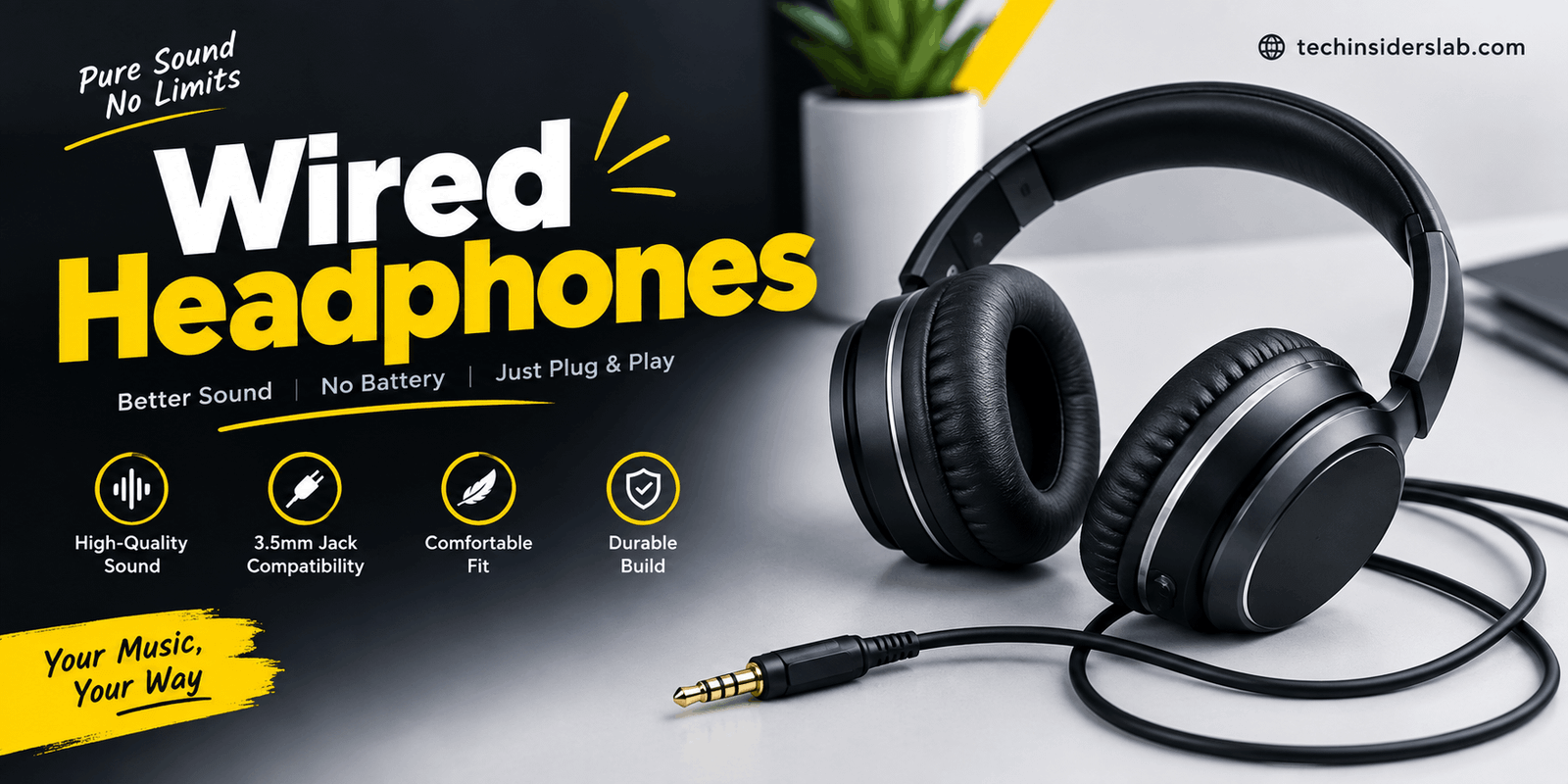
Wired headphones have been around for decades, but they remain an important part of the modern audio world. While wireless headphones and earbuds have become extremely popular, wired headphones continue to attract music listeners, gamers, students, content creators, musicians, and audio professionals who want a reliable connection without depending on batteries or wireless pairing.
Unlike Bluetooth headphones, wired headphones transmit audio directly through a physical cable. This simple connection can provide very low latency, stable performance, and consistent audio transmission. Depending on the design, wired headphones can connect through a traditional 3.5mm headphone jack, USB-C, USB-A, or other professional audio connections.
The modern wired headphone market includes everything from inexpensive earphones for everyday listening to high-end studio headphones designed for professional recording and mixing. Understanding the different types, connections, specifications, and use cases can help you choose a model that fits your needs.
What Are Wired Headphones?
Wired headphones are audio devices that connect directly to a source device using a physical cable. The source can be a smartphone, computer, laptop, tablet, gaming console, audio interface, music player, or another compatible device.
A traditional analog wired headphone usually receives an analog audio signal through a connector such as a 3.5mm jack. The device’s internal digital-to-analog converter, or DAC, converts digital audio into an analog signal before it reaches the headphones.
USB-C headphones work somewhat differently. They can receive digital audio through the USB connection and may contain their own DAC and amplifier. This means the conversion from digital audio to an analog signal can happen inside the headphones or an attached adapter rather than inside the smartphone or computer.
This distinction is important because not every wired headphone works with every device in exactly the same way.
Why Are Wired Headphones Still Popular?
The biggest reason people continue choosing wired headphones is simplicity. There is no Bluetooth pairing, wireless connection management, or headphone battery to recharge when using traditional passive wired models.
A wired connection can also provide extremely low latency. Since traditional analog headphones do not need to encode, wirelessly transmit, and decode the audio signal, the delay can be very small. This makes wired headphones particularly useful for gaming, music production, recording, live monitoring, and situations where audio and video synchronization matters.
Another advantage is consistency. Wireless headphones can experience connection problems or codec-related changes depending on the device and environment. A physical connection avoids many of these wireless variables.
However, wired headphones are not automatically better than wireless headphones in every situation. The best choice depends on how you plan to use them.
Main Types of Wired Headphones
Wired headphones come in several different designs, and each design serves a different purpose.
1. Over-Ear Wired Headphones
Over-ear headphones have large ear cups that completely surround the ears. They are commonly used for music listening, gaming, studio monitoring, and professional audio work.
Because the ear cups are larger, manufacturers have more room for larger drivers and acoustic designs. Closed-back over-ear headphones can also provide passive isolation from surrounding sounds.
Studio headphones are often available in wired form because professionals value a stable connection and predictable monitoring.
2. On-Ear Wired Headphones
On-ear headphones have smaller ear cups that sit directly on the ears instead of surrounding them.
They are generally lighter and more compact than many over-ear models. Some people prefer them for portability because they can be easier to carry.
Their smaller design can also allow more environmental sound to reach the listener, depending on the construction.
3. Wired In-Ear Headphones
Wired in-ear headphones, often called wired earphones or IEMs when they use an in-ear monitor design, fit inside or close to the ear canal.
They are compact and convenient for portable listening. Many models offer good passive isolation because their ear tips form a seal inside the ear.
For people who want a small wired audio solution, in-ear headphones can be an attractive alternative to full-size headphones.
3.5mm Wired Headphones
The 3.5mm connector has traditionally been one of the most common headphone connections.
Many laptops, desktop computers, audio interfaces, gaming devices, and older smartphones still support this connection. The major benefit is broad compatibility with devices that include a standard analog headphone output.
However, many modern smartphones no longer include a 3.5mm headphone port. In such cases, users may need a USB-C-to-3.5mm adapter.
The quality of an adapter can matter because the adapter may contain the DAC and amplifier responsible for converting and driving the audio signal.
USB-C Wired Headphones
USB-C has become increasingly important for wired audio because many modern phones, tablets, laptops, and computers use USB-C ports.
USB-C headphones can transmit digital audio rather than relying on the traditional analog signal path. In this design, the headphones or USB-C adapter may contain the necessary DAC and amplification hardware.
One important point is that USB-C does not automatically mean superior sound quality. The actual result depends on the headphones, DAC, amplifier, software, source device, and overall implementation.
USB-C can nevertheless be very useful for modern devices that do not have a traditional headphone jack.
Wired Headphones vs Wireless Headphones
The main difference between wired and wireless headphones is how the audio signal reaches the headphones.
Wireless headphones typically use Bluetooth or another wireless technology. Bluetooth audio requires encoding, transmission, decoding, and often additional processing. These steps can introduce latency.
Traditional wired headphones avoid the wireless transmission stage.
This can be especially important for:
- Competitive gaming
- Music recording
- Instrument monitoring
- Video editing
- Live audio monitoring
- Professional studio work
- Real-time communication
Modern wireless technology has improved considerably, and specialized 2.4GHz wireless gaming systems can provide much lower latency than ordinary Bluetooth. Therefore, the difference is not simply “wired good, wireless bad.” The connection technology and intended use both matter.
Sound Quality and Wired Headphones
Many people associate wired headphones with better sound quality, but the connection type alone does not determine whether headphones sound good.
The drivers, acoustic design, tuning, DAC, amplifier, source quality, and recording itself all influence the final listening experience.
A cheap wired headphone can sound worse than a well-designed wireless headphone. Similarly, a high-quality wired headphone can provide an excellent listening experience when paired with an appropriate source.
For this reason, specifications should be considered as a whole rather than focusing on one number.
Understanding Headphone Impedance
Impedance is measured in ohms, represented by the symbol Ω. It describes the electrical load that headphones present to the audio source.
Low-impedance headphones are generally easier for portable devices to drive, while higher-impedance headphones may require more voltage from the source or a dedicated amplifier.
However, impedance should not be interpreted as a quality rating. A higher impedance does not automatically mean better sound.
Sensitivity also matters because it indicates how efficiently headphones convert electrical power or voltage into sound. The relationship between impedance, sensitivity, and the source device determines how easily a headphone reaches a useful listening level.
This is particularly important when buying professional or high-impedance studio headphones.
What Is Frequency Response?
Frequency response describes the range of frequencies a headphone is designed to reproduce.
The range is commonly expressed in Hertz (Hz) and kilohertz (kHz). For example, a manufacturer might publish a frequency range covering very low bass through high treble.
However, a wider frequency-response number does not automatically mean better sound. The way the headphone emphasizes or reduces different frequencies is much more important to the actual listening experience.
Bass-heavy headphones may emphasize low frequencies, while studio-oriented models may aim for a more controlled or neutral presentation.
Therefore, frequency response should be treated as useful technical information rather than a simple sound-quality score.
Wired Headphones for Gaming
Wired headphones are popular among gamers because low latency can help keep sound synchronized with on-screen action.
In fast-paced games, even a small delay can potentially affect the relationship between visual events and audio cues. Traditional analog wired connections generally introduce very little latency compared with Bluetooth connections.
Wired gaming headphones can also eliminate concerns about battery life during long gaming sessions.
For PC gaming, USB headphones may provide additional features such as software-based equalizers, microphone controls, virtual surround processing, or chat mixing. However, USB headphones may introduce some processing latency depending on their internal electronics.
Wired Headphones for Music Production
Music producers and recording professionals often need predictable audio monitoring.
Wired headphones are useful in these environments because they provide a stable physical connection and very low latency. Musicians can use them while recording vocals or instruments, while producers can use them for editing, mixing, and detailed listening.
Closed-back headphones are particularly useful during recording because they can help reduce sound leakage into microphones.
Open-back wired headphones are also common for critical listening and mixing because their acoustic design can create a more spacious presentation. However, open-back models allow more sound to enter and escape, making them less suitable for noisy environments or microphone recording.
Wired Headphones for Everyday Use
For everyday listening, the right wired headphones depend heavily on convenience and device compatibility.
If your phone, laptop, or music player has a 3.5mm port, traditional wired headphones can be extremely straightforward. If your device only has USB-C, USB-C headphones or a suitable adapter may be necessary.
For commuting or travel, compact wired earphones can be convenient. For home listening, over-ear headphones may provide greater comfort.
The key is to match the design to your environment rather than simply choosing based on price.
Advantages of Wired Headphones
Wired headphones offer several practical advantages:
Very low latency: Traditional passive analog connections can provide extremely low delay.
No battery requirement: Passive wired headphones do not need to be charged.
Stable connection: A physical cable avoids many wireless connection problems.
Wide range of choices: Wired models are available in budget, gaming, studio, audiophile, and professional categories.
Easy setup: Plugging in a compatible cable is usually simpler than pairing a Bluetooth device.
Useful for professional work: Recording, monitoring, editing, and other real-time applications often benefit from a direct connection.
Disadvantages of Wired Headphones
Wired headphones also have limitations.
The cable can become tangled, snag on objects, or restrict movement. Users who exercise or move frequently may find a cable less convenient than Bluetooth.
Compatibility can also be an issue. Many smartphones have removed the 3.5mm headphone jack, meaning users may need an adapter or USB-C headphones.
USB-C headphones can also introduce compatibility considerations because devices and accessories may implement USB audio differently. This makes checking device compatibility important before buying.
How to Choose the Right Wired Headphones
Before buying wired headphones, consider the following factors.
Check the Connector
Determine whether your device supports 3.5mm, USB-C, USB-A, or another connection.
Consider Your Main Use
Choose based on whether you primarily need headphones for music, gaming, studying, recording, video editing, commuting, or professional audio.
Look at Comfort
Comfort is extremely important if you plan to wear headphones for several hours. Consider ear-pad material, clamping force, weight, headband design, and fit.
Check Impedance and Sensitivity
If you’re purchasing high-impedance headphones, verify that your phone, laptop, audio interface, or amplifier can drive them properly.
Consider Cable Quality
A detachable cable can be useful because it allows easier replacement if the cable becomes damaged.
Think About Microphone Requirements
If you need headphones for calls, gaming communication, or online meetings, make sure the model includes a microphone or supports a compatible external microphone.
Are Wired Headphones Better for You?
Wired headphones can be an excellent choice if you prioritize reliable connectivity, low latency, long listening sessions without charging, or professional audio applications.
They are particularly practical for people who work with audio, play competitive games, record music, or simply prefer a direct connection.
Wireless headphones may be more convenient for people who value freedom of movement, commuting, exercise, and cable-free listening.
The decision ultimately depends on your device, environment, listening habits, and priorities.
Conclusion
Wired headphones continue to be a practical choice for people who value reliable audio, low latency, and a simple connection. From 3.5mm headphones to modern USB-C models, there are options for music lovers, gamers, students, content creators, and audio professionals. They also eliminate the need to charge a battery when using traditional passive designs.
The right wired headphones ultimately depend on your device, listening habits, comfort preferences, and intended use. By checking the connector, sound characteristics, impedance, sensitivity, microphone, comfort, and overall build quality, you can find a pair that provides a satisfying and dependable listening experience.