iPhone SE 1st Generation to Buy: Complete Guide for Buyers
introduction
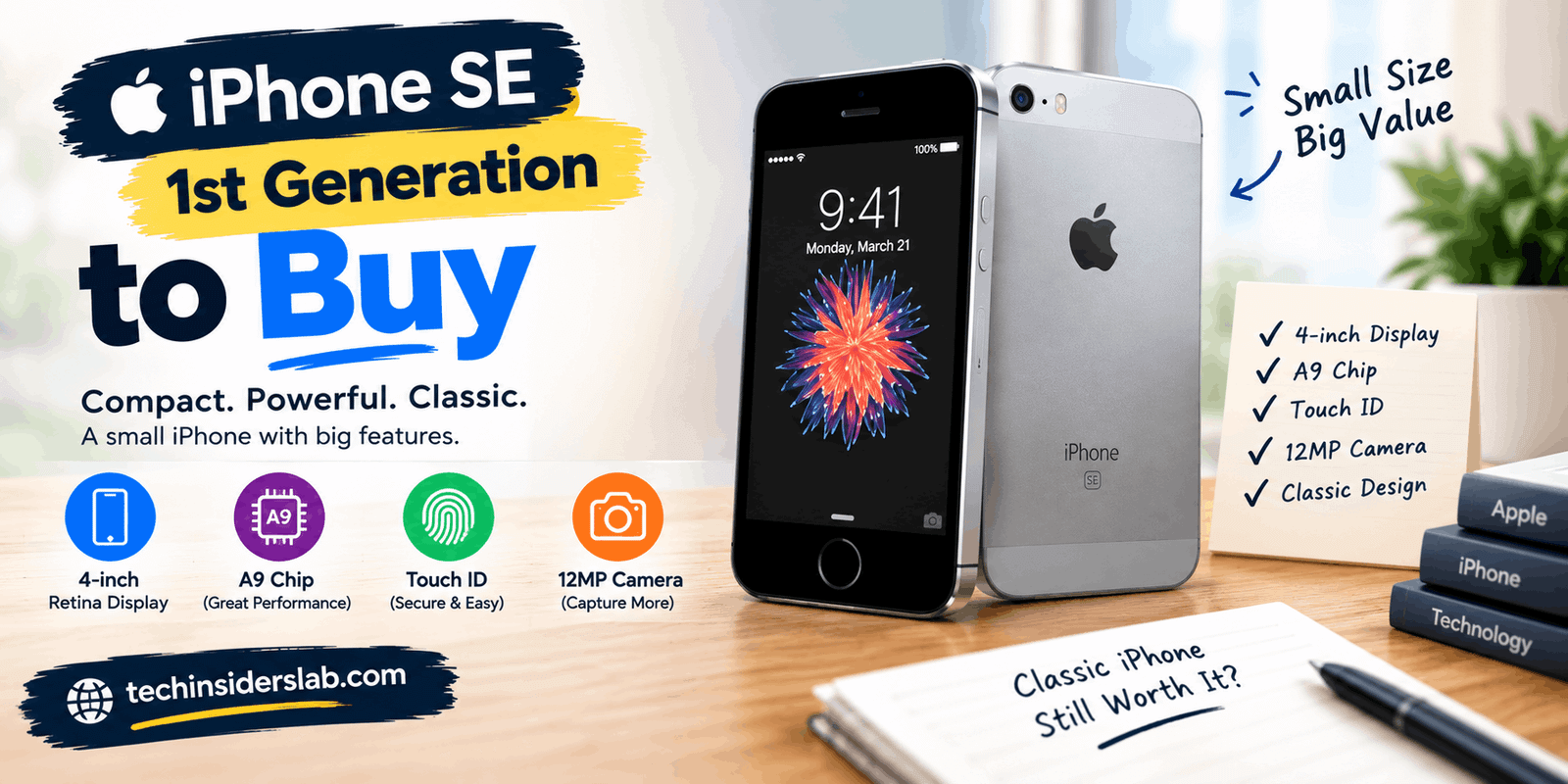
4Originally introduced by Apple in 2016, the device combined the compact body of the iPhone 5s with significantly upgraded internal hardware, including the Apple A9 chip and a 12MP rear camera.
Even though the first-generation iPhone SE is now an old smartphone, it still attracts attention in the used-phone market. Its small 4-inch display, lightweight body, Touch ID fingerprint sensor, and familiar iOS experience make it different from most modern smartphones.
However, buying a phone this old requires more consideration than simply checking its appearance or asking whether it still works. Battery condition, software compatibility, storage, network support, physical condition, and repair availability can all affect the value of a used iPhone SE.
This guide explains what buyers should know before purchasing an iPhone SE 1st Generation.
What Is the iPhone SE 1st Generation?
The first-generation iPhone SE was introduced by Apple in March 2016. Its concept was straightforward: offer modern internal hardware inside a smaller and familiar iPhone design.
The phone used the same general compact form factor associated with the iPhone 5s, but Apple upgraded several important components. It featured the A9 processor, a 12MP rear camera, Touch ID, NFC support, and improved wireless connectivity.
Its 4-inch Retina display was one of its defining characteristics. At a time when smartphones were becoming increasingly large, the iPhone SE provided an option for people who wanted a device that could easily be used with one hand.
Apple originally offered the phone in Silver, Gold, Space Gray, and Rose Gold. Storage options included 16GB, 32GB, 64GB, and 128GB across its production period.
iPhone SE 1st Generation Specifications
The compact design is still one of the phone’s biggest attractions. According to Apple’s technical specifications, the device measures approximately 123.8 mm in height, 58.6 mm in width, and 7.6 mm in thickness. It weighs only 113 grams.
Display
The iPhone SE features a 4-inch Retina IPS LCD display with a resolution of 1136 × 640 pixels at 326 pixels per inch.
For today’s standards, this screen is small. However, its compact size can be useful for users who prefer simple navigation and one-handed operation.
The display also provides full sRGB support and an oleophobic coating designed to reduce fingerprints.
Processor
Inside the phone is Apple’s A9 chip with the integrated M9 motion coprocessor.
When the iPhone SE launched, the A9 was a major reason the device offered strong performance despite its small size. Apple positioned the A9 as a significant upgrade over the processor used in the iPhone 5s.
For basic tasks on supported software, the hardware can still handle simple operations, but buyers should remember that this is a 2016 smartphone.
Camera
The rear camera is a 12MP iSight camera with an f/2.2 aperture. It supports features such as Live Photos, autofocus with Focus Pixels, True Tone flash, panorama photography, and 4K video recording.
Apple also included several image-processing features that helped the camera produce better results than many older compact smartphones.
The front camera is considerably more limited by modern standards. Therefore, buyers who frequently use video calls, selfies, or social-media photography should carefully consider whether the older camera hardware meets their needs.
Why People Still Look for an iPhone SE 1st Generation
The biggest reason people search for an iPhone SE 1st Generation to buy is its size.
Modern smartphones generally use much larger displays, making compact phones increasingly uncommon. The original SE is small enough to fit comfortably in many pockets and can be operated with one hand.
Another attraction is the physical Home button with Touch ID. Users who prefer fingerprint authentication and traditional iPhone navigation may find this design more comfortable than newer Face ID-based devices.
The phone is also lightweight. At around 113 grams, it feels considerably smaller than most modern smartphones.
Its classic design can also appeal to collectors, secondary-device buyers, children, or people looking for a simple phone rather than a large entertainment-focused device.
Is the iPhone SE 1st Generation Still Usable?
The answer depends heavily on what you expect from the phone.
For basic functions such as calling, texting, music playback, taking simple photos, and some lightweight applications, the device can still be useful when it is in good physical condition.
However, software support is now a major limitation.
Apple’s current iOS 27 compatibility information lists the iPhone SE starting from the 2nd generation, meaning the original SE is not compatible with iOS 27. Apple also lists the original iPhone SE among its obsolete iPhone products.
This is an important consideration for anyone searching for an iPhone SE 1st Generation to buy in 2026.
A phone that cannot run the latest major operating system may have increasing compatibility limitations as applications and online services require newer software.
Things to Check Before Buying
If you are considering a used first-generation iPhone SE, do not purchase it based only on its low price.
1. Battery Health
Battery condition is one of the most important things to inspect.
An old battery may have significantly reduced capacity. Ask the seller about battery health and check whether the phone shuts down unexpectedly, drains quickly, or becomes unusually warm.
A replacement battery may improve usability, but repair options should be considered carefully because the phone is now an obsolete product under Apple’s service policy.
2. Storage Capacity
The original SE was available with multiple storage configurations, including 16GB, 32GB, 64GB, and 128GB.
For modern usage, smaller storage capacities can become restrictive quickly because photos, videos, applications, and cached data consume space.
If you are buying one as a secondary device, a larger-capacity version may provide more practical flexibility.
3. Screen Condition
Inspect the entire display for cracks, dead pixels, discoloration, touch problems, or unusual lines.
Since this is an older phone, a used device may have experienced years of physical wear.
Test the touchscreen from edge to edge and make sure every area responds correctly.
4. Touch ID and Home Button
The Home button is an important part of the original SE experience.
Test both the physical button and Touch ID. Make sure the fingerprint sensor recognizes your fingerprint and that the button does not feel excessively loose or inconsistent.
5. Camera
Open the camera application and test both cameras.
Take photographs in different lighting conditions and record a short video. Check autofocus, flash, microphone recording, and playback.
A damaged camera module can make an otherwise inexpensive phone less useful.
6. Charging Port
The iPhone SE uses Apple’s Lightning connector.
Test charging with a reliable cable and confirm that the connection remains stable. If the cable only works when held at a particular angle, the charging port may need cleaning or repair.
7. Network and SIM Compatibility
Before buying a used phone, verify that its cellular connectivity works with your intended network.
Different regional models can support different cellular bands. Apple’s model identification information lists model numbers including A1662, A1723, and A1724 for the first-generation SE.
This is especially important when purchasing an imported or second-hand device.
8. Activation Lock
Never buy an iPhone that is still linked to another person’s Apple Account.
The seller should properly erase the device and remove their account before you complete the purchase. If Activation Lock remains enabled, you may not be able to use the phone normally.
iPhone SE 1st Generation Design
The design is one of the strongest identity features of the original SE.
The phone has a compact aluminum body, flat sides, a small screen, and a physical Home button. Its design is noticeably different from modern edge-to-edge iPhones.
Apple offered four primary finishes: Silver, Gold, Space Gray, and Rose Gold.
The small body also makes the device easy to carry. People who dislike large phones may still appreciate this form factor even years after its original release.
Camera Experience
The 12MP rear camera was one of the phone’s stronger features when it launched.
It supports 4K video recording at 30 frames per second, along with 1080p video recording and slow-motion capabilities. Apple’s specifications also list Live Photos, True Tone flash, autofocus, and other image-processing features.
For casual photography, the camera can still produce usable images in suitable lighting.
However, buyers should not expect the computational photography, night photography, stabilization, or video capabilities found on newer iPhones.
Performance and Everyday Use
The A9 processor was powerful for its generation and helped make the original SE more capable than its small body suggested.
Today, however, performance should be evaluated according to the phone’s age.
Simple tasks may remain manageable, but modern applications can require newer iOS versions or more recent hardware. Multitasking and demanding applications can also feel much more limited compared with current smartphones.
Therefore, the original SE is better understood as an older compact smartphone rather than a modern flagship alternative.
Who Should Consider Buying It?
The first-generation iPhone SE may interest several types of buyers.
Someone who specifically wants a very small phone may appreciate its 4-inch display and 113-gram body.
It can also appeal to collectors interested in classic Apple hardware. Similarly, someone looking for an inexpensive secondary device may consider it if the software requirements of their intended applications are compatible.
Users who prefer Touch ID and the traditional Home button may also find the design appealing.
However, people who need long-term software support, modern applications, advanced cameras, 5G connectivity, or current iOS features should carefully consider newer hardware.
Who Should Avoid It?
The original SE may not be appropriate for users who depend on their phone for demanding modern applications.
It is also less suitable for people who want a large display, advanced photography, long battery life, current connectivity standards, or years of future software compatibility.
The lack of compatibility with Apple’s current iOS 27 release is particularly important in 2026.
Because Apple classifies the original iPhone SE as obsolete, buyers should also understand that official hardware service is no longer available under Apple’s obsolete-product policy.
Tips for Finding a Used iPhone SE 1st Generation
When searching for an iPhone SE 1st Generation, condition is often more important than appearance.
Look for a phone with a healthy battery, working Touch ID, responsive touchscreen, functional cameras, reliable charging, and no major water or impact damage.
Ask whether the phone has been repaired before. Third-party screen or battery replacements are not necessarily a problem, but buyers should know what components have been replaced.
Always test the device before paying whenever possible.
Check the model information, storage capacity, physical condition, camera, speakers, microphone, Wi-Fi, Bluetooth, charging, and cellular connectivity.
Most importantly, make sure the device has been removed from the previous owner’s Apple Account.
Conclusion
The iPhone SE 1st Generation remains a distinctive smartphone because of its compact 4-inch display, lightweight body, Touch ID, physical Home button, and classic iPhone design. Its A9 chip and 12MP camera were impressive for their time, and the device still has appeal for people who specifically prefer small smartphones.
However, buyers should remember that this is a 2016 device. The first-generation SE is not compatible with Apple’s current iOS 27, while Apple continues to list iOS 15 security updates for the model. This makes software compatibility one of the most important factors to consider before purchasing a used unit.
If you are searching for an iPhone SE 1st Generation to buy, carefully inspect the battery, display, Touch ID, cameras, charging port, storage, network compatibility, and Activation Lock status. For basic use, collecting, or enjoying a classic compact iPhone design, a well-maintained device can still be interesting. For modern apps, long-term software support, and advanced smartphone features, buyers should consider a newer iPhone model.