Mastery Connect:Guide to Digital Assessment & Student Progress
introduction
Education has changed significantly with the growth of digital technology. Today, teachers and schools have access to tools that can make assessment, student tracking, and instructional planning more organized and effective. One platform designed for this purpose is Mastery Connect, an assessment-focused educational application used in K–12 learning environments.
Mastery Connect helps educators create and manage assessments, monitor student performance, connect learning activities with academic standards, and identify areas where students may need additional support. Instead of focusing only on final grades, the platform emphasizes understanding how well students are mastering specific skills and concepts.
For schools that want to make better use of assessment data, Mastery Connect can provide a structured way to connect testing with everyday classroom instruction.
What Is Mastery Connect?
Mastery Connect is a digital assessment and student mastery tracking platform designed primarily for K–12 education. It gives teachers tools for creating assessments and monitoring how students perform against selected academic standards.
Traditional tests often provide a final score or percentage. While this information is useful, it does not always explain exactly what a student understands or where they are struggling. Mastery Connect takes a more detailed approach by organizing assessment information around standards and learning objectives.
For example, a mathematics teacher may discover that a student performs well in basic calculations but struggles with fractions. Instead of treating the entire mathematics grade as one measurement, the teacher can use standards-based information to identify the specific area that needs attention.
This makes assessment more useful for instructional planning.
How Does Mastery Connect Work?
Mastery Connect generally works by connecting assessments with academic standards and student learning data. Teachers can create or use assessments and associate questions with relevant standards.
Once students complete an assessment, the resulting information can be reflected in the teacher’s mastery tracker. This allows educators to review performance at both the class and individual student levels.
The basic process can be understood in four steps:
- Select or create an assessment.
- Align assessment questions with relevant standards.
- Allow students to complete the assessment.
- Review performance and use the results to guide instruction.
This workflow helps turn assessment results into actionable classroom information.
Understanding the Mastery Tracker
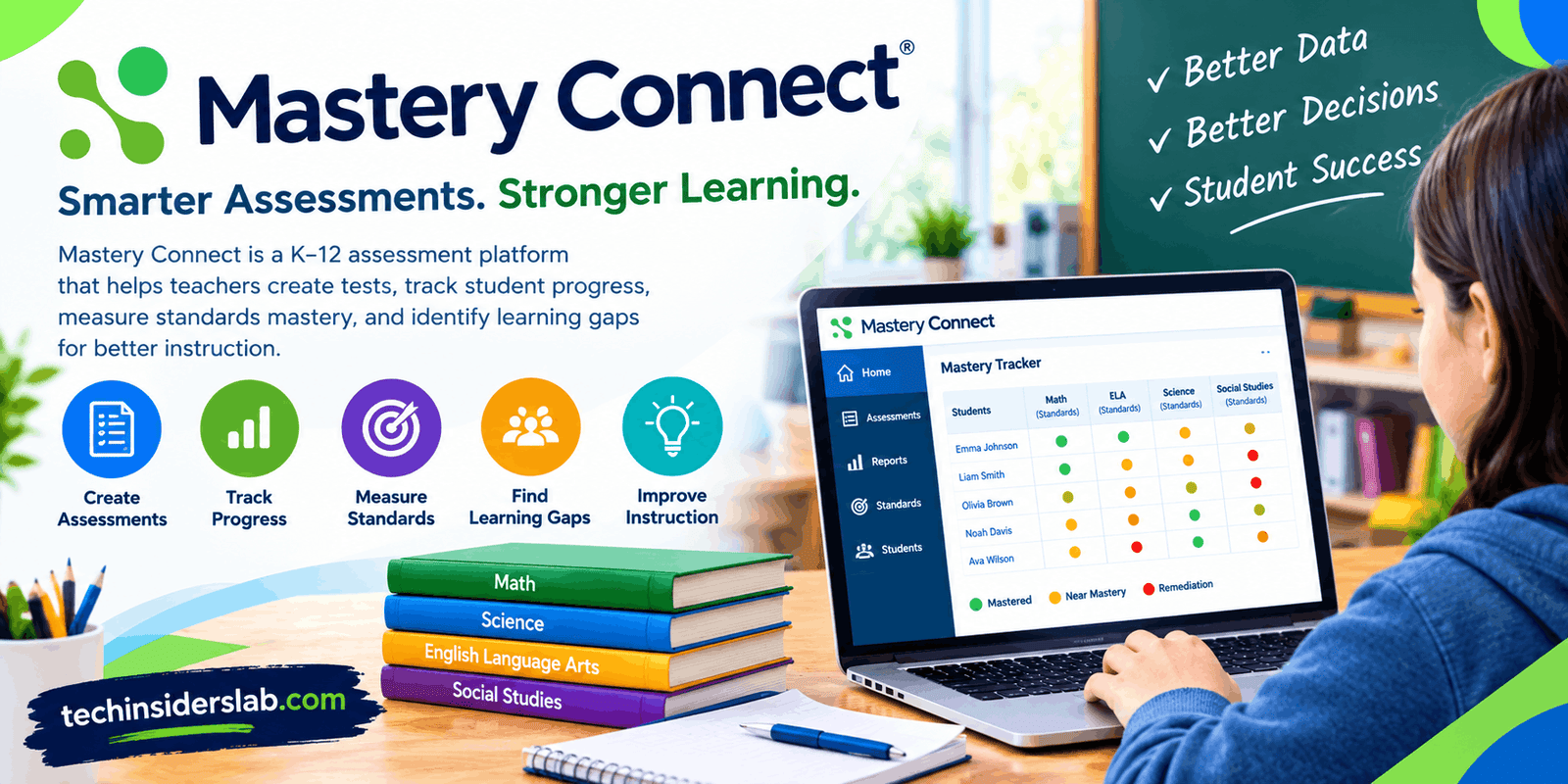
The Mastery Tracker is one of the most important parts of the platform. It provides educators with an organized view of student performance across different standards.
Instead of reviewing every test separately, teachers can use the tracker to see patterns over time. It can help answer questions such as:
- Which standards have students mastered?
- Which concepts are students approaching mastery in?
- Which areas require additional instruction?
- Are multiple students struggling with the same standard?
- How is an individual student’s performance changing?
The visual presentation of mastery information can make large amounts of student data easier to understand.
For teachers managing multiple classes, this type of organization can save time and make it easier to identify students who need additional support.
Standards-Based Assessment
One of Mastery Connect’s major strengths is its focus on standards-based assessment.
A general test score does not always provide enough information about learning. Two students might receive similar overall grades while having very different strengths and weaknesses.
Standards-based assessment provides more detailed information by connecting questions and results to particular learning objectives.
For instance, a science assessment might include standards related to ecosystems, energy, and scientific investigation. A student could demonstrate strong understanding of ecosystems but need more practice with energy concepts.
This information gives the teacher a clearer picture of the student’s learning needs.
Formative Assessment
Formative assessment is used during the learning process rather than only at the end of a course or unit. Its purpose is to help teachers understand whether students are learning the material effectively.
Mastery Connect can support formative assessment by allowing educators to evaluate student understanding regularly.
A teacher might give a short assessment after introducing a new topic. The results can then indicate whether students are ready to move forward or whether additional explanation and practice are necessary.
This approach can help prevent small learning gaps from becoming larger problems later.
Benchmark Assessments
In addition to classroom-focused assessments, Mastery Connect can support benchmark-style assessments.
Benchmark assessments are generally broader than short formative tests. They can evaluate progress across multiple standards or learning objectives.
Schools can use this type of assessment to examine student performance over longer periods and identify broader academic trends.
For example, an institution may use benchmark assessments to understand how students are progressing throughout a semester or school year. Teachers and administrators can then use the information to identify areas that may require additional resources or instructional attention.
Assessment Creation
Teachers need flexibility when designing assessments because every classroom has different requirements.
Mastery Connect provides tools that can help educators create and organize assessment content. Teachers can develop assessments around specific standards and learning objectives instead of relying only on generic tests.
A well-designed assessment can help educators collect more meaningful information about student understanding.
Teachers may use different question types and assessment formats depending on the learning objective. The goal is to create assessments that measure knowledge and skills rather than simply generating grades.
Student Progress Monitoring
Monitoring student progress is an important part of effective teaching.
A single test can show how a student performed at one moment, but progress tracking provides a bigger picture. Mastery Connect can help educators compare performance across assessments and standards.
This makes it easier to recognize improvement as well as continuing difficulties.
For example, a student who initially struggles with a particular standard may show improvement after receiving additional instruction. Progress information allows the teacher to recognize that change and determine whether the student is ready for more advanced material.
Benefits for Teachers
Mastery Connect can offer several advantages for educators.
Easier Data Organization
Teachers often work with large amounts of assessment information. A centralized system can make this information easier to organize and review.
Identifying Learning Gaps
Standards-level data can help teachers identify specific concepts that students have not fully understood.
Better Instructional Decisions
Assessment information can guide lesson planning, intervention, review sessions, and additional practice.
Individual Student Analysis
Teachers can examine individual performance instead of relying only on class averages.
Class-Level Insights
Educators can also identify patterns across an entire class. If many students struggle with the same standard, the teacher may decide to revisit that topic.
Progress Tracking
Repeated assessments can provide a clearer picture of whether students are improving over time.
Benefits for Students
Students can also benefit from a standards-based assessment approach.
Instead of seeing only a final grade, students may be able to understand which learning areas they have successfully developed and which areas need more attention.
This can encourage students to think about learning as a process rather than focusing entirely on scores.
When students understand their weaknesses, they can spend more time practicing specific concepts. Similarly, recognizing mastered skills can give students confidence and help them move toward more challenging material.
Benefits for Schools
Schools and educational organizations can use assessment data for broader planning.
Administrators may examine performance trends across classrooms, grades, or other groups depending on their system permissions and implementation.
This information can support decisions related to:
- Curriculum planning
- Teacher support
- Student intervention
- Assessment strategies
- Academic improvement
- Professional development
- Resource allocation
The value of this data depends heavily on how accurately assessments are designed and how thoughtfully the results are interpreted.
Mastery Connect and Canvas
Mastery Connect can work alongside learning management systems such as Canvas.
A learning management system typically handles courses, assignments, learning materials, communication, and other classroom activities. Mastery Connect focuses more heavily on assessment and mastery tracking.
When these systems are integrated, teachers can benefit from a more connected workflow. Assessment activities can become part of the broader digital classroom instead of operating as completely separate processes.
For institutions already using a compatible learning management environment, integration can reduce the need to manage multiple disconnected workflows.
Why Data Matters in Modern Education
Modern classrooms generate a significant amount of information about student performance. However, collecting data is only useful when educators can understand and apply it.
Mastery Connect is designed around the idea that assessment should support instruction.
A teacher should not have to wait until the end of a semester to discover that students misunderstood an important concept. Regular assessment can provide earlier signals.
When these signals are clearly organized, educators can respond more quickly.
This creates a cycle:
Teach → Assess → Analyze → Adjust → Teach Again
This cycle can make assessment an active part of learning rather than simply a final measurement.
Mastery Connect for Different Educational Roles
Different users can benefit from the platform in different ways.
Teachers
Teachers can create assessments, review student performance, monitor standards, and identify learning gaps.
School Administrators
Administrators can examine broader assessment information and support school-level academic planning.
Curriculum Coordinators
Curriculum teams can use assessment data to evaluate whether students are progressing toward expected learning objectives.
Instructional Coaches
Instructional coaches can use performance trends to help teachers develop targeted instructional strategies.
Students
Students can benefit from greater visibility into their learning progress and areas requiring improvement.
Things to Consider Before Using Mastery Connect
Although digital assessment platforms can be useful, successful implementation requires thoughtful planning.
First, teachers need to understand how the assessment and tracking system works. Training can help educators make better use of the available features.
Second, assessment questions should be properly aligned with learning standards. Poor alignment can produce misleading data.
Third, schools should establish clear policies for managing student information. Educational data should be handled responsibly and access should be provided according to appropriate roles and permissions.
Finally, schools should focus on using data for improvement rather than treating assessment results as the only measure of student success.
Tips for Getting Better Results
Schools and teachers can improve their experience with Mastery Connect by following a few practical strategies.
Use Clear Learning Objectives
Every assessment should have a clear purpose. Teachers should know what they are trying to measure before creating questions.
Avoid Unnecessary Testing
More assessments do not automatically mean better learning. Assessments should be meaningful and connected to instruction.
Review Results Regularly
Teachers should examine assessment data soon after students complete an assessment so that learning gaps can be addressed promptly.
Combine Data With Teacher Judgment
Assessment results are valuable, but they should be considered alongside classroom participation, assignments, observations, and other evidence of learning.
Track Improvement Over Time
Looking at a single score can be misleading. Progress across multiple assessments can provide a more useful picture.
Is Mastery Connect Worth Using?
For schools that need a structured system for digital assessment and standards-based progress monitoring, Mastery Connect can be a useful solution.
Its biggest advantage is the ability to connect assessment results with specific learning standards. This allows teachers to move beyond simple percentages and focus on what students actually know and where they need support.
However, the effectiveness of the platform depends on implementation. Good assessment design, accurate standards alignment, teacher training, and responsible data interpretation are all important.
A technology platform cannot replace good teaching, but it can provide educators with information that makes instructional decisions more informed.
Conclusion
Mastery Connect is a powerful assessment-focused application designed to help K–12 educators understand student learning in greater detail. Its emphasis on standards-based assessment, mastery tracking, progress monitoring, and data analysis makes it different from systems that focus primarily on final grades.
For teachers, the platform can simplify assessment management and make learning gaps easier to identify. For students, it can provide a clearer picture of their academic strengths and areas for improvement. For schools, assessment data can support broader curriculum and instructional planning.
The most important idea behind Mastery Connect is simple: assessment should do more than measure learning; it should help improve learning.
When educators use assessment information thoughtfully, they can identify problems earlier, provide targeted support, and make classroom instruction more responsive to student needs. That makes Mastery Connect a relevant tool for schools looking to build a more data-informed and student-centered learning environment.