
Standard Frame Sizes: The Complete Guide to Picture
Introduction
Choosing the right frame is essential for protecting and displaying your photos, artwork, posters, or certificates. A well-sized frame not only enhances the appearance of your print but also complements your home or office décor. Since most manufacturers produce frames in standard dimensions, understanding these sizes can help you save money and avoid the need for custom framing.
This guide explains the most common standard frame sizes, how frame measurements work, and how to choose the right frame for your needs.
What Are Standard Frame Sizes?
Standard frame sizes are commonly manufactured dimensions designed to fit popular photo, artwork, poster, and certificate sizes. Because these sizes match standard print dimensions, they’re easy to find in stores and online.
Benefits of Standard Frames
- Easy to purchase
- More affordable than custom frames
- Available in many styles and materials
- Compatible with common print sizes
- Easy to replace if damaged
For most people, standard frames are the best combination of convenience and affordability.
Why Frame Size Matters
Using the correct frame size improves both the appearance and protection of your artwork.
A properly fitted frame:
- Protects photos from dust and damage
- Prevents prints from moving inside the frame
- Enhances the overall presentation
- Matches your room décor
- Gives artwork a professional look
An incorrectly sized frame may crop the image or leave unwanted gaps around the print.
Understanding Frame Measurements
One common mistake is assuming the listed frame size refers to its outside dimensions. In reality, frame sizes usually refer to the inside dimensions, which match the size of the artwork or photo.
For example:
An 8 × 10-inch frame is designed to hold an 8 × 10-inch print, while the outer frame will be slightly larger depending on its border width.
Before buying a frame, always check:
- Inside dimensions
- Outside dimensions
- Mat opening (if included)
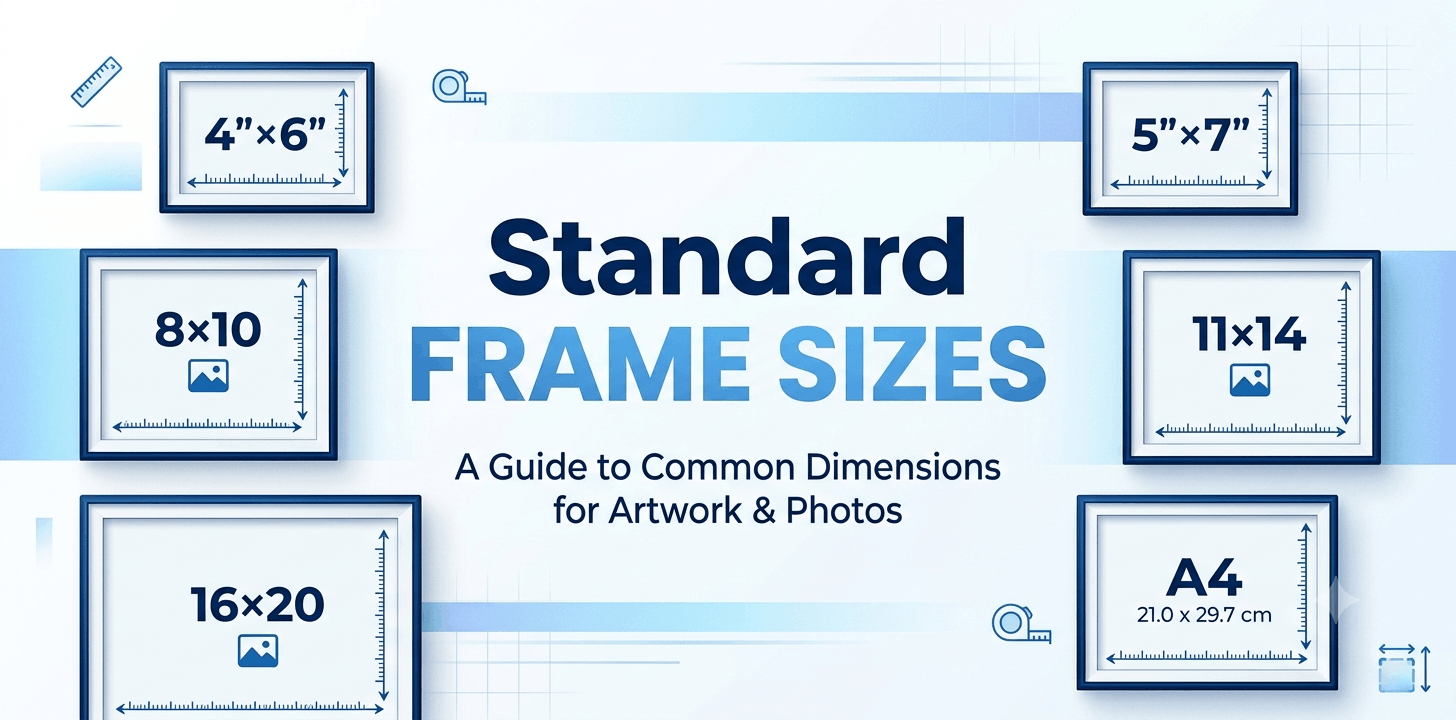
Common Standard Picture Frame Sizes
These are some of the most popular frame sizes available:
| Frame Size | Best For |
|---|---|
| 4 × 6 | Family photos |
| 5 × 7 | Portraits |
| 8 × 10 | Professional photos |
| 8.5 × 11 | Certificates |
| 11 × 14 | Wall décor |
| 12 × 18 | Small posters |
| 16 × 20 | Photography |
| 18 × 24 | Large posters |
| 20 × 24 | Artwork |
| 24 × 36 | Movie posters |
| 30 × 40 | Large wall art |
These sizes are widely available in home décor stores and online marketplaces.
Frame Sizes in Centimeters
If you’re buying internationally, you may see metric measurements instead of inches.
Common conversions include:
| Inches | Approx. Centimeters |
|---|---|
| 4 × 6 | 10 × 15 cm |
| 5 × 7 | 13 × 18 cm |
| 8 × 10 | 20 × 25 cm |
| 11 × 14 | 28 × 36 cm |
| 16 × 20 | 41 × 51 cm |
| 18 × 24 | 46 × 61 cm |
| 24 × 36 | 61 × 91 cm |
Knowing both systems helps when ordering frames from international retailers.
Standard Photo Frame Sizes
Photo printing services commonly use these dimensions:
4 × 6 Inches
Perfect for:
- Family photos
- Travel memories
- Albums
- Tabletop frames
5 × 7 Inches
A popular choice for:
- Portraits
- Graduation photos
- Wedding pictures
8 × 10 Inches
Ideal for:
- Studio portraits
- Office displays
- Home decoration
11 × 14 Inches
Suitable for:
- Professional photography
- Decorative wall displays
- Wedding portraits
16 × 20 Inches
Commonly used for:
- Fine art photography
- Gallery prints
- Living room décor
Standard Poster Frame Sizes
Poster frames are generally larger than photo frames.
Popular sizes include:
- 12 × 18 inches
- 18 × 24 inches
- 24 × 36 inches
- 27 × 40 inches
- 30 × 40 inches
These frames work well for movie posters, artwork, promotional prints, and office displays.
Standard Art Frame Sizes
Artists often create paintings and prints using standard dimensions, making framing easier.
Common art frame sizes include:
- 8 × 10
- 9 × 12
- 11 × 14
- 12 × 16
- 16 × 20
- 18 × 24
- 20 × 24
- 24 × 30
- 24 × 36
- 30 × 40
These sizes fit most canvas prints and fine art pieces.
Choosing the Right Frame
Before purchasing a frame, consider these factors:
Measure Your Artwork
Always measure your print carefully instead of estimating.
Display Location
Small frames suit desks and compact rooms, while larger frames work better on spacious walls.
Frame Material
Choose a material that matches your décor.
Popular options include:
- Wood
- Metal
- Acrylic
- Composite
Orientation
Select a frame that matches the shape of your artwork:
- Portrait
- Landscape
- Square
Using Mat Boards
Many picture frames include a mat board, which creates a border between the artwork and the frame.
Benefits include:
- Adds depth
- Improves presentation
- Prevents artwork from touching the glass
- Helps preserve valuable prints
For example, an 8 × 10-inch photo can be displayed inside an 11 × 14-inch frame using a mat for a more professional appearance.
Standard vs. Custom Frames
Standard Frames
Best for:
- Family photos
- Posters
- Certificates
- Common print sizes
Advantages:
- Affordable
- Easy to find
- Available in many designs
- Simple to replace
Custom Frames
Custom framing is recommended when:
- Artwork has unusual dimensions.
- Museum-quality materials are required.
- You want a unique design.
- Special matting is needed.
Although custom frames cost more, they provide greater flexibility and protection.
How to Measure Artwork Correctly
Before buying a frame, always measure your artwork accurately. Even a small measurement error can result in a poor fit.
Steps to Measure
- Lay the artwork on a flat surface.
- Measure the width and height from edge to edge.
- Record the measurements in inches or centimeters.
- If using a mat board, consider the mat opening as well.
Always measure the artwork itself instead of estimating its size.
Standard Canvas Frame Sizes
Canvas prints are available in several standard sizes that fit most floating and traditional frames.
| Canvas Size | Best For |
|---|---|
| 8 × 10 | Small artwork |
| 11 × 14 | Portrait paintings |
| 12 × 16 | Decorative wall art |
| 16 × 20 | Photography |
| 18 × 24 | Medium artwork |
| 20 × 24 | Professional artwork |
| 24 × 30 | Living room displays |
| 24 × 36 | Large wall décor |
| 30 × 40 | Gallery artwork |
| 36 × 48 | Oversized displays |
Floating frames are especially popular because they create a clean, modern look around canvas artwork.
Certificate and Diploma Frame Sizes
Certificates deserve frames that protect them while giving a professional appearance.
Common frame sizes include:
| Certificate Size | Recommended Frame |
|---|---|
| 8.5 × 11 | 8.5 × 11 or 11 × 14 with mat |
| 11 × 14 | 11 × 14 or 16 × 20 with mat |
| A4 | A4 Frame |
| A3 | A3 Frame |
For long-term protection, consider using UV-protective glass to reduce fading.
Gallery Wall Layouts
Gallery walls combine multiple frames to create an attractive display.
Symmetrical Layout
Frames are evenly spaced and aligned.
Best for:
- Family photos
- Certificates
- Modern interiors
Asymmetrical Layout
Frames of different sizes create a creative appearance.
Ideal for:
- Travel photos
- Mixed artwork
- Living rooms
Single Statement Frame
One large frame becomes the focal point of the room.
Suitable for:
- Offices
- Living rooms
- Entryways
- Conference rooms
Before hanging frames, arrange them on the floor to find the best layout.
Choosing the Right Frame Material
The frame material affects both durability and appearance.
Wood Frames
Benefits include:
- Classic design
- Durable construction
- Available in many finishes
- Great for traditional décor
Metal Frames
Advantages include:
- Lightweight
- Strong
- Modern appearance
- Resistant to warping
Acrylic Frames
Ideal for:
- Children’s artwork
- Dorm rooms
- Offices
- Budget-friendly displays
Composite Frames
These frames imitate wood while remaining affordable and lightweight.
Glass vs. Acrylic Covers
Choosing the right cover is just as important as selecting the frame.
Glass
Pros
- Scratch resistant
- Clear appearance
- Premium finish
Cons
- Heavy
- Can break if dropped
Acrylic (Plexiglass)
Pros
- Lightweight
- Shatter resistant
- Safer for large frames
Cons
- Scratches more easily than glass
For homes with children or large wall displays, acrylic is often the safer option.
Common Framing Mistakes
Avoid these common mistakes when buying a frame:
- Buying a frame before measuring the artwork.
- Ignoring the mat board opening.
- Choosing a frame that’s too small.
- Forgetting to measure available wall space.
- Selecting a frame that doesn’t match the room’s décor.
Taking accurate measurements helps prevent costly mistakes.
Tips for Choosing the Perfect Frame
Keep these recommendations in mind:
- Measure your artwork carefully.
- Match the frame to the artwork.
- Use mat boards for a professional look.
- Choose UV-protective glass for valuable prints.
- Buy standard sizes whenever possible to save money.
- Select neutral colors for a timeless appearance.
Frame Maintenance Tips
Proper maintenance helps frames and artwork last longer.
- Dust frames regularly with a soft cloth.
- Avoid harsh chemical cleaners.
- Keep artwork away from direct sunlight.
- Maintain moderate humidity indoors.
- Check hanging hardware occasionally for safety.
With proper care, quality frames can remain in excellent condition for many years.
Conclusion
Choosing the correct standard frame size makes displaying photos, artwork, posters, and certificates much easier. Standard frames are affordable, widely available, and designed to fit the most common print sizes, making them the best choice for most homes and offices.
Before purchasing a frame, always measure your artwork carefully, decide whether you need a mat board, and choose a material that complements your décor. While custom framing is ideal for unique or valuable pieces, standard frames offer an excellent balance of style, protection, and value.
Frequently Asked Questions (FAQs)
Standard frame sizes are common dimensions designed to fit popular photo, artwork, and poster sizes.
Popular sizes include 4 × 6, 5 × 7, 8 × 10, 11 × 14, and 16 × 20 inches.
Yes. Frame sizes usually refer to the inside dimensions, which match the artwork size.
Yes. A mat board improves presentation and helps protect artwork from touching the glass.
Yes. Standard frames are mass-produced and generally cost much less than custom-made frames.
Common poster frame sizes include 18 × 24, 24 × 36, and 27 × 40 inches.
Yes. You can order a custom frame or use a larger standard frame with a custom-cut mat.