Claude: Features, Uses, Benefits, and Complete Guide
introduction
Artificial intelligence has quickly become part of everyday digital life, helping people write content, analyze information, create software, learn new subjects, and complete complicated tasks. Among the growing number of AI assistants available today, Claude has established itself as a powerful option for users who want an AI tool for both everyday conversations and more advanced knowledge work.
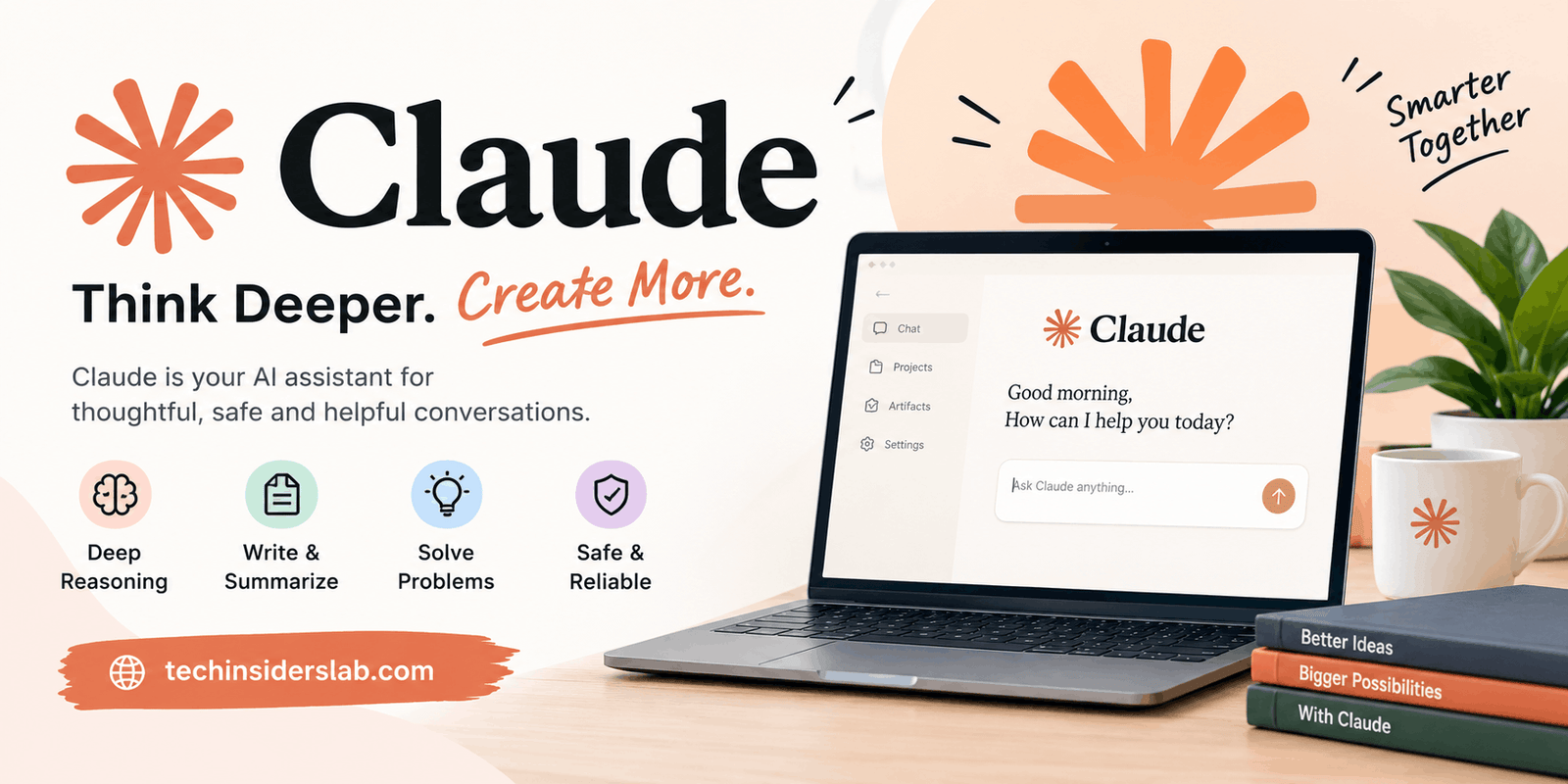
Claude is an artificial intelligence assistant developed by Anthropic. It is designed to help users with tasks such as writing, summarization, learning, coding, analysis, brainstorming, translation, and image interpretation. Anthropic describes Claude as a helpful, honest, and harmless conversational AI assistant.
Unlike an AI tool designed for only one specific purpose, Claude can be used across many different workflows. Students can use it for learning, developers can use it as a coding partner, writers can use it for drafting and editing, and businesses can use it to work with documents and information.
What Is Claude?
Claude is a large language model and AI assistant created by Anthropic. It can understand natural-language instructions and generate responses based on the context of a conversation.
Users do not need to learn a complicated programming language to interact with Claude. A normal written prompt can be enough to ask a question, request an explanation, analyze information, create content, or work through a problem. Anthropic recommends communicating with Claude naturally while being specific about the desired result.
Claude is available through web, desktop, and mobile interfaces, while developers can also access Claude models through Anthropic’s API and several cloud platforms. Anthropic’s current model ecosystem includes models designed for different levels of reasoning, coding, and knowledge work.
How Does Claude Work?
Claude is based on artificial intelligence models trained to understand and generate language. When a user enters a prompt, the system analyzes the instructions and surrounding context before producing a response.
The quality of the result depends heavily on the information provided in the prompt. A short question can produce a quick answer, while a detailed prompt containing goals, requirements, examples, and source material can help Claude produce a much more specific result.
This makes Claude useful as an interactive assistant rather than simply a question-and-answer system. Users can continue a conversation, correct an answer, add information, and ask the model to improve its previous work.
Claude can also work with information contained in documents and other inputs, making it useful for tasks that involve large amounts of material.
Key Features of Claude
One of Claude’s biggest strengths is the wide range of tasks it supports. Its features continue to evolve as Anthropic introduces new models and products.
1. Writing and Editing
Claude can assist with many forms of writing, including articles, emails, reports, scripts, summaries, explanations, and creative writing.
It can also rewrite existing content to make it clearer, more concise, more professional, or better suited to a particular audience. This makes it useful for bloggers, marketers, students, professionals, and content creators.
2. Coding Assistance
Claude can work as an AI programming partner. Users can ask it to explain code, identify potential problems, create functions, suggest improvements, or help understand unfamiliar programming concepts.
Anthropic’s documentation specifically highlights coding as one of Claude’s major use cases, while its newer products place additional emphasis on software engineering and technical work.
For developers, an important advantage is the ability to discuss a programming problem conversationally instead of searching through numerous documentation pages before getting started.
3. Summarizing Long Information
Claude can summarize articles, documents, conversations, research material, and other lengthy text.
Instead of reading an entire document immediately, users can ask Claude to identify the major points, explain important sections, create an outline, or turn complicated information into simpler language.
This can be particularly useful for students, researchers, managers, and professionals who regularly work with large amounts of written information. Anthropic lists summarization among Claude’s core use cases.
4. Image Analysis
Claude is also capable of interpreting images. Users can provide an image and ask questions about visible information, charts, diagrams, or other visual content.
For example, an image containing a chart can be analyzed to identify trends, while a screenshot can be used as context when asking about a technical problem.
5. Projects
Projects are designed to organize conversations and supporting information around a specific subject or ongoing task.
Instead of starting from zero in every conversation, users can establish a project containing relevant knowledge and instructions. Anthropic introduced Projects as a way to bring curated knowledge and chat activity together for longer-running workflows.
This can be helpful for activities such as content planning, software development, research projects, business analysis, or managing a collection of related documents.
6. Artifacts
Artifacts are another important Claude feature. They allow Claude-generated work to appear in a dedicated workspace alongside the conversation.
Users can ask Claude to create items such as text documents, code, diagrams, graphics, or website designs. This makes the experience more interactive because users can work with the generated result rather than treating the response as ordinary chat text.
For developers and creators, this can make experimentation significantly easier, particularly when working on interfaces, prototypes, or other structured outputs.
What Can You Use Claude For?
Claude has a broad range of practical applications.
Content Creation
Bloggers and content creators can use Claude to brainstorm topics, organize outlines, improve drafts, generate ideas, and simplify complicated explanations.
It can also help transform rough notes into structured content. However, human editing remains important because AI-generated information can still contain mistakes or unsupported claims.
Education and Learning
Students can use Claude as a learning assistant. Instead of simply requesting an answer, they can ask for a step-by-step explanation, examples, practice questions, or a simpler explanation of a difficult topic.
Claude’s ability to adjust explanations through conversation makes it useful for personalized learning.
Software Development
Developers can use Claude for debugging, code generation, code explanation, documentation, architecture discussions, and brainstorming technical solutions.
Anthropic has expanded Claude’s developer-focused capabilities through products such as Claude Code, which is designed for working with code from the terminal.
Research and Analysis
Claude can help researchers organize information, summarize documents, compare ideas, generate questions, and analyze complex material.
Anthropic has also expanded its focus on scientific workflows. In 2026, the company introduced Claude Science, an AI workbench designed around scientific research workflows and tools.
Business Productivity
Businesses can use AI assistants to reduce repetitive work. Claude can assist with drafting emails, preparing documents, analyzing information, brainstorming strategies, and working with internal knowledge.
Its project-based approach can also make it easier to maintain context for longer-running tasks.
Claude for Developers
Claude has become increasingly relevant to software developers.
A developer can use it to generate example code, understand unfamiliar codebases, troubleshoot errors, create documentation, and discuss possible technical approaches.
Anthropic’s current ecosystem includes Claude Code and API access, giving developers options ranging from conversational coding assistance to building Claude-powered applications.
For developers who work on larger projects, maintaining context is particularly important. Claude’s project and coding capabilities are designed to support workflows that involve more than a single short question.
Claude and AI Safety
Anthropic places significant emphasis on AI safety and responsible development.
The company has published a Claude Constitution describing the principles and values it wants its models to follow. The constitution is intended to influence how Claude behaves and how its training is approached.
This safety-oriented approach is part of Anthropic’s broader effort to develop AI systems that are useful while reducing the risk of harmful behavior.
However, safety mechanisms do not mean Claude is perfect. Users should still verify important information, particularly when AI is being used for legal, financial, medical, security, or other high-stakes decisions.
Claude’s Growing Role in Knowledge Work
Claude is increasingly being used for more than simple chatbot conversations.
Anthropic’s 2026 Economic Index research found that a large majority of analyzed Claude conversations produced some form of artifact. Explanations, documents, reports, guidance, code, and technical work were among the major output categories.
This highlights an important change in how AI assistants are being used. Instead of only asking questions, people are increasingly using AI to produce useful work products.
That distinction is important because it positions Claude as a productivity application rather than simply an AI chatbot.
Advantages of Claude
Claude offers several potential advantages for users:
- Natural conversational interaction
- Support for writing and editing
- Strong coding assistance
- Document and information analysis
- Image understanding
- Project-based workflows
- Artifact creation
- Support across web, desktop, and mobile
- Developer access through APIs
- Tools designed for longer and more complex workflows
Its broad functionality means that one AI application can potentially support several different tasks.
Limitations to Keep in Mind
Despite its capabilities, Claude should not be treated as an infallible source of information.
AI models can misunderstand questions, make factual mistakes, interpret information incorrectly, or produce code that requires testing. The quality of an answer can also depend on the quality of the prompt and the context provided.
Users should therefore review important outputs before publishing, deploying, or relying on them.
Another consideration is that different Claude models and plans can have different capabilities and usage limits. Anthropic’s current product ecosystem includes multiple model and subscription options, so users should check the current offering before choosing a plan.
Is Claude Worth Using?
For people who frequently write, research, code, study, analyze documents, or brainstorm ideas, Claude can be a valuable AI application.
Its biggest strength is versatility. Rather than being limited to one task, Claude can move between writing, analysis, coding, learning, and creative work within the same general environment.
It is especially useful when a task requires several steps or when the user needs to refine an answer through an ongoing conversation.
Conclusion
Claude is a powerful AI application designed to help with writing, coding, research, learning, analysis, and everyday productivity. Its conversational capabilities, Projects, Artifacts, and developer-focused tools make it useful for both beginners and professionals. While Claude can save time and improve workflows, important information should still be reviewed for accuracy. Overall, Claude is a versatile AI app and a strong option for people looking to use artificial intelligence for practical digital tasks.